

If you have ever bought a punnet of damsons and wondered what to do with them, this damson jam recipe is the answer. Damsons are small, sour and a bit too tart to eat raw, but once they meet sugar they turn into one of the best jams there is: deep purple, glossy, and sharp enough that it never tastes cloying.
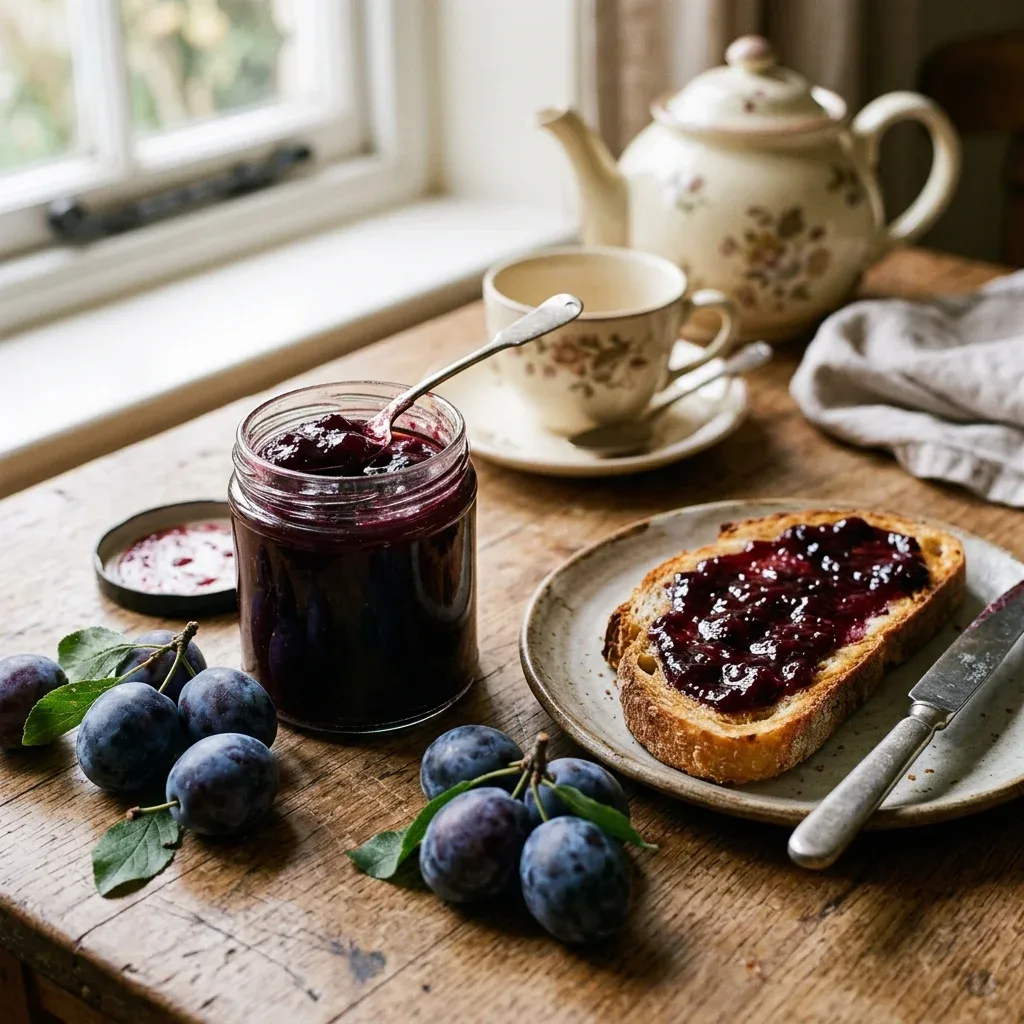
Quick answer: simmer 1 kg whole damsons in 300 ml water until soft, skim out the stones as they float up, add 1 kg sugar, dissolve it, then boil hard to 105°C (221°F) or until a spoonful wrinkles on a cold plate. No added pectin needed.
RECIPE
Easy Damson Jam
Ingredients
- 1 kg damsons about 2 1/4 lb, rinsed, stalks removed
- 300 ml water 1 1/4 cups
- 1 kg granulated sugar about 5 cups; jam sugar is not needed
- 1 small knob butter optional, to reduce foam
Method
- Put 2 or 3 small plates in the freezer for testing the set later. Wash your jars and lids, then sterilise them: place jars in a 140°C (275°F) oven for 15 minutes, or boil them for 10 minutes.
- Put the whole damsons and water in a large, wide, heavy-based pan. Bring to a simmer, cover and cook gently for 15 to 20 minutes, stirring now and then, until the fruit is completely soft and the skins have split.
- Take the pan off the heat. As you stir, the stones will separate from the flesh and rise. Scoop them out with a slotted spoon. Count them if you like: 1 kg of damsons has roughly 60 to 80 stones.
- Add the sugar and stir over low heat until every grain has dissolved. Do not let it boil until the sugar is dissolved, or the jam can turn grainy.
- Turn the heat up and boil hard, stirring occasionally, for 8 to 12 minutes, until the jam reaches 105°C (221°F) on a thermometer.
- Test the set: spoon a little jam onto a cold plate, wait 1 minute, then push it with your finger. If it wrinkles, it is ready. If not, boil for 2 more minutes and test again.
- Take off the heat, stir in the butter to clear any foam, and let it stand for 10 minutes so the fruit is evenly spread.
- Ladle into the hot sterilised jars, leaving about 1 cm headspace, wipe the rims and seal. For long-term pantry storage, process in a boiling water bath (see notes).
Notes
Private Notes
Tried this recipe?
Let us know how it was!Why You Don’t Need to Stone Damsons First
Damson stones cling tightly to the flesh, so pitting raw fruit is slow and messy. The easier way is to cook them whole. Once the fruit is soft, the stones slip free and rise to the surface, where you can lift them out with a slotted spoon. Run a wooden spoon along the bottom of the pan to find any stragglers. A few missed stones are common in homemade damson jam, which is why many British cooks warn guests to eat it carefully.
Do You Need Pectin or Jam Sugar?
No. Damsons are one of the highest-pectin fruits, especially when a few are slightly under-ripe. Ordinary granulated sugar sets them beautifully. Using jam sugar (with added pectin) can make the jam set too firmly, almost rubbery.
How to Know When Damson Jam Is Set
- Thermometer: 105°C (221°F) is the setting point at sea level.
- Wrinkle test: a small blob on a frozen plate wrinkles when pushed after a minute.
- Flake test: the jam falls off a wooden spoon in thick drops that join into a sheet.
Damson jam sets quickly, so start testing after about 8 minutes of hard boiling. Overcooked jam turns dark, sticky and tastes caramelised.
Troubleshooting
- Runny jam: pour it back into the pan and boil again for 2 to 3 minutes, then test. It may also firm up over 24 to 48 hours.
- Too firm: you boiled past the set. Warm it gently with a splash of water before using.
- Grainy or crystallised: the sugar was not fully dissolved before boiling.
- Lots of foam: stir in a small knob of butter, or skim with a spoon.
Storing Damson Jam Safely
Traditional British jam is simply poured hot into sterilised jars and sealed, and stored in a cool cupboard. For the most reliable seal, especially if you plan to keep it for many months or live somewhere warm, process the filled jars in a boiling water bath. The National Center for Home Food Preservation has tested processing times and altitude adjustments. Once opened, keep jam in the fridge.
How to Use Damson Jam
- On toast, crumpets or scones with clotted cream (or try it next to a jar of homemade grape jelly)
- Swirled through natural yogurt or porridge
- Sandwiched in a Victoria sponge
- Melted with a splash of vinegar as a glaze for roast pork or duck
- Served with cheese, especially a sharp cheddar
Damson Jam FAQs
How many jars does 1 kg of damsons make? About 5 standard 340 g (12 oz) jars.
Can I use less sugar? You can reduce it by up to about 25%, but the jam will set more softly and keep for a shorter time. Store lower-sugar jam in the fridge.
Can I use frozen damsons? Yes. Cook them from frozen, adding a few extra minutes to the first simmer.
What else can I make with damsons? Damson gin is the other autumn classic.
For more ideas with seasonal fruit, browse our jams and preserves.