

Damson gin is one of those autumn traditions that feels a little old-fashioned, in the best way. You drop a bag of dark, tart little plums into a jar with sugar and gin, give it a shake now and then, and a couple of months later you have a deep ruby liqueur that tastes like a hedgerow in a glass. This damson gin recipe keeps things simple: three ingredients, ten minutes of work, and a few tips that make a real difference.
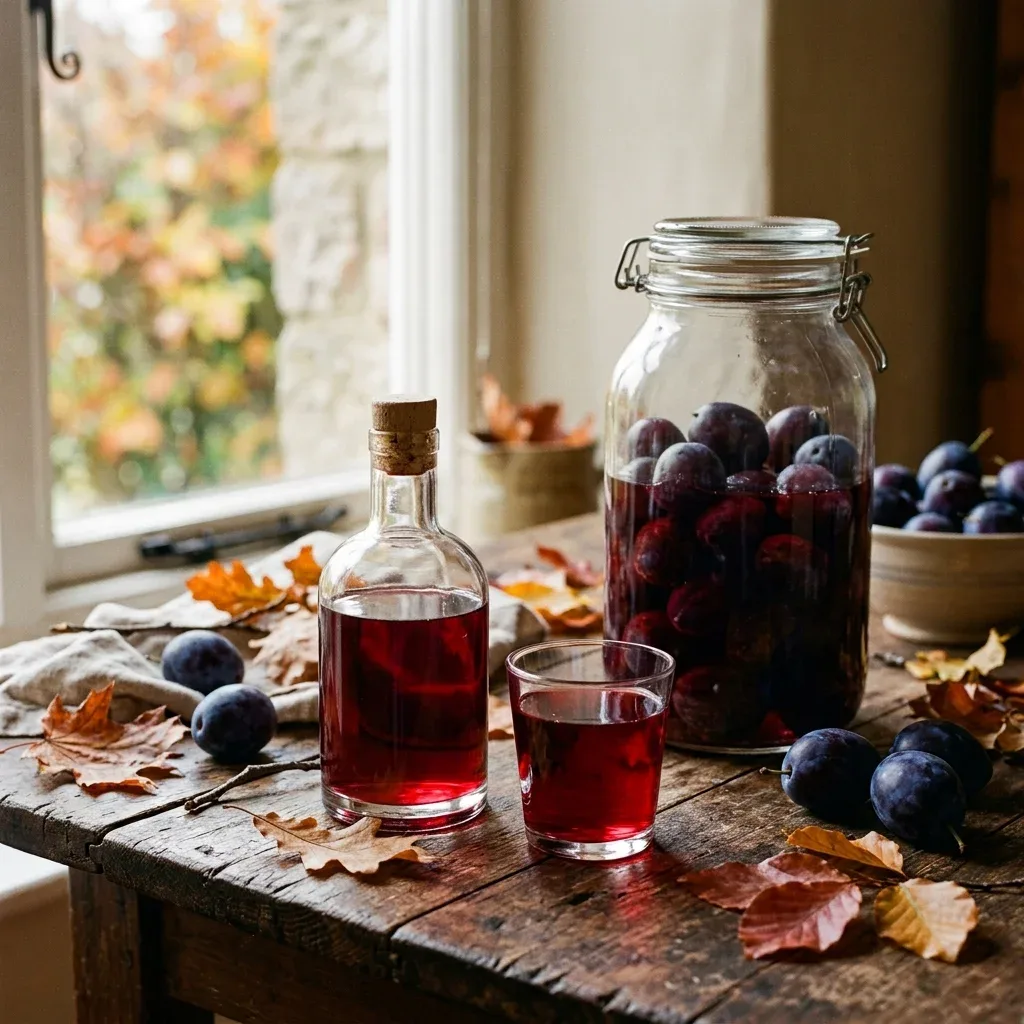
Quick answer: use 500 g damsons, 250 g sugar and a 70 cl bottle of gin. Freeze the damsons first to split the skins, combine everything in a large jar, shake daily for a week, then steep for 8 to 12 weeks before straining and bottling.
RECIPE
Damson Gin
Ingredients
- 500 g damsons about 1 lb 2 oz, ripe and unblemished
- 250 g granulated sugar about 1 1/4 cups; use 150 g for a drier gin
- 700 ml gin one standard 70 cl bottle; a decent supermarket London dry is ideal
Method
- Rinse the damsons, pull off any stalks and throw out any that are split, bruised or mouldy. Dry them well.
- Freeze the damsons overnight in a bag. Freezing splits the skins so the juice can escape, which saves you pricking every one. If you prefer, prick each damson a few times with a clean needle or fork instead.
- Tip the damsons (still frozen is fine) into a clean 1.5 litre jar or two smaller jars. Add the sugar, then pour in the gin.
- Seal tightly and shake well. Keep the jar somewhere cool and dark.
- Shake the jar every day for the first week until the sugar has fully dissolved, then about once a week.
- Leave to steep for at least 8 weeks, and up to 3 months for a deeper flavour.
- Strain through a sieve lined with muslin or a coffee filter into a jug. Taste, and stir in a little more sugar if you want it sweeter.
- Bottle in clean, sterilised bottles and label with the date. Drink within a year or two; it softens and improves with age.
Notes
Private Notes
Tried this recipe?
Let us know how it was!When to Pick or Buy Damsons
Damsons ripen from late August to early October in the UK, with September usually the peak. You want fruit that is deep purple-blue with a dusty bloom, gives slightly when pressed, and comes off the stalk easily. Slightly under-ripe fruit is fine for gin, since the sugar balances the sharpness, but avoid anything split or mouldy. If you pick them in September, the gin is ready right on time for Christmas.
Why Freeze the Damsons First?
The traditional method is to prick every single damson with a needle. It works, but it takes ages and stains your fingers. Freezing overnight does the same job: ice crystals burst the skins, so the juice and colour flow out into the gin much faster. It is also handy if you pick more damsons than you can deal with at once, since you can start the gin whenever suits you.
How Much Sugar Should You Use?
- 250 g gives a classic, sweet, sippable liqueur.
- 150 to 200 g makes a drier gin that works better in cocktails and with tonic.
- You can always add more sugar after straining, but you can’t take it out. If unsure, start lower.
How Long Does Damson Gin Take?
It is drinkable after about 6 weeks, but 8 to 12 weeks gives a rounder, more jammy flavour. Leaving the fruit in for much longer than 3 months can make it taste slightly bitter and almondy, because the stones start to give up their flavour. Once strained and bottled, damson gin keeps for years and gets smoother as it ages.
Choosing the Gin
There is no need for an expensive craft gin, because the damsons and sugar take over. A good, plain London dry gin at 37.5% to 40% ABV works perfectly. Very floral or heavily flavoured gins can clash with the fruit.
How to Serve Damson Gin
- Neat, in a small glass, after dinner
- With tonic and a slice of orange
- Topped up with sparkling wine for a festive fizz
- Splashed over vanilla ice cream
- Wrapped up in a small bottle as a homemade Christmas gift
Common Problems
- Cloudy gin: usually from fine fruit sediment. Let the bottle stand for a few days, then carefully pour off the clear gin, or strain through a coffee filter.
- Sugar not dissolving: keep shaking. It can take a week, especially in a cold room.
- Too sweet: mix with some plain gin, or serve it long with tonic.
- Too sharp: stir in a spoonful of sugar syrup.
Damson Gin Recipe FAQs
Do I need to stone the damsons? No. The fruit stays whole in the jar and is strained out at the end.
Can I use vodka instead of gin? Yes. Damson vodka is just as good and has a cleaner, more fruit-forward flavour.
Can I make damson gin with frozen shop-bought fruit? Yes, as long as it is plain damsons with no added sugar or syrup.
What else can I make with damsons? If you have more than you can fit in a jar, damson jam is the other classic.
This is an alcoholic drink, so please enjoy it responsibly and keep it out of reach of children. For more cosy drinks, have a look at our blackberry vodka, or browse our beverage recipes.