

During the Second World War, oranges all but vanished from British shops, and children were sent out into the countryside to gather rosehips instead. The hips were turned into syrup and handed out as a source of vitamin C. The recipe has stuck around because it tastes lovely: fruity, a little floral, something like a cross between apple and hibiscus. This rosehip syrup recipe follows the traditional method, with one step you should never skip.
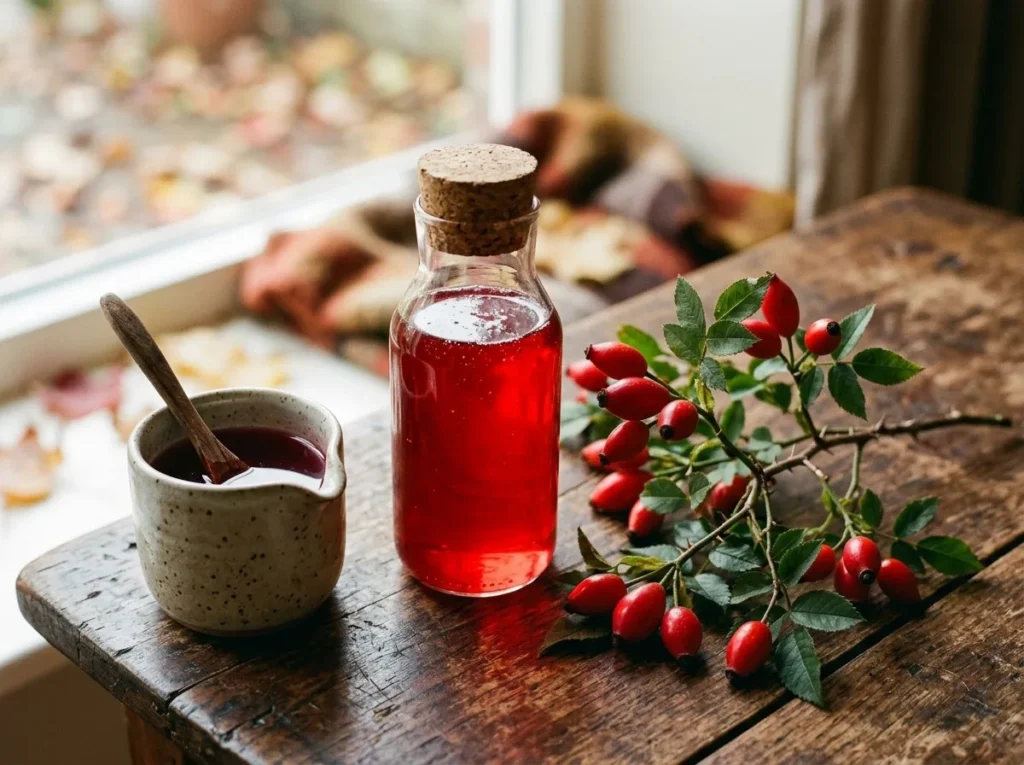
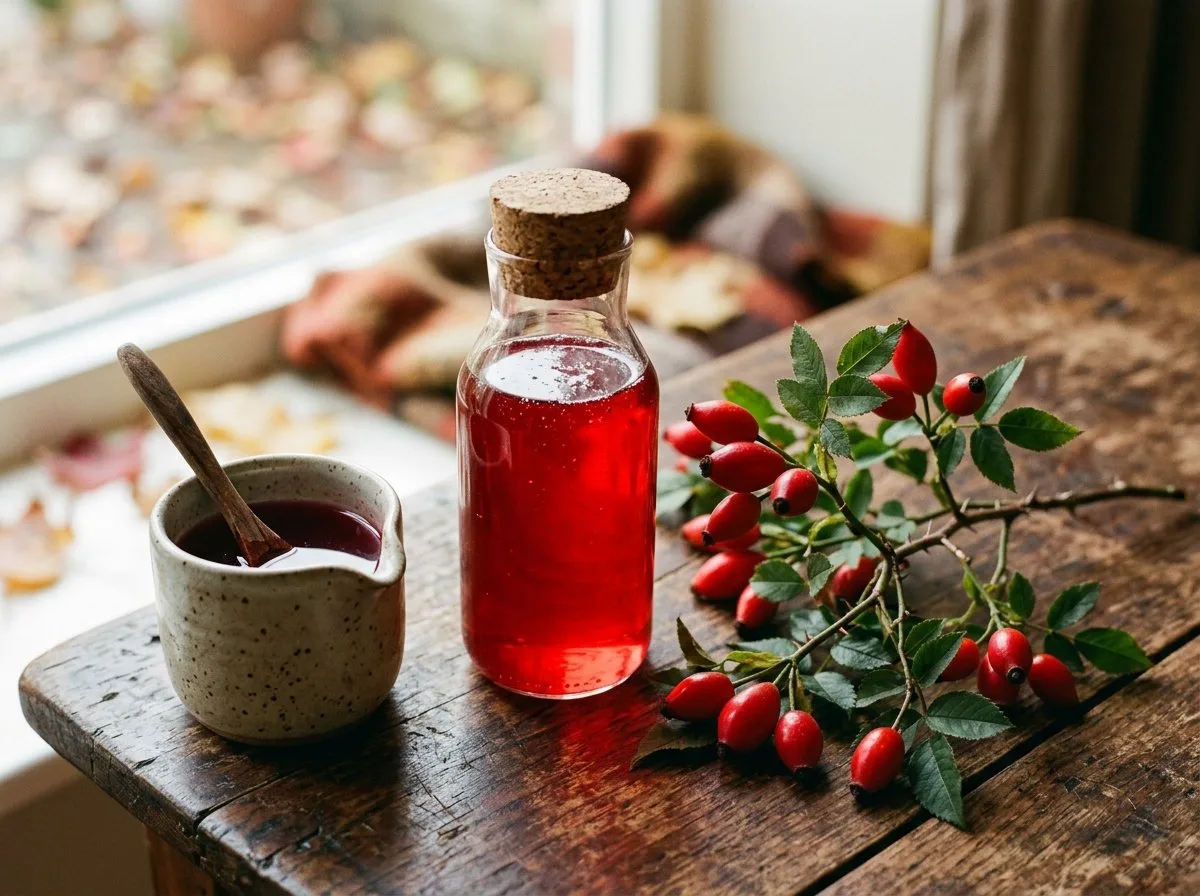
Rosehip Syrup
Ingredients
- 1 kg ripe rosehips about 2 lb 3 oz, stalks and dried flower ends trimmed
- 2.5 litres water divided: 1.7 litres, then 800 ml
- 500 g granulated sugar about 2 1/2 cups
Method
- Bring 1.7 litres of water to the boil in a large pan. Meanwhile, roughly chop or blitz the rosehips in a food processor.
- Add the chopped hips to the boiling water, bring back to the boil, then take off the heat and leave to infuse for 15 minutes.
- Pour everything through a jelly bag or a sieve lined with a double layer of fine muslin set over a bowl. Let it drip without squeezing.
- Return the pulp to the pan with 800 ml fresh water, boil again, infuse for 10 minutes and strain again through the bag into the same bowl.
- Now strain all the liquid a second time through a clean, fresh piece of fine muslin or a coffee filter. This removes the tiny hairs from inside the hips, which are irritating if swallowed.
- Pour the strained liquid into a clean pan and boil until reduced to about 1 litre.
- Add the sugar, stir until dissolved, then boil for 5 minutes.
- Pour into hot, sterilised bottles and seal. Keep in the fridge and use within 4 weeks once opened, or freeze in ice cube trays for longer storage.
Notes
Private Notes
Tried this recipe?
Let us know how it was!The Step You Must Not Skip
Inside every rosehip, around the seeds, are fine, prickly hairs. Children once used them as itching powder, and if they end up in your syrup they can irritate your mouth and stomach. That is why the juice is strained twice: once through a jelly bag, then again through a clean piece of fine muslin or even a coffee filter. Hold a spoonful up to the light before bottling. It should be completely clear, with no floating specks.
Finding Rosehips
Rosehips are the fruit of wild roses, especially the dog rose (Rosa canina), which grows in hedgerows across the UK and Europe. The garden rugosa rose produces big, tomato-like hips that work well too. Pick them from September to November when they are deep red and just starting to soften. Some foragers wait for the first frost, which sweetens them; freezing them overnight has a similar effect. Pick only from plants you can identify with confidence, away from roadsides and anything that may have been sprayed.
A Word on Vitamin C
Rosehips are naturally rich in vitamin C, but a lot of it is lost with long boiling and time. Keeping the cooking short, as in this recipe, helps. Think of the syrup as a delicious treat with a bit of history, rather than a supplement.
Ways to Use Rosehip Syrup
- Drizzled over pancakes, waffles or porridge
- Stirred into plain yogurt or rice pudding
- Diluted with sparkling water for a homemade cordial
- A splash in gin and tonic or Prosecco
- Poured over vanilla ice cream
Storage
Homemade syrup is lower in sugar than commercial versions, so keep it in the fridge once opened and use it within about four weeks. For longer storage, freeze it in ice cube trays and pop out a cube whenever you need one. Small bottles are better than one large one, so you only open what you will use.
Already have a hedgerow habit? Try our sloe vodka or blackberry vodka next.
A Few Questions
Do I need to remove the seeds first?
No. The hips are chopped whole, and the seeds and hairs are removed by the double straining.
Can I use dried rosehips?
Fresh hips give the best flavour. Dried rosehips are better suited to tea.
Is rosehip syrup safe for children?
Yes, as long as it has been strained properly. It does contain a lot of sugar, so treat it like any other syrup.