

Raw quinces are hard, fuzzy, and almost impossible to eat. Leave one in a bowl in the kitchen, though, and the whole room fills with a scent somewhere between pear, apple, rose and honey. Cooking brings that perfume out, and this quince jelly recipe captures it in a clear, glowing jelly that sets on its own, no pectin needed.
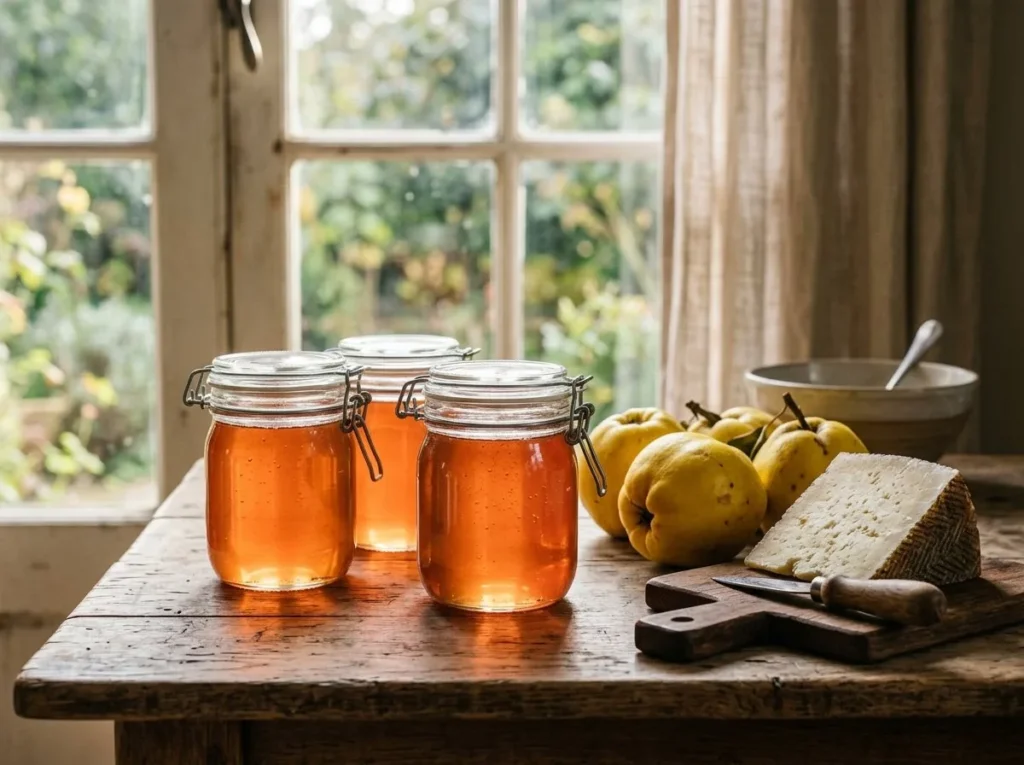
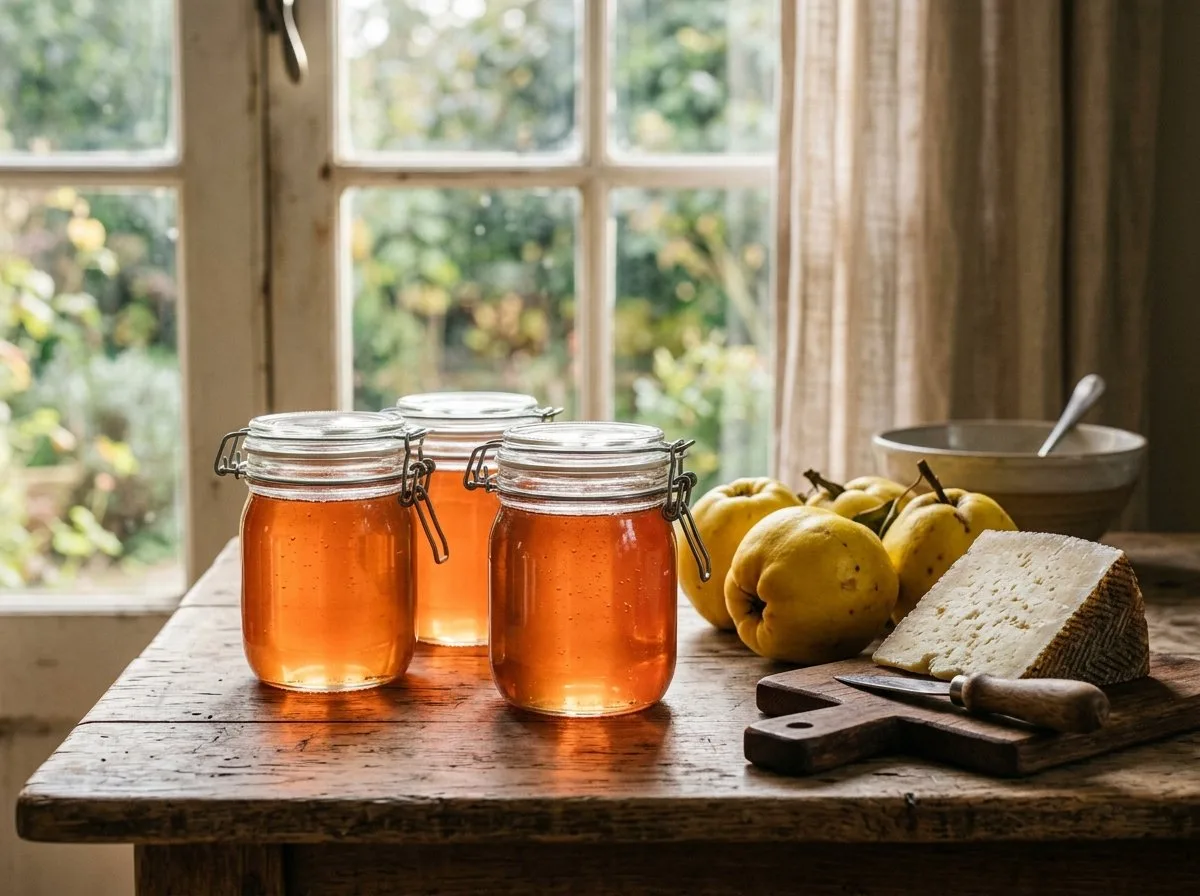
Quince Jelly
Ingredients
- 3 1/2 lb quinces about 1.6 kg, washed and rubbed free of fuzz
- 7 cups water 1.65 liters
- 1/4 cup lemon juice bottled or fresh
- 3 cups granulated sugar 600 g
Method
- Rub the grey fuzz off the quinces with a cloth, then wash them. Cut into small chunks, keeping the skin, core and seeds; they hold a lot of the pectin.
- Put the quince pieces in a large pot with the water. Bring to a boil, cover and simmer for about 25 minutes, until very soft.
- Pour into a damp jelly bag or a colander lined with several layers of damp cheesecloth over a bowl. Let it drip for several hours or overnight without squeezing.
- Measure 3 3/4 cups of juice. Prepare a boiling water canner and sterilise the jars by boiling them for 10 minutes. Chill a few small plates in the freezer.
- Put the juice and lemon juice in a wide pot, bring to a boil and stir in the sugar until dissolved.
- Boil hard, skimming off foam, until the jelly reaches 220°F (104°C), or 8°F above the boiling point of water where you live. Check with the cold plate test: it should wrinkle when pushed.
- Ladle into the hot jars, leaving 1/4 inch headspace. Wipe the rims, add lids, and process in a boiling water bath for 5 minutes (adjust for altitude).
- Cool undisturbed for 24 hours and check the seals.
Notes
Private Notes
Tried this recipe?
Let us know how it was!Why Quince Jelly Changes Colour
One of the nicest surprises with quince is watching the juice change as it cooks. It starts pale gold and slowly deepens to amber, pink or even ruby. This happens because quinces contain tannin-like compounds that turn into red pigments during long cooking. The longer and slower the fruit simmers, the deeper the colour. So if your first batch is pale, it is not a failure; it just cooked more quickly.
Before You Start
- Rub off the fuzz. Ripe quinces are often coated in soft grey down. A dry cloth takes it off easily.
- Don’t peel or core. Most of the pectin lives in the skin and around the seeds.
- Choose ripe, fragrant fruit. Ripe quinces are yellow and smell strongly. A few green ones in the mix actually help the set.
- Use a sharp, heavy knife. Raw quinces are very hard, so cut carefully on a stable board.
Getting a Clear, Firm Set
Let the juice drip through the bag without squeezing, and skim carefully while boiling. Quince is naturally high in pectin, so the jelly usually sets well. If it is still runny after 48 hours, it can be reboiled to 220°F and rejarred. The quantities and processing time here are based on the tested recipe from the National Center for Home Food Preservation, which is the safest way to make shelf-stable jars.
Don’t Throw Away the Pulp
After straining, the soft cooked quince left in the bag still has plenty of flavour. Push it through a sieve to remove seeds and skin, and you have the base for quince paste (membrillo) or a spoonful stirred into porridge or yogurt.
How to Use Quince Jelly
- With Manchego, aged cheddar or blue cheese
- Melted into gravy for roast lamb, pork or duck
- As a glaze for a fruit tart
- Stirred into a vinaigrette for a winter salad
- Simply on buttered toast
For more ways with this unusual fruit, see our quince recipes. Crabapples make a similar no-pectin jelly, too; try our crabapple jelly recipe.
Quick Questions
Where can I buy quinces?
Look in farmers markets, Middle Eastern, Turkish and Greek grocers, and some supermarkets from October to December.
Can I use less sugar?
Not in this recipe. Without added pectin, the sugar is part of what makes it set and keep.
Can I freeze the quince juice?
Yes, for up to a year, then make the jelly whenever you like.