

If you are the kind of person who likes to give homemade presents at Christmas, now is the time to start. This pear chutney recipe needs a few weeks in the jar before it tastes its best, which makes October the ideal month to cook it. By December it has turned mellow, sticky and fragrant, exactly what you want next to a wedge of Stilton or a slice of cold ham.
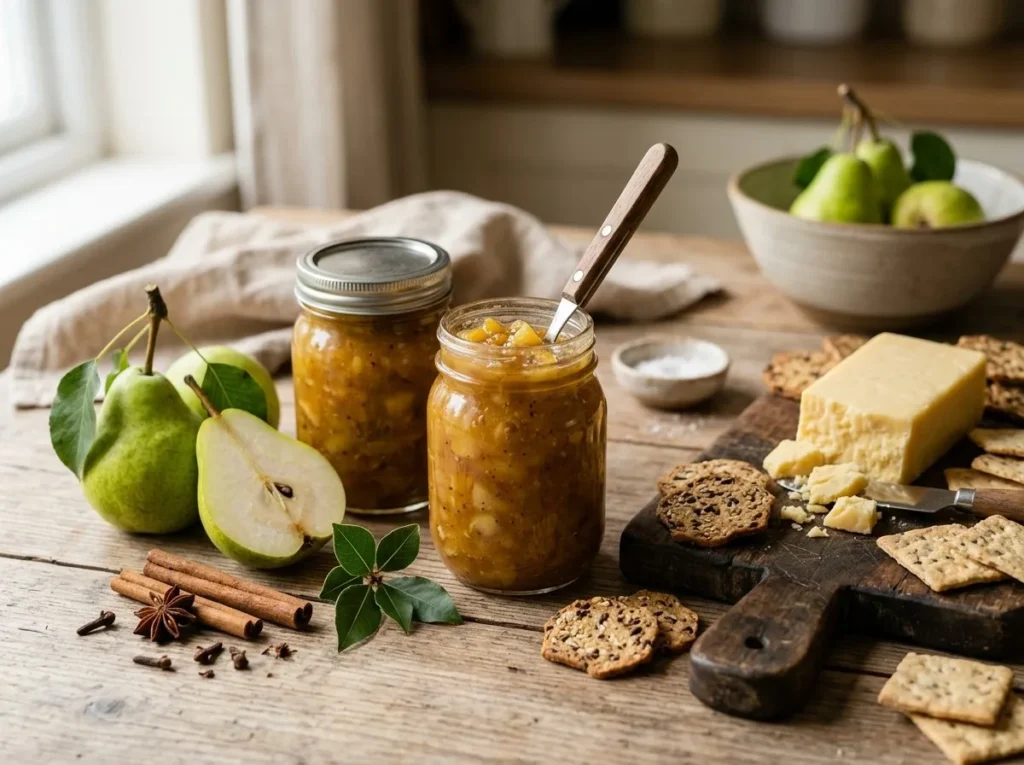
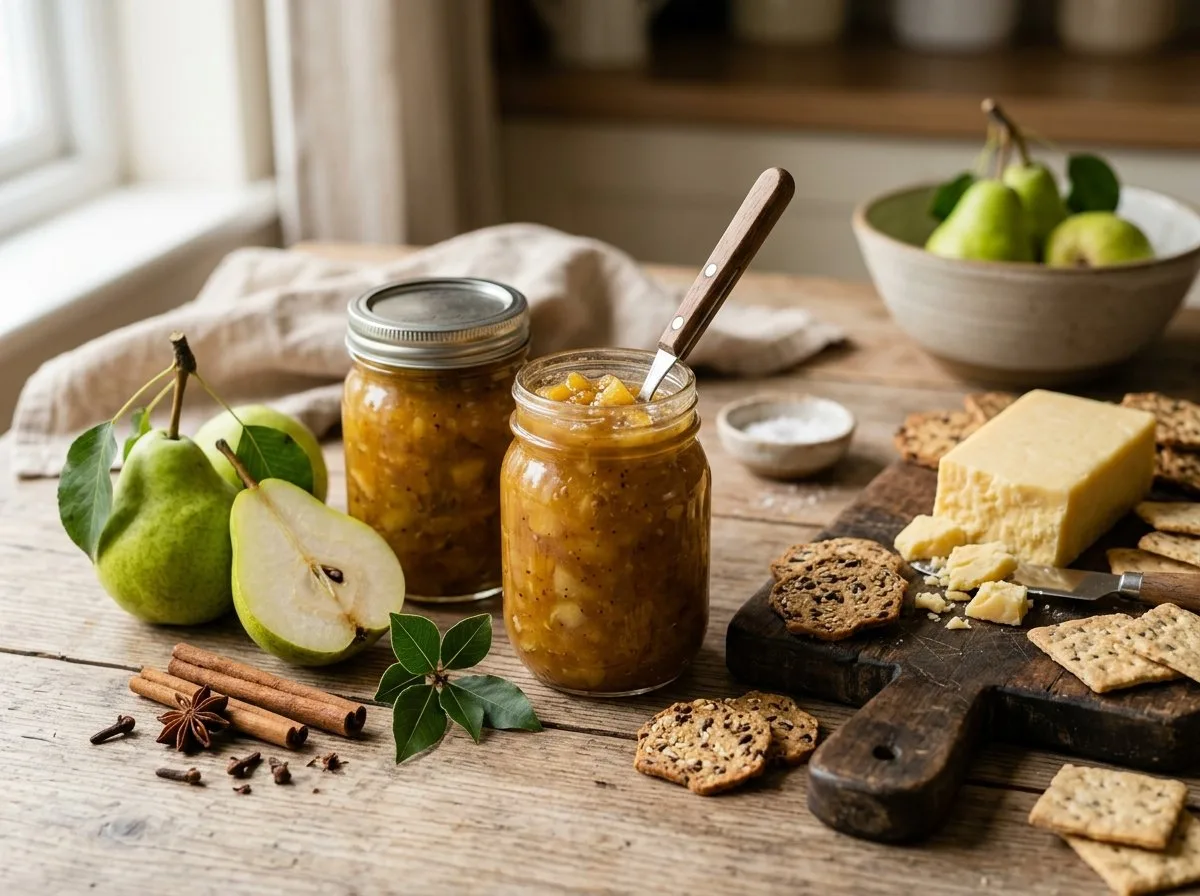
Spiced Pear Chutney
Ingredients
- 1 kg firm pears about 7, peeled, cored and cut into 1 cm dice
- 2 medium onions finely chopped
- 1 cooking apple peeled, cored and chopped (helps it thicken)
- 200 g sultanas or raisins
- 350 g light brown sugar
- 400 ml cider vinegar at least 5% acidity
- 1 tbsp fresh ginger finely grated
- 1 tsp yellow mustard seeds
- 1 tsp ground mixed spice or 1/2 tsp cinnamon and 1/2 tsp allspice
- 1/2 tsp chilli flakes optional
- 1 tsp salt
Method
- Put everything into a large, heavy-based, non-reactive pan (stainless steel or enamel, not aluminium or copper).
- Heat gently, stirring, until the sugar dissolves. Then bring to a simmer.
- Cook uncovered for 1 1/2 to 2 hours, stirring more often towards the end as it thickens so it doesn’t catch.
- It is ready when you can drag a wooden spoon across the bottom of the pan and the channel stays open for a few seconds before filling in.
- Meanwhile sterilise your jars in a 140°C (275°F) oven for 15 minutes, or boil them for 10 minutes. Use lids with a plastic or vinegar-proof lining.
- Spoon the hot chutney into the hot jars, pressing out air pockets, leave 1 cm headspace and seal. For a shelf-stable seal, process in a boiling water bath for 10 minutes.
- Label and store in a cool, dark place for at least 4 weeks before opening, so the flavours can mellow.
Private Notes
Tried this recipe?
Let us know how it was!A Simple Timeline
| When | What to do |
|---|---|
| Early to mid October | Make the chutney and jar it |
| October to November | Leave it alone in a dark cupboard |
| Early December | Taste a jar, label and wrap the rest as gifts |
| Christmas to spring | Eat it with cheese, cold cuts and pies |
Choosing Your Pears
Use pears that are still firm, even slightly under-ripe. Conference and Bosc are ideal, because they hold their shape during the long cook. Very ripe, juicy pears break down into a purée and make a much wetter chutney. A single cooking apple helps too: it adds pectin and a bit of sharpness, so the chutney thickens properly.
Why Chutney Needs Time
Straight from the pan, chutney tastes sharp and vinegary. Over four weeks or more, the vinegar softens and the spices blend into the fruit. It is the same reason jars from the back of the cupboard always taste better than the ones you just made. Be patient with it.
What Can Go Wrong
- Too runny: it wasn’t cooked long enough. Tip it back into the pan and keep simmering until the spoon test works.
- Burnt on the bottom: the heat was too high near the end. Stir often in the last half hour and use a heavy pan.
- Metal lids rusting: vinegar attacks bare metal. Use coated lids or put a disc of waxed paper under the lid.
- Shrinking in the jar: usually a poor seal or jars not filled fully. Fill to about 1 cm from the top.
Making It Look Like a Gift
- Use small 190 to 250 g jars rather than big ones
- Cover the lid with a circle of brown paper or fabric tied with string
- Add a handwritten label with the date and “best after” date
- Pair a jar with a small wedge of cheese and some crackers
Want another chutney for the collection? Our damson chutney is darker and richer, and pairs well with game and strong cheeses.
Good to Know
Can I use less sugar?
A little, but sugar and vinegar are what preserve the chutney. Reduce the sugar by more than a quarter and it should be kept in the fridge.
Can I make it without onions?
Yes. Replace them with an extra apple for a sweeter, fruitier chutney.
Is water bath processing necessary?
Traditional British chutney is simply sealed hot in sterilised jars. For long-term storage and a reliable seal, a 10-minute water bath is the safer option, as recommended by the National Center for Home Food Preservation.