
Danish butter cookies are the blue tin cookies. Yep, that tin, the one at grandma’s that you’d pop open hoping for cookies and find needles and thread instead. Total betrayal, every single time. So let’s make our own and put actual cookies in a tin for once. It’s just butter, powdered sugar, an egg, vanilla and flour, piped into rings and swirls and baked at 350°F till the edges go a little golden. What you get is sandy and crisp and ridiculously buttery, and I’d bet you eat four before they’re even off the rack.
Confession: my very first tray spread into sad, flat puddles. Took me two small changes to fix it, and I’ll walk you through both so your ridges actually stay ridges.
- Total time: 50 minutes (20 prep, 15 chill, 15 bake)
- Makes: about 36 cookies (2-inch)
- Difficulty: Easy, a little piping practice
- Key ingredients: butter, powdered sugar, egg, vanilla, flour, cornstarch
- Make ahead: Yes, the dough freezes and the cookies keep 2 weeks
In this post
- Why Everyone’s Talking About the Blue Tin Again
- Danish Butter Cookies vs. Sugar Cookies
- The Two Tricks That Keep the Ridges Sharp
- Ingredients and Smart Swaps
- Equipment You’ll Need
- How to Make Danish Butter Cookies Step by Step
- Shapes, Sizes and Bake Times
- Butter Cookie Troubleshooting (Flat, Hard, Burst Bags)
- Flavor Variations to Try
- How to Store and Freeze Danish Butter Cookies
- Danish Butter Cookies FAQ
- Before You Start Piping
Why Everyone’s Talking About the Blue Tin Again
Quick bit of trivia. Royal Dansk goes back to 1966 in Helsingør, Denmark, and today it’s part of Kelsen Group, which Ferrero (yes, the Nutella people) bought in 2019. That farmhouse painted on the lid is a real place on the island of Funen, by the way. And the cookies still only come out of two bakeries in Denmark, one in Nørre Snede and one in Ribe. The Royal Dansk page on Wikipedia has the whole family tree if you’re curious.
And this year the tin itself turned into a Christmas decoration. On October 5, 2026, Old World Christmas launched a mouth-blown glass ornament shaped like the blue tin, priced at $27.99 and timed for National Cookie Day on December 4 (here’s the announcement). Searches for homemade Danish butter cookies jumped right after Halloween too. Apparently a lot of us want the real thing on the cookie tray, not just the box.
Here’s my take. The store cookies are nice. Homemade ones, still a little warm, made with really good butter? Not even close.
Danish Butter Cookies vs. Sugar Cookies
People ask me this a lot, since they sort of look like sugar cookies. The difference is all in the ratio. There’s way more butter, a little less sugar, and no baking powder or baking soda whatsoever, so nothing makes them puff. Flat, crisp, “short.” (Old baker word. Means sandy, falls apart on your tongue in the best way.) Shortbread’s softer cousin, basically, and the egg is the reason you can pipe it at all.
In Denmark the wreath shape has its own name, vaniljekranse, or vanilla wreaths. They’re a Christmas thing there, baked in the weeks before the holiday. The butter cookie entry on Wikipedia covers the wider family, from Danish to Dutch to the Indian nankhatai.
The Two Tricks That Keep the Ridges Sharp
Remember my puddle cookies? This is what fixed them.
First fix: I swapped granulated sugar for powdered. Regular sugar melts as it bakes and the dough just runs. Powdered sugar melts into the butter right away, and it’s already got a bit of cornstarch mixed in, so the shapes hold and the crumb turns out super fine. I toss in 2 more tablespoons of cornstarch too, because why not, it makes them even more tender.
Second fix: the freezer. Once they’re piped, the whole tray goes in for 15 minutes (30 in the fridge if your freezer’s packed with Thanksgiving stuff like mine). Cold butter needs longer to melt in the oven, so the outside firms up before the cookie has time to slouch. Yes, it’s one more step. You’ll stop complaining the minute you see those crisp little ridges.
One more thing about butter temperature. “Softened” should mean about 65°F (18°C), cool to the touch and leaves a dent when you press it. Warmer than that and the dough goes greasy. King Arthur’s guide to creaming butter and sugar explains why that matters so much.
Ingredients and Smart Swaps
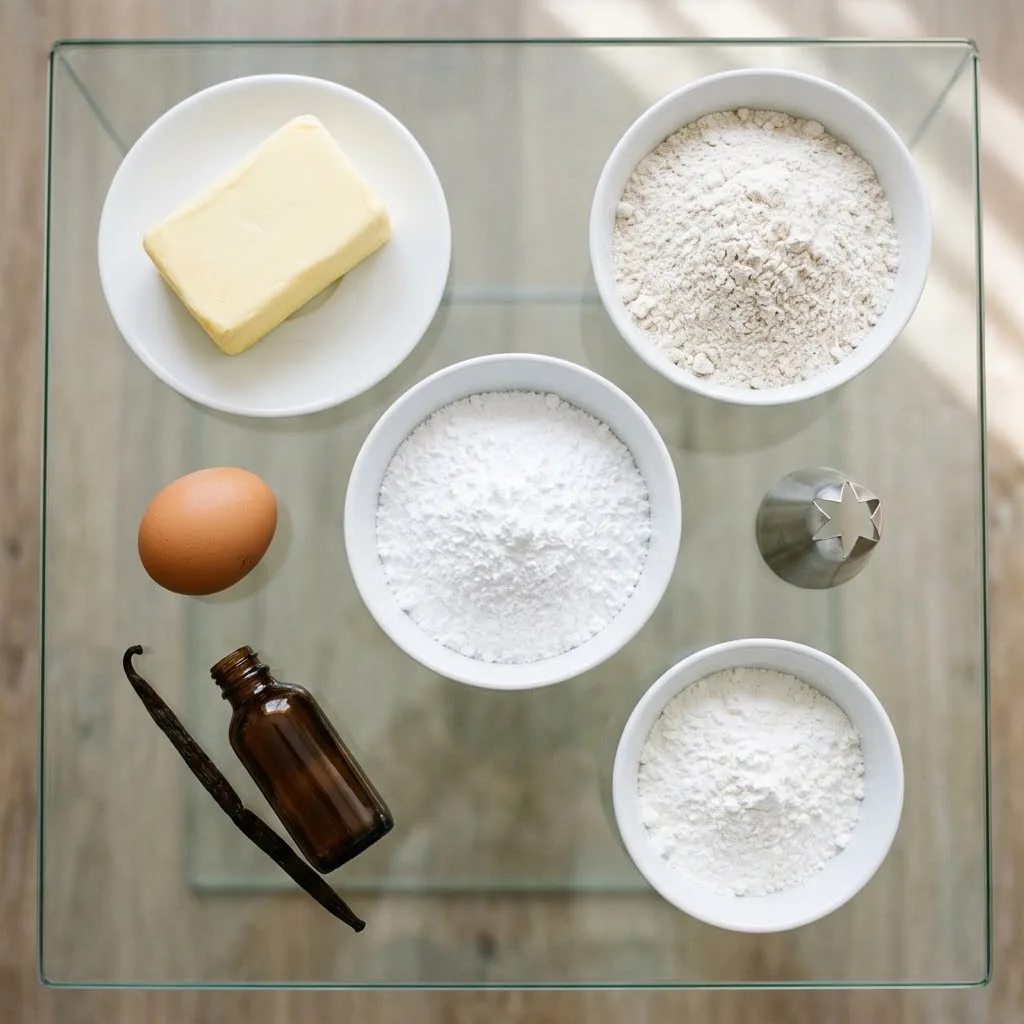
Short shopping list. Since butter is pretty much the entire flavor though, this is the place to splurge a little. Here’s the lineup and what you can swap if you’re missing something:
| Ingredient | Amount | Swap | What changes |
|---|---|---|---|
| Unsalted butter | 1 cup (227 g) | European-style butter (82% fat) | Richer, more “tin cookie” flavor |
| Powdered sugar | 2/3 cup (80 g) | 1/2 cup (100 g) granulated | Crunchier, spreads more, less defined ridges |
| Egg | 1 large, room temp | 2 egg yolks | Richer, slightly more crumbly |
| Vanilla extract | 2 tsp | Seeds of 1 vanilla bean, or 2 tsp vanilla paste | Little black specks, stronger aroma |
| Flour + cornstarch | 2 1/4 cups (280 g) + 2 tbsp (16 g) | Replace 1/2 cup flour with 1/2 cup (50 g) almond flour | Nuttier, closer to Danish vaniljekranse |
I always go unsalted and add the salt myself. Salted butter is all over the place depending on the brand, and in a cookie this plain, too much salt is the first thing you’ll taste.
Equipment You’ll Need
A hand mixer is fine, a stand mixer is nicer. Then two sheet pans with parchment and a heavy-duty piping bag with a big open star tip. Mine’s a Wilton 1M, but an Ateco 827 does the same job. Skip the flimsy disposable bags, this dough is thick and I’ve had one split right down the side mid-squeeze. Piping not your thing? A cookie press works too.
How to Make Danish Butter Cookies Step by Step
- Cream it. Butter, powdered sugar and the salt into the bowl, then a couple minutes on medium. You want it pale and fluffy, kind of like frosting.
- Egg and vanilla. In they go, beat it smooth, then scrape down the bowl (there’s always a sneaky butter blob at the bottom).
- Flour time. Whisk flour and cornstarch together in another bowl, tip it in, mixer on low. Stop the second the dry streaks are gone. I mean it, extra mixing = tough cookies.
- Load the bag. Spoon the dough into your bag with the star tip, but only half full. More than that and your hand will hate you by tray two.
- Pipe. Bag straight up and down, tip about half an inch off the parchment, then squeeze out 2-inch rings, swirls or little S shapes with 1 1/2 inches between them. Shower them with coarse sugar.
- Chill. Freezer, 15 minutes. (Fridge is fine too, just double it.) Meanwhile flip the oven on, 350°F or 175°C.
- Bake, one pan at a time, for 12 to 15 minutes. I take them out once the edges and the bottoms have gone light gold and the tops are still on the pale side.
- Cool. Leave them be on the pan for 5 minutes, then rack. Hot ones feel soft. Underdone? Nope. Wait. They crisp.
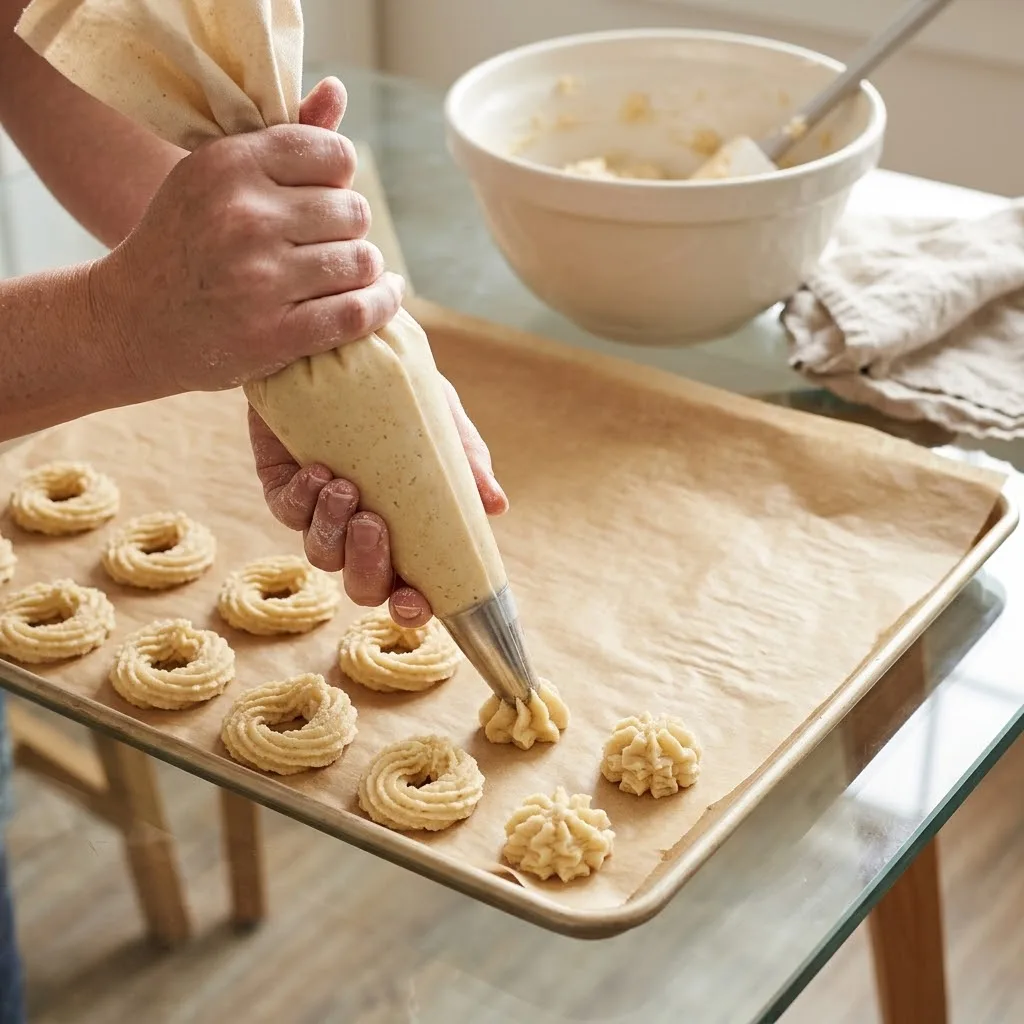
Wobbly piping on the first few? Totally normal, mine looked like worms for a while. Scrape the bad ones back into the bag and go again. They all taste the same anyway, and the wonky ones are the cook’s share.
Danish Butter Cookies
Equipment
- Stand or hand mixer
- 2 baking sheets lined with parchment
- Heavy-duty piping bag
- Large open star tip (Wilton 1M or Ateco 827)
Ingredients
- 1 cup unsalted butter (227 g) softened to about 65°F / 18°C
- 2/3 cup powdered sugar (80 g)
- 1/4 teaspoon fine salt
- 1 large egg room temperature
- 2 teaspoons vanilla extract (10 ml) or vanilla bean paste
- 2 1/4 cups all-purpose flour (280 g) spooned and leveled
- 2 tablespoons cornstarch (16 g)
- 2 tablespoons coarse or sanding sugar (25 g) for sprinkling
Instructions
- Beat the softened butter, powdered sugar and salt on medium speed for about 2 minutes, until pale and fluffy.
- Add the egg and vanilla and beat until smooth. Scrape down the bowl.
- Whisk the flour and cornstarch together, add to the bowl and mix on low just until no dry streaks remain.
- Spoon the dough into a sturdy piping bag fitted with a large open star tip, filling it only halfway.
- Pipe 2-inch rings, swirls or S shapes onto parchment-lined baking sheets, 1 1/2 inches apart. Sprinkle with coarse sugar.
- Freeze the piped cookies for 15 minutes (or refrigerate 30 minutes). Heat the oven to 350°F (175°C).
- Bake one sheet at a time for 12 to 15 minutes, until the edges and bottoms are light golden and the tops are still pale.
- Cool on the sheet for 5 minutes, then move to a wire rack to cool completely. The cookies crisp as they cool.
Notes
Nutrition
Shapes, Sizes and Bake Times
Different shapes need slightly different times. Here’s the chart I keep taped inside a cupboard door:
| Shape | Size | Bake at 350°F | How many |
|---|---|---|---|
| Ring / wreath | 2 inches | 12-14 min | About 36 |
| Rosette swirl | 1 1/2 inches | 11-13 min | About 48 |
| S or finger | 2 1/2 inches long | 12-14 min | About 40 |
| Big ring | 3 inches | 15-17 min | About 20 |
What you’re after: pale on top, golden around the edge. Let the whole thing go brown and you lose that pure butter taste, it turns kind of toasty.
Butter Cookie Troubleshooting (Flat, Hard, Burst Bags)
Stuff goes wrong. Here’s what usually happened and how I’d fix it:
| Problem | Likely cause | Fix |
|---|---|---|
| Cookies spread and lost ridges | Butter too warm, or skipped chilling | Chill piped cookies 15 min; use butter at 65°F |
| Dough too stiff to pipe | Butter too cold, or too much flour | Let dough sit 10 min; spoon and level flour |
| Piping bag burst | Thin bag, too much dough | Use a thick bag, fill only halfway |
| Hard, not tender | Overmixed after flour, or overbaked | Mix flour on low just until combined; pull at golden edges |
Okay, about sneaking a spoonful of dough. I get it, believe me. But raw flour and raw eggs can both carry nasty bacteria, and the FDA says to skip eating raw dough. So hold out for the baked ones. Twelve minutes, that’s all.
Flavor Variations to Try
Got the plain ones nailed? Good. Now we play.
Almond is my pick, hands down. Swap out 1/2 cup of flour for almond flour, splash in 1/4 teaspoon almond extract, done, you’ve pretty much got Danish vaniljekranse. Chocolate fans: melt 4 oz dark chocolate, dip half of each (cooled!) cookie, park them on parchment till they set. Orange zest, about a teaspoon, is my winter move. Smells like Christmas morning, no joke.
For a holiday tray I sometimes go a little extra. Red or green gel color in half the dough. A halved candied cherry pressed on top before baking, very retro, very cute. Or no sugar on top at all and a thin drizzle of royal icing once they’re cool.
How to Store and Freeze Danish Butter Cookies
Good news, these last. That’s the whole reason they come in gift tins. Counter, tin with a tight lid: up to 2 weeks and still crisp. Just keep soft cookies out of that tin, they give off moisture and your crunchy ones go limp overnight. Freezer: 3 months in a zip bag. Pull them out 20 minutes before you want them and they’re fine.
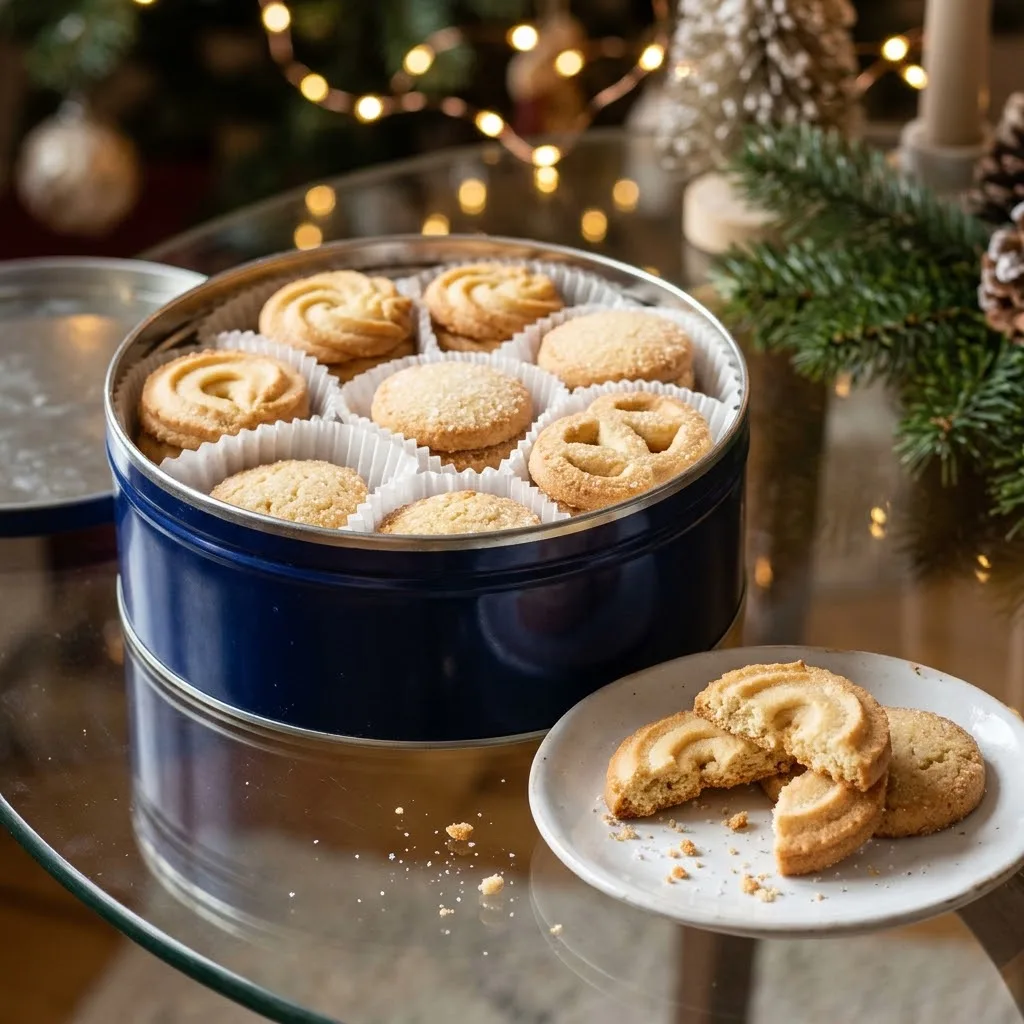
Dough freezes too, which saves me every December. Pipe, freeze the tray till they’re rock hard, bag them up. When you want cookies, bake straight from frozen with an extra minute or two. Went soft anyway? 3 or 4 minutes at 350°F and they snap again.
Building a cookie box? Mix these with something soft and chewy, like banana pudding cookies. Crunchy next to chewy always wins. For Thanksgiving, I’d add a few pecan pie cookies with their gooey caramel middles.
Danish Butter Cookies FAQ
Danish butter cookies or shortbread, what’s the difference?
Honestly? Mostly the egg. Shortbread sticks to butter, sugar and flour and gets pressed into a pan. Add an egg and a good splash of vanilla and you’ve got a dough soft enough to pipe, which is the Danish one. Lighter, crisper. Scottish shortbread is the denser, crumblier sibling.
My dough is too stiff to pipe. Help?
Cold butter or a heavy hand with the flour, almost always. Give the dough 10 minutes on the counter and squeeze from the top of the bag with your whole fist, not your fingertips. Next batch, weigh the flour (280 g). Scooping packs it in.
No piping bag?
Cookie press, if you’ve got one. If not, roll the dough into a log, wrap it, fridge it an hour, slice 1/4-inch coins. No ridges, same taste, and nobody’s ever turned one down at my house.
How long do they keep?
Two weeks-ish in a tin on the counter, three months frozen. Store them alone, though. Soft cookies in the same tin will make them limp.
Before You Start Piping
Pipe one test cookie and bake it alone. Five minutes of patience tells you if your oven runs hot or if the dough needs a little more chill, before you’ve filled four trays.
I really hope these end up on your Christmas table this year. If you bake them, come back and leave a comment with the shape you went with, and a star rating on the recipe card helps other bakers find it. Pin it now so it’s ready for cookie swap season. And if you caught the piping bug, try these little iced gems next.