
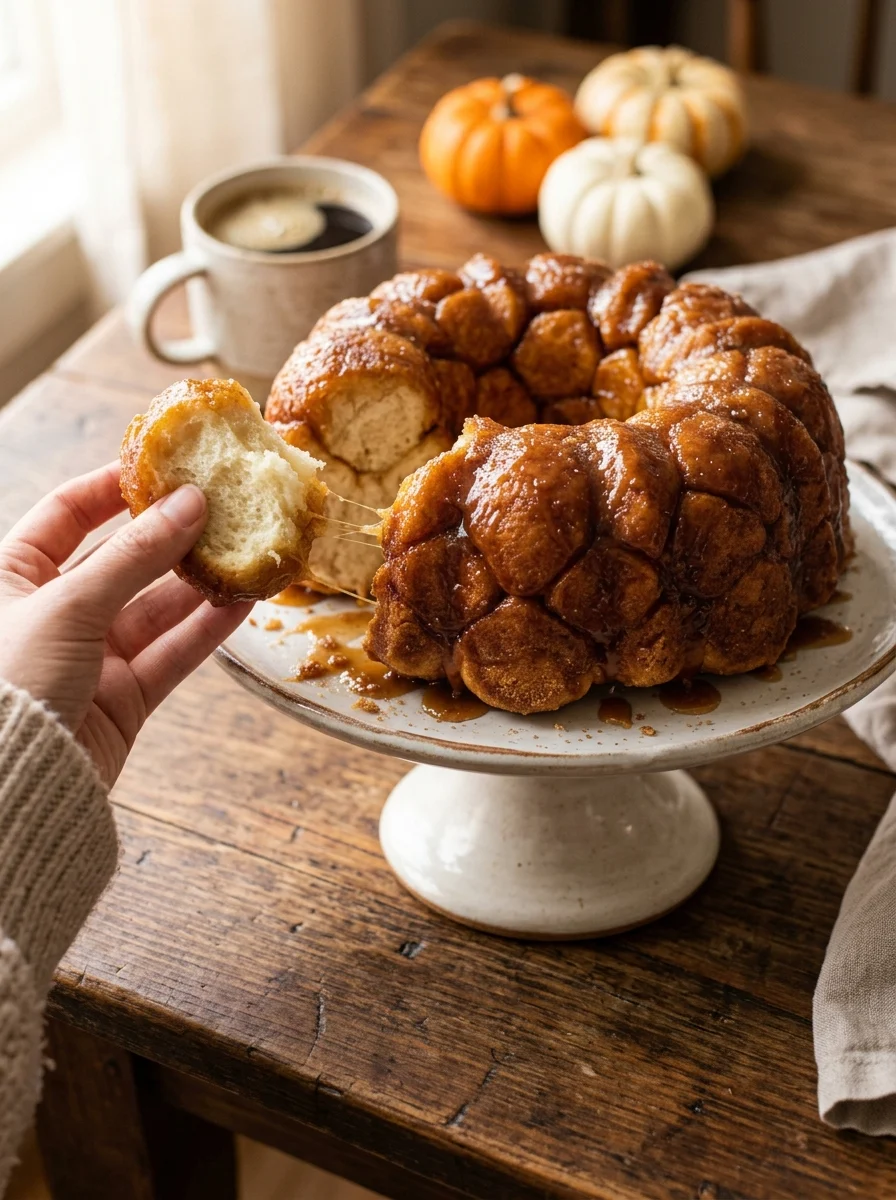
Monkey bread. Sticky, buttery, a little bit ridiculous, and it vanishes in about ten minutes every time I set one down. Never had it? Okay so imagine a bundt pan crammed with small balls of sweet dough, every one rolled through cinnamon sugar, baked sitting in brown sugar butter, then turned out upside down so the caramel slides down the sides. You don’t cut it. You tear a piece off with your fingers (that’s probably where the name comes from) and then you go back for one more. Then one more.
I make mine from scratch. Not because canned biscuits are bad, they’re fine and I’ll show you how to use them further down, but a soft yeast dough gives you that fluffy, tear-apart inside biscuits never quite manage. It isn’t hard. It mostly sits there rising while you drink your coffee.
Funny timing, too. Pinterest searches for “pull apart monkey bread” shot up something like 400% in a single week at the tail end of September 2026, and they’re about three times where they were this time last year. So apparently half of America had the same idea I did.
RECIPE
Pull Apart Monkey Bread (From Scratch)
Ingredients
- 1 cup whole milk warmed to about 110°F / 43°C
- 1/4 cup water warm
- 1/4 cup granulated sugar
- 2 1/4 tsp instant or active dry yeast 1 packet
- 2 large eggs room temperature
- 4 tbsp unsalted butter melted and slightly cooled
- 3 3/4 cups all-purpose flour 470 g, plus a little for kneading
- 1 1/2 tsp fine salt
- 1 cup granulated sugar
- 1 tbsp ground cinnamon
- 1/2 cup unsalted butter melted
- 1/2 cup unsalted butter
- 3/4 cup light brown sugar packed
- 1 tsp vanilla extract
- 1 pinch salt
- 1 cup powdered sugar
- 2 tbsp milk
Method
- Stir the warm milk, water, 1 tablespoon of the sugar and the yeast together. If using active dry yeast, wait 5 to 10 minutes until foamy.
- Add the eggs, melted butter, remaining sugar, salt and 3 cups of the flour. Mix, then add the rest of the flour a little at a time until the dough pulls away from the bowl.
- Knead 6 to 8 minutes by machine (8 to 10 by hand) until smooth and slightly tacky. Cover and let rise in a warm spot until doubled, 1 to 1 1/2 hours.
- Butter the bundt pan very well, including the center tube.
- Mix the 1 cup sugar and cinnamon in a bowl. Put the 1/2 cup melted butter in a second bowl.
- Punch the dough down and pat it into an 8 x 8 inch square. Cut it into 64 pieces (8 x 8) and roll each into a ball about 1 inch wide.
- Dip each ball in butter, roll in cinnamon sugar and layer loosely in the pan. Sprinkle any leftover cinnamon sugar on top.
- Melt the 1/2 cup butter and brown sugar together, stir until smooth, then add the vanilla and salt. Pour evenly over the dough balls.
- Cover and let rise until puffy and about 1 inch below the rim, 40 to 50 minutes. Heat the oven to 350°F (175°C).
- Set the pan on a foil-lined sheet and bake 30 to 35 minutes, until deep golden and the center reads 190°F (88°C). Tent with foil after 20 minutes if the top darkens fast.
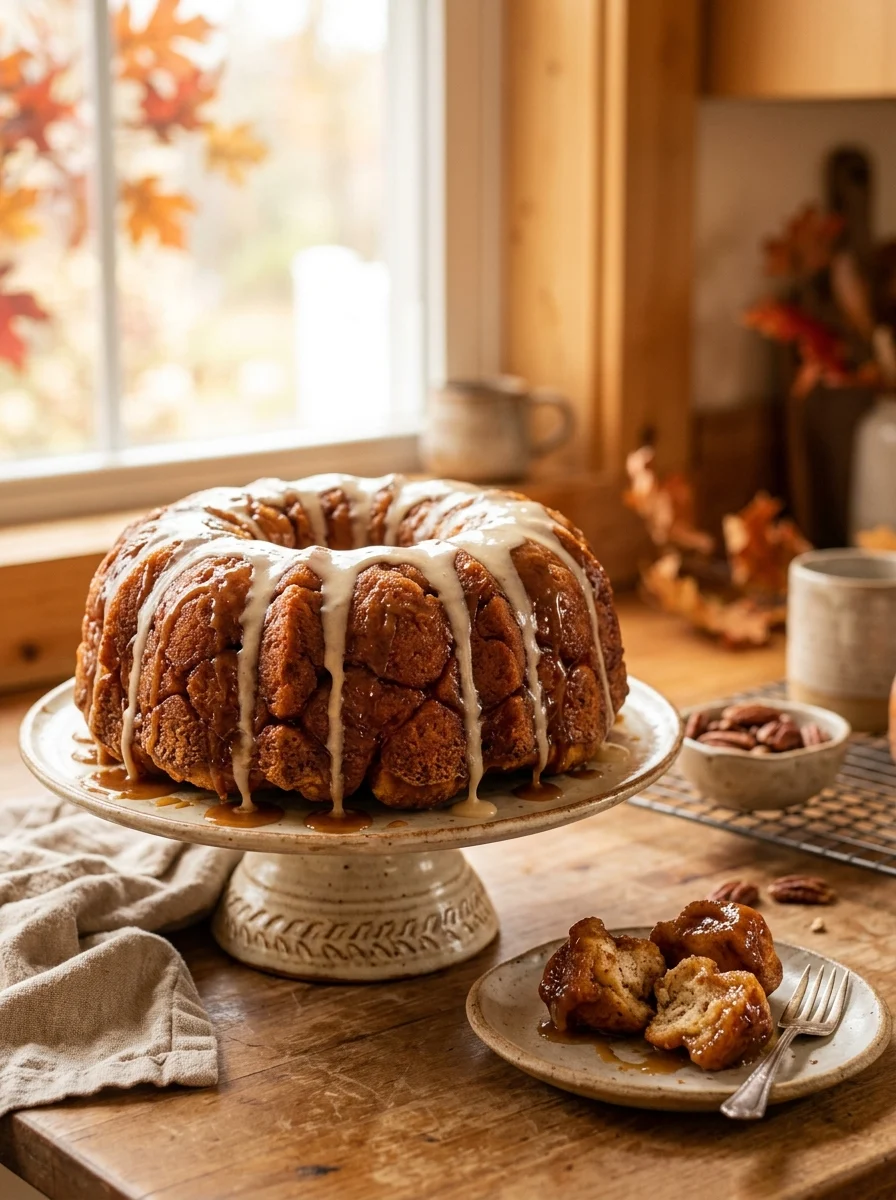
- Cool in the pan exactly 5 minutes, then flip onto a large plate. Scrape any caramel left in the pan over the top. Drizzle with glaze if you like and serve warm.
Notes
Private Notes
Tried this recipe?
Let us know how it was!So where did monkey bread even come from?
The name is a bit of a mystery, which I kind of love. One camp says it’s because you pick at it with your fingers like a monkey, the other camp points at the knobbly monkey puzzle tree, and as far as I can tell nobody has ever settled it.
The bread itself is way older than the name though. Most people tie it to arany galuska, a Hungarian “golden dumpling” cake, buttery balls of dough baked together, that shows up in Hungarian books as far back as the 1880s. Hungarian immigrants (a lot of them Jewish families) brought it to the States, bakeries picked it up, and by the 50s you’d find it in every ladies magazine and church cookbook going. Nancy Reagan served it at White House Christmases in the 80s and after that, yeah, it was everywhere.
Scratch dough vs. a can of biscuits
Short answer, both work. Longer answer: they turn out pretty different, so here’s the quick rundown.
| From scratch (this recipe) | Canned biscuits | |
|---|---|---|
| Texture | Soft, fluffy, a bit chewy, almost brioche | Flaky, a little salty, biscuit-y |
| Hands-on time | About 35 minutes | About 15 minutes |
| Rising time | Around 2 hours total | None |
| Night-before prep | Yes, and it’s great | Skip it, they go gummy |
| Best for | Weekend or holiday brunch | A last-minute craving |
I grew up on the biscuit version and I still have a soft spot for it. But the first time I did it with a real yeast dough my sister stood at the counter and ate like a third of the pan and kept asking what I changed. The middle stays all pillowy for hours, and the caramel sinks down into the bread instead of just coating the outside.
Rolling the little dough balls
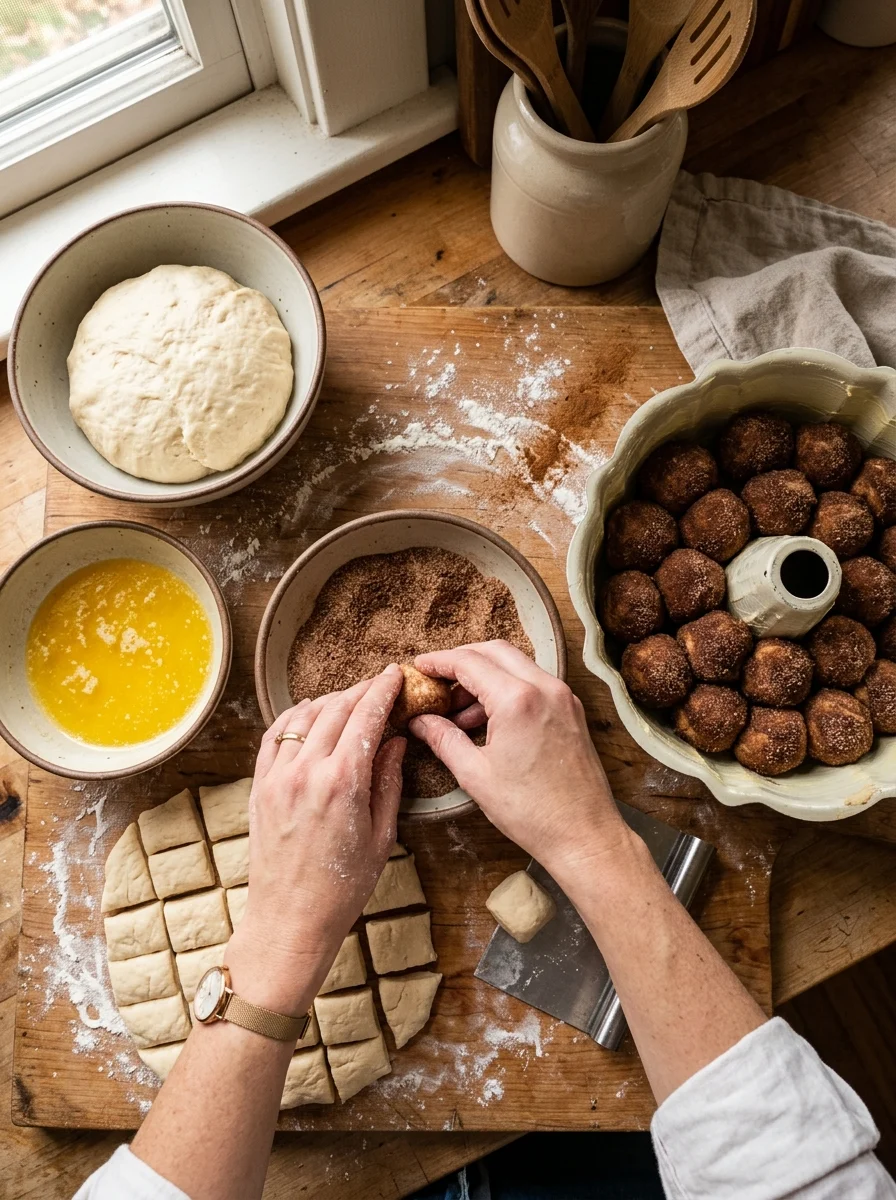
Once the dough has doubled, I pat it out into a squarish 8 inch shape and cut it 8 by 8, so 64 little pieces. Keeping them roughly the same size is kind of a big deal, the big ones stay raw in the middle and the tiny ones go dry and hard, so even-ish pieces means even baking.
Two bowls, side by side. Butter left, cinnamon sugar right, one hand for each (it took me years to figure that out, before that I always ended up with gloopy sugar hands). And don’t squash the balls into the pan, just drop them in loose, they need room to puff and squish into each other on the second rise.
Wait five minutes, then flip it
Here’s where I messed up my very first one, and where I think most people do. I was so excited that I flipped it the second it came out of the oven and the caramel, still basically liquid, ran off the plate and onto the counter and then the floor. The next time I overcorrected, waited a good fifteen minutes, and the sugar had already started to harden and cemented the whole bottom layer into the pan.
So set a timer. Five minutes. Put a big plate on top (bigger than the pan), grab both with oven mitts and turn it over in one go. Don’t hesitate halfway. If a few pieces stay stuck, no big deal: pick them out and tuck them back on top with whatever caramel is left in the pan.
Not sure it’s baked through? Stick a thermometer into the thickest part. You want about 190°F. King Arthur Baking tested this and found most yeast breads and soft rolls are done right around there, which saves you from the classic gooey-raw middle hiding under a perfectly brown top.
My night-before trick
Okay this part is why it became a thing in our house. The night before, I shape it all, pour the caramel on, throw plastic wrap over the pan and shove it in the fridge. It’ll sit there up to 16 hours no problem. Cold yeast is lazy yeast, so the second rise basically happens on its own while everybody’s asleep.
Morning of, I pull the pan out, turn on the oven and let it sit on the counter maybe 45 min to an hour till it looks puffy again, then bake it like normal plus about 5 minutes. Christmas, Thanksgiving, whatever, by the time the kids come down the house smells amazing and I look a lot more put together than I am.
A few fall twists we love
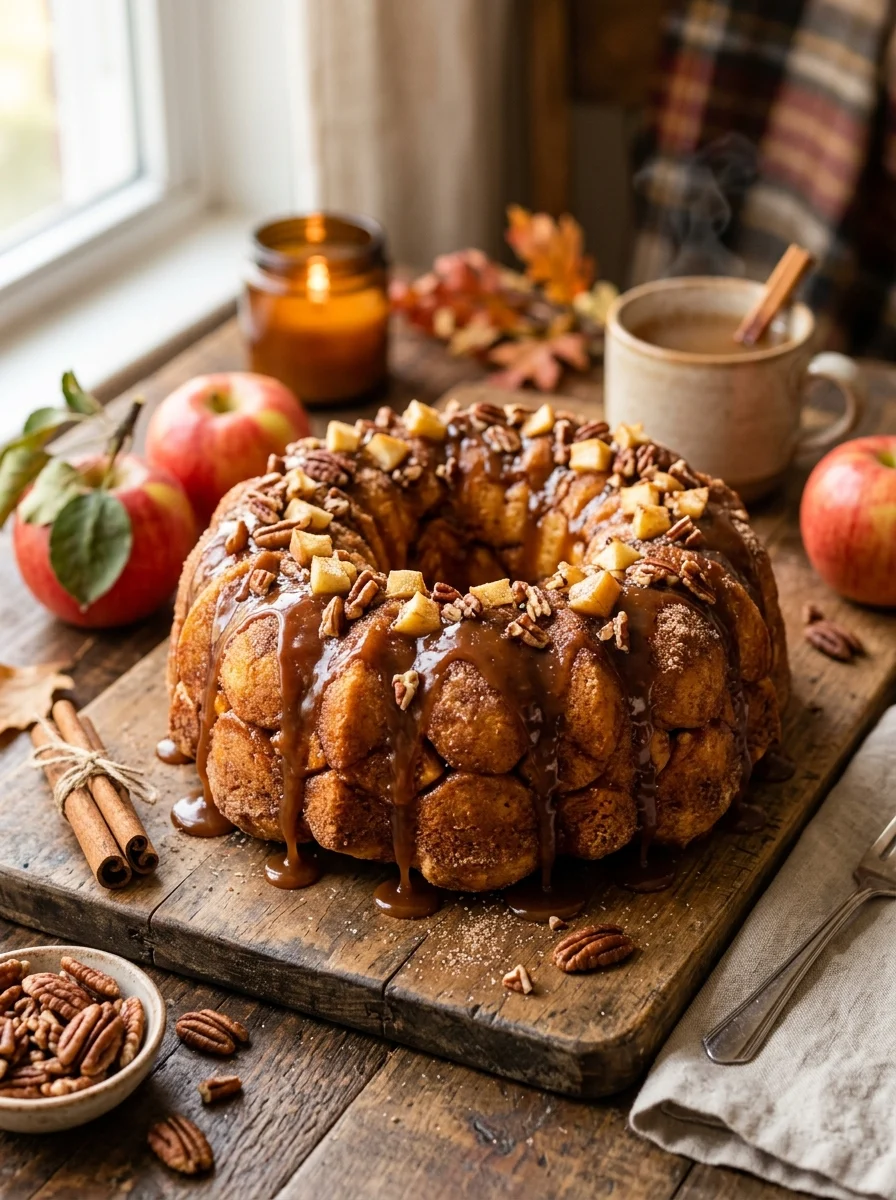
My kids vote for the caramel apple one every single October. I peel and dice one big apple really small, toss it with a spoonful of the cinnamon sugar, and scatter the bits between the layers of dough as I go. Then a little extra caramel over the top when it comes out. That’s it.
If you’re a pumpkin spice person (no judgment, I am too), swap the cinnamon in the coating for a tablespoon of pumpkin pie spice. I sometimes stir a spoon of my homemade pumpkin spice syrup into the glaze, which is a bit much, but in a good way.
My husband likes pecans in everything, so on his birthday I throw a handful of toasted chopped pecans into the bottom of the pan before the dough goes in. After the flip they end up on top, sticky and caramel-coated. And when I want something less sweet, I beat a couple ounces of soft cream cheese into the glaze. Tangier. Grown-up. Still disappears.
If you somehow have leftovers
We rarely do, but okay. It’s at its best the day you bake it. Still, a covered plate on the counter keeps it decent for a couple of days, and 15 or 20 seconds in the microwave brings the caramel back to life. I’ve also wrapped chunks in plastic and foil and frozen them for a month or two; they thaw on the counter, then I warm them in a low oven, around 300°F, for ten minutes or so.
What I would bake next
If you’re into the cinnamon and caramel combo, my pumpkin cinnamon rolls use pretty much the same soft dough. No time for yeast at all? Then grab the caramel apple pie dump cake, which is ten minutes of work, tops. And on a slow weekend I like putting this out with a pile of vanilla cinnamon French toast and calling it brunch.
A few questions people ask me
Why is it called monkey bread?
Honestly nobody knows, and I’ve read way too much about it. My grandma always said it was because you pick at it like a monkey would, while other folks are convinced it’s because the thing looks like a monkey puzzle tree, which, okay, maybe if you squint. I’m sticking with grandma.
Do I really need a bundt pan?
Nope, I didn’t own one for years and we still had monkey bread most Christmases, I just piled the dough into a 9 x 13 dish or split it between two loaf pans and started peeking at it around 22 minutes since the shallower layers cook quicker.
Mine came out doughy in the middle, what happened?
Almost always it just wanted another five or ten minutes, or the dough balls were cut on the big side. I stopped trusting the color of the top a long time ago and now poke a thermometer in until it says about 190°F, laying a loose sheet of foil on top if it’s browning faster than the inside is cooking.
Can it really sit in the fridge overnight?
Yep, and honestly that’s my default. Shape, caramel, cover, fridge, done. Next day I let it sit out about an hour while the oven warms up and give it a few more minutes in the oven than usual.
And if I use canned biscuits, how many?
I use two of the big 16.3 oz tubes, sixteen biscuits in all. Quarter each one and you’ve got just the right amount for a regular bundt pan.
One last thing: put a foil lined sheet pan on the rack under it. A bit of caramel always bubbles over and trust me, tossing foil is a whole lot better than scraping burnt sugar off your oven floor on a Sunday morning.