
Here’s how to make chimichurri sauce in about 15 minutes, no blender needed: chop a big bunch of flat-leaf parsley and a few garlic cloves really fine, stir in dried oregano, red pepper flakes, a splash of salty hot water, red wine vinegar and good olive oil, then let it sit 20 minutes. That’s it. Bright, garlicky, a little sharp, and honestly it makes a cheap steak taste like you went out for dinner.
I put it on way more than steak, though. Eggs, potatoes, roast chicken, even a plain bowl of rice on a lazy night. Once you’ve got a jar in the fridge you start looking for excuses.
- Total time: 35 minutes (15 prep, 20 rest)
- Makes: about 1 cup (8 servings of 2 tablespoons)
- Difficulty: Easy, just knife work
- Key ingredients: parsley, garlic, dried oregano, red wine vinegar, olive oil
- Make ahead: Yes, it’s better after a few hours
In this post
- Wait, Why Is Chimichurri Suddenly Everywhere?
- Where Chimichurri Comes From
- What You Need to Make Chimichurri
- How to Make Chimichurri Sauce Step by Step
- Hand-Chopped vs. Food Processor
- How Long Should Chimichurri Sit Before Using?
- What to Put Chimichurri On
- Red Chimichurri and Other Variations
- How Long Does Homemade Chimichurri Last?
- Chimichurri Mistakes I’ve Made So You Don’t Have To
- Chimichurri FAQ
- One Last Tip
Wait, Why Is Chimichurri Suddenly Everywhere?
You’re not imagining it. Google’s 2025 Year in Search put chimichurri at number 3 among the world’s trending recipes, right behind hot honey and Marry Me Chicken. Then this year it went full mainstream. In March 2026 the chicken chain Starbird rolled out a whole chimichurri menu, with wings, fries and a chicken sandwich (here’s the announcement).
And in August, a small Florida brand called Chimi sold out its whole first run of 2,500 jars before schedule, at almost $15 a jar. Their press release cites Tastewise data saying about one in four U.S. consumers now eat chimichurri, up 13% in a year. Fifteen bucks, though! A homemade jar costs you a bunch of parsley and some oil. Let’s do that instead.
Where Chimichurri Comes From
It’s Argentine, first and foremost, and you’ll find it all over Uruguay too, sitting on the table at every asado (that’s the big weekend barbecue) next to the grilled beef and chorizo. Nobody’s 100% sure where the name comes from. One popular theory points to Basque immigrants and the word tximitxurri, roughly “a mix of things.” The “Jimmy’s curry” story you might’ve heard? Pretty much a myth, according to the chimichurri page on Wikipedia.
What matters for us is the classic version: parsley, garlic, oregano, chili, vinegar and oil. That’s chimichurri verde. There’s also a red one, chimichurri rojo, with paprika and more chili, which I’ll show you further down.
What You Need to Make Chimichurri
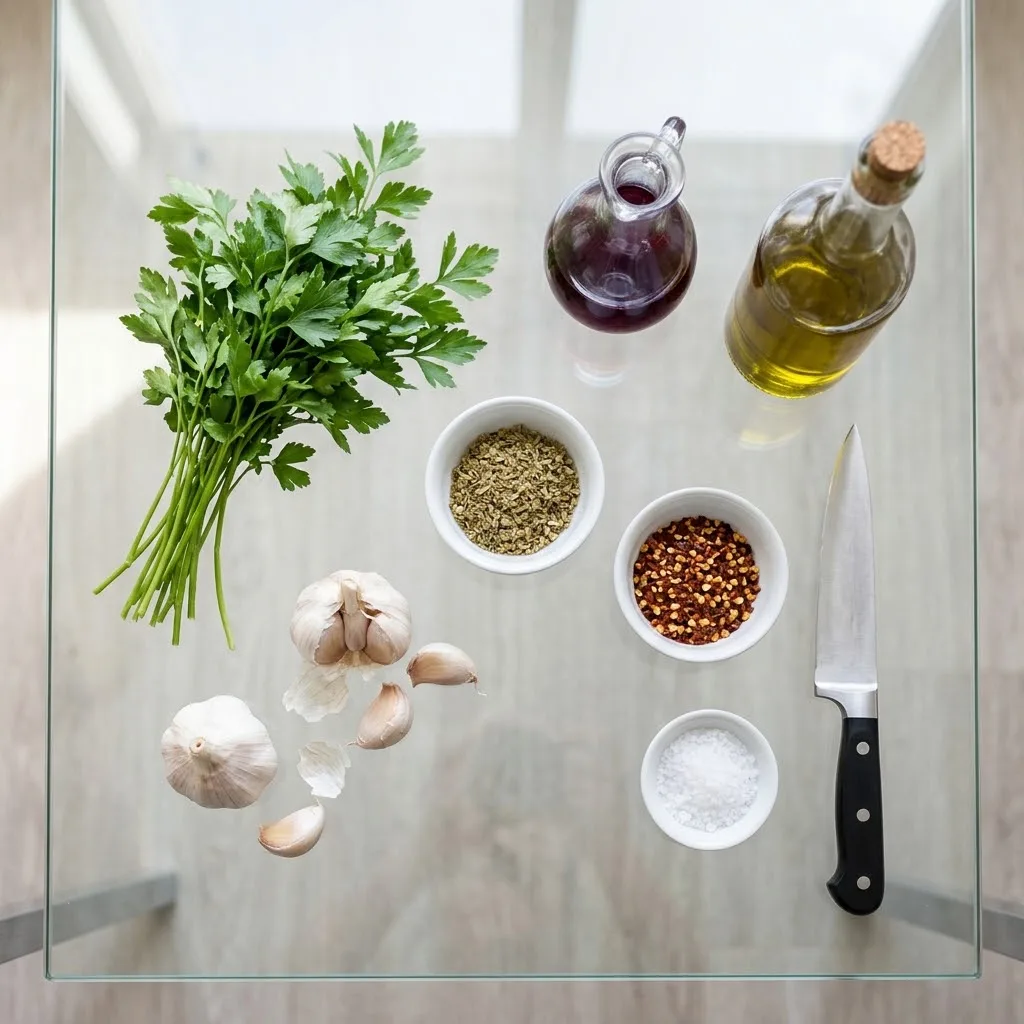
Seven things and some salt. Since you’re basically tasting raw parsley and raw oil, buy the perky bunch, not the floppy one hiding in the back. Swaps, if you’re short on something:
| Ingredient | Amount | Swap | What changes |
|---|---|---|---|
| Flat-leaf parsley | 1 packed cup, chopped (about 1 large bunch, 30 g) | Half parsley, half cilantro | Brighter and more Mexican-leaning, not traditional |
| Garlic | 4 cloves, minced | 2 cloves for a milder sauce | Less bite, still good |
| Dried oregano | 2 tsp | 2 tbsp fresh oregano, chopped | Greener, more floral |
| Red wine vinegar | 1/4 cup (60 ml) | Sherry vinegar, or half lemon juice | Rounder, or fresher and more citrusy |
| Extra virgin olive oil | 1/2 cup (120 ml) | Half olive oil, half sunflower oil | Milder, closer to what many Argentine homes use |
| Red pepper flakes | 1/2 tsp | 1 small fresh red chili, minced | Fruitier heat |
Only curly parsley at your store? Fine, it’ll work. It’s a touch bitter and a bit scratchy on the tongue, so just chop it extra small. Flat-leaf is the one to grab if you’ve got the choice.
How to Make Chimichurri Sauce Step by Step
- Salt water first. 1/2 teaspoon kosher salt into 2 tablespoons hot water, stir till it’s gone. In Argentina this is called salmuera, and it spreads the salt around way better than sprinkling it in dry. Takes the raw edge off the garlic too.
- Parsley. Get it bone dry (wet parsley = murky sauce, learned that one the hard way). Strip off the thick stems. Chop fine, but quit before it goes mushy. Little flecks, not paste.
- Garlic. Four cloves, minced as small as your patience allows.
- Everything in the jar. Parsley, garlic, oregano, chili flakes, black pepper. Salt water and vinegar go in next, quick stir, then the oil.
- Wait. 20 minutes, minimum, on the counter. Go set the table or something. Then taste, maybe more salt, maybe a splash more vinegar.
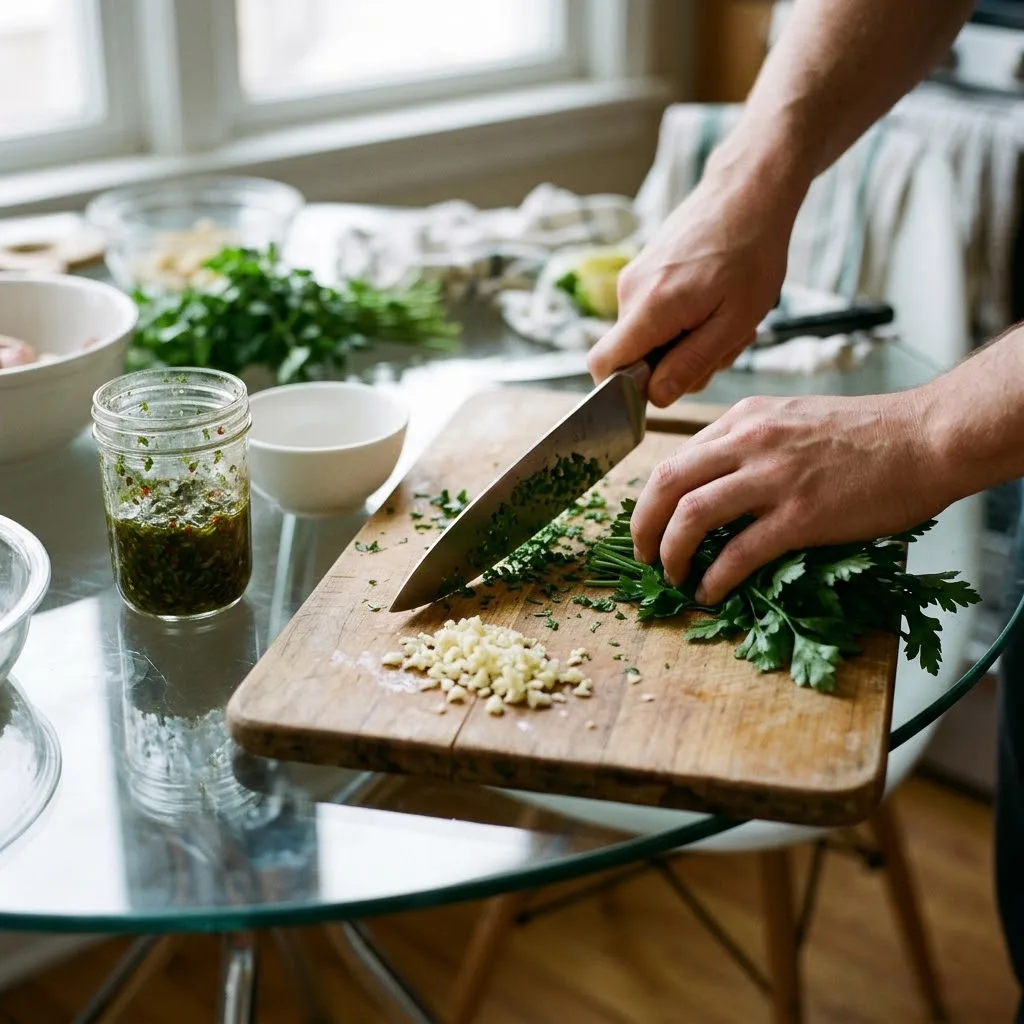
Not confident with a knife? Honestly this is the perfect thing to practice on. Big board, sharp knife, rock it back and forth for five minutes. Ugly chopping still tastes great.
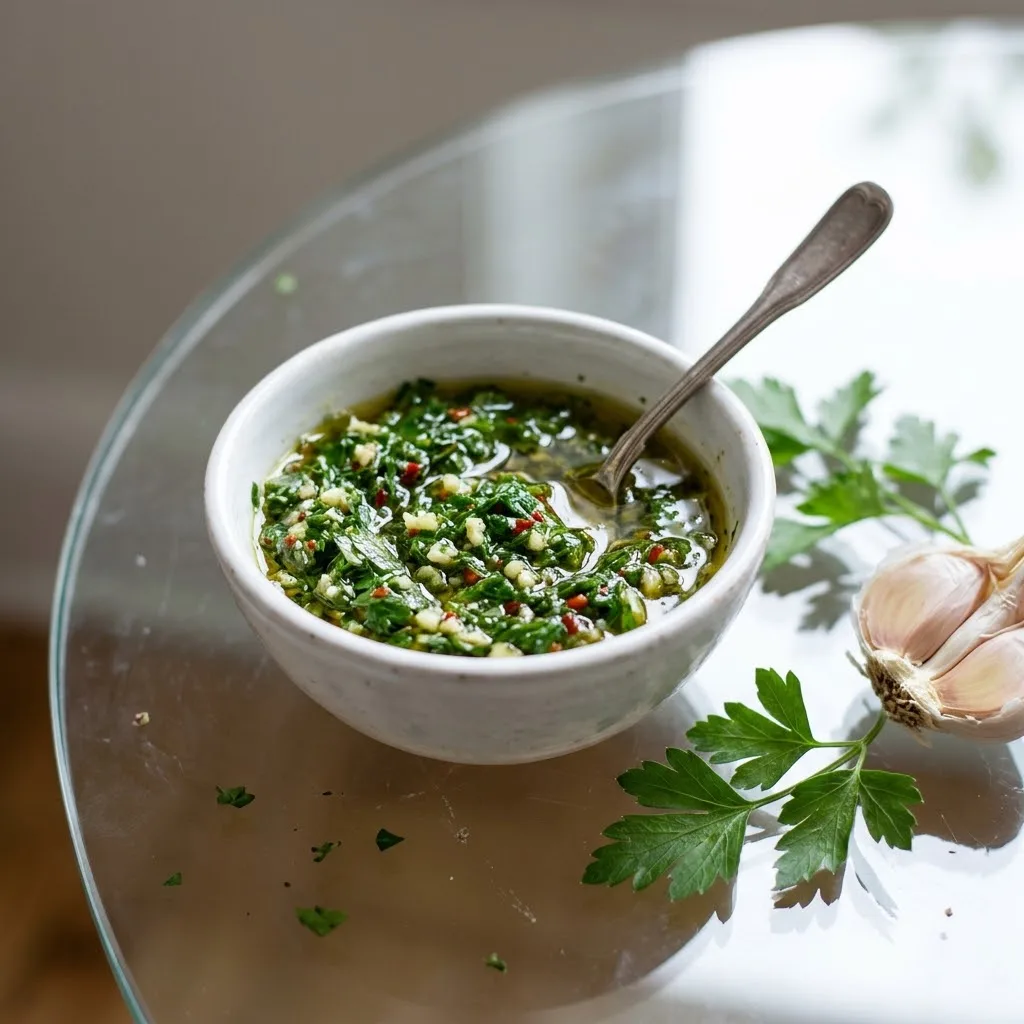
Chimichurri Sauce
Ingredients
- 1/2 teaspoon kosher salt
- 2 tablespoons hot water (30 ml)
- 1 cup fresh flat-leaf parsley (30 g) packed, finely chopped, about 1 large bunch
- 4 garlic cloves minced
- 2 teaspoons dried oregano or 2 tablespoons fresh, chopped
- 1/2 teaspoon red pepper flakes
- 1/4 teaspoon black pepper freshly ground
- 1/4 cup red wine vinegar (60 ml)
- 1/2 cup extra virgin olive oil (120 ml)
Method
- Stir the kosher salt into the hot water until dissolved to make a quick salmuera (salt brine).
- Dry the parsley well, remove the thick stems and chop the leaves finely, stopping before it turns to paste.
- Mince the garlic as finely as possible.
- In a bowl or jar, combine the parsley, garlic, oregano, red pepper flakes and black pepper.
- Stir in the salt water and red wine vinegar, then add the olive oil and stir again.
- Let the chimichurri rest at room temperature for at least 20 minutes (up to 2 hours). Taste and adjust salt or vinegar before serving.
Notes
Private Notes
Tried this recipe?
Let us know how it was!Hand-Chopped vs. Food Processor
Short version: a processor is fine, a blender kind of changes the sauce. I still mostly chop by hand. Here’s my honest take on each:
| Method | Time | Texture | Best for |
|---|---|---|---|
| Knife | 10-15 min | Loose, bright, oil stays separate | Steak, the classic look |
| Food processor (pulse) | 3 min | Finer, a bit more blended | Big batches, marinades |
| Blender | 1 min | Smooth, almost like pesto | Drizzling, dressings |
| Mortar and pestle | 15 min | Rustic, very aromatic | Small batches, max flavor |
If you do use the processor: herbs and garlic only, a few pulses. Stir the oil and vinegar in after with a spoon. Spin olive oil too hard and it can turn bitter on you, something about the polyphenols breaking loose.
How Long Should Chimichurri Sit Before Using?
20 minutes at the very least. Two hours if you can stand it. Straight after mixing? Harsh. All garlic and vinegar, like it’s yelling at you. Leave it alone a while and it calms down, the oregano rehydrates, the oil goes green, and the flavors finally start talking to each other.
Pulled a jar from the fridge and it looks cloudy and kind of solid? Totally normal, cold olive oil does that. Let it hang out on the counter half an hour.
What to Put Chimichurri On
Steak first, obviously. I like skirt or flank, sliced against the grain, sauce on at the last second. Safety-wise it’s 145°F (63°C) with a 3-minute rest according to the USDA safe temperature chart, then sauce it.
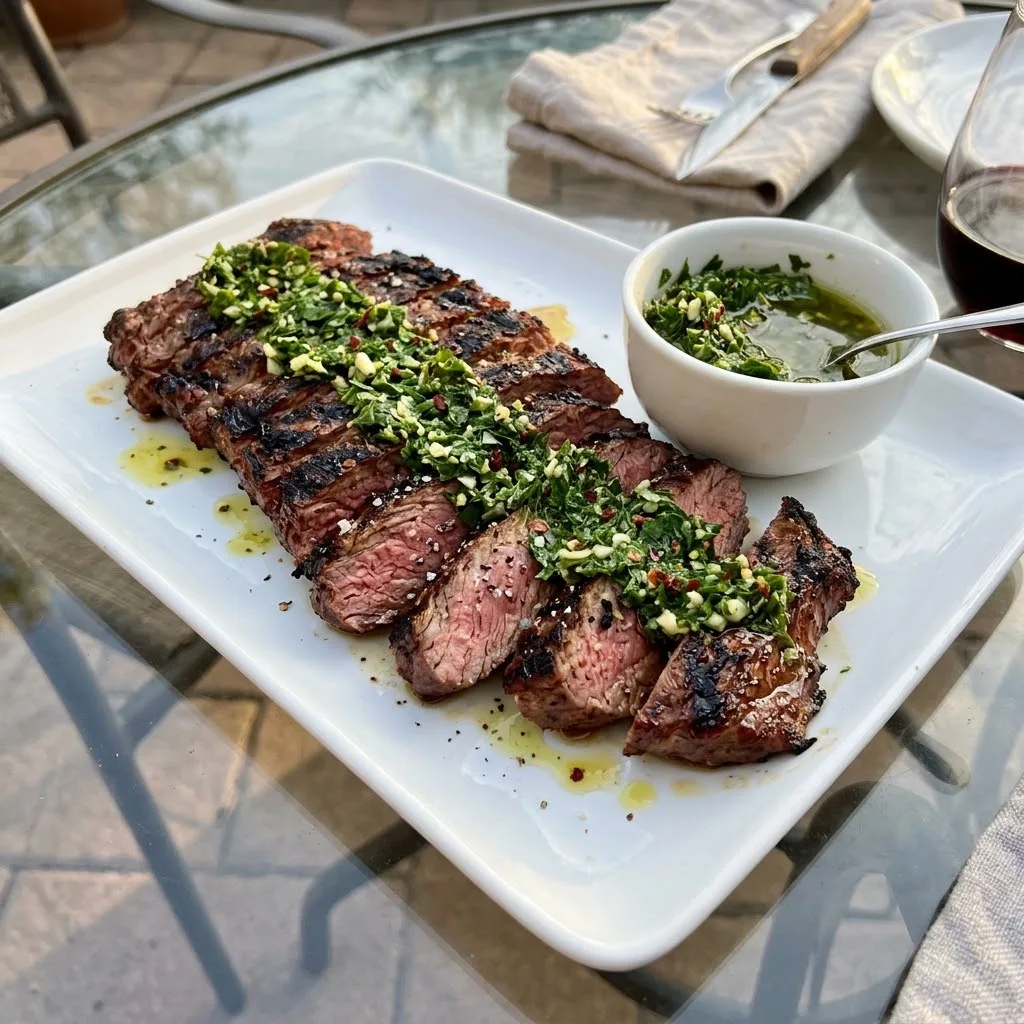
And then the list of other stuff, which keeps growing:
- Roast or grilled chicken, especially thighs
- Shrimp and white fish, a big spoonful over the top
- Crispy potatoes, like these honey gold roasted potatoes
- Fried or scrambled eggs, trust me on this
- Stirred into mayo for a sandwich spread
- As a marinade, with an extra splash of vinegar
And if you’re building a little sauce collection, this one sits nicely next to a buttery Cajun seafood boil sauce. Totally different moods, both worth having.
Red Chimichurri and Other Variations
Red chimichurri (rojo) is easy. Cut the parsley in half, then add 1 tablespoon sweet paprika, 1/2 teaspoon smoked paprika, plus another pinch of chili. Smoky, a tiny bit sweet. Amazing on pork chops and grilled zucchini.
Other things I’ve tried and liked: lemon juice for a quarter of the vinegar, with some zest. A spoonful of minced shallot for crunch. A jalapeño or Fresno chili if you like it hot. And for wings, oddly enough, a pinch of my homemade lemon pepper seasoning stirred in. Don’t knock it.
How Long Does Homemade Chimichurri Last?
Okay, serious bit for a second. Fresh garlic and herbs in oil can grow botulism if they’re stored badly, room temperature especially. The official line from Oregon State University Extension is to refrigerate fresh garlic or herbs in oil and use them within 4 days, or freeze them.
Yes, chimichurri has vinegar, and yes, half the internet says it lasts for weeks. I stick with 4 days anyway. Small batch, clean jar, fridge. Anything extra goes in the freezer.
Which is honestly the best trick. Ice cube tray, freeze, pop the cubes into a zip bag. Around 3 months in there, and one cube is the perfect amount for two steaks.
Chimichurri Mistakes I’ve Made So You Don’t Have To
The blender batch, first. Mine came out looking like baby food. Tasted okay! Looked tragic. Pulse it or chop it.
Then there was the time I rinsed the parsley and went straight to chopping, dripping wet. All that water split away from the oil and turned the jar a sort of swampy color. Salad spinner, then a towel. Every time now.
Garlic is sneaky too, because raw garlic actually gets louder the longer it sits. Four cloves per cup of sauce. I once did eight and was breathing garlic on people for two days.
Last two, quickly. Fridge-cold chimichurri is waxy and thick, so let it warm up a bit before serving. And don’t skimp on salt, because without it the whole thing just tastes like oily grass. Taste, season, taste again.
Chimichurri FAQ
Cilantro in chimichurri, yes or no?
Traditional Argentine? No, parsley only. Lots of restaurants toss cilantro in anyway and it’s honestly delicious. Just maybe don’t call it authentic in front of your Argentine friend.
Smooth or chunky?
Chunky. Loose, spoonable, oil pooling around little bits of green and garlic. You can blend it smooth for drizzling, and that’s tasty too, it just isn’t the classic.
Fresh oregano or dried?
I go dried most of the time, same as most cooks in Argentina. Fresh is greener and more flowery. Swapping? Use roughly triple the amount of fresh.
Out of vinegar?
Lemon juice works. Fresher, less punch. Just don’t leave out acid completely, it’s part of what helps it keep in the fridge.
One Last Tip
Always save a spoonful of chimichurri before it goes on the meat. Tomorrow morning, swirl it into scrambled eggs and thank me later.
Make a batch this week and come tell me in the comments what you put it on, I’m always looking for new ideas. If it turned out great, a star rating on the recipe card helps other people find it. And save it to Pinterest for your next cookout.