
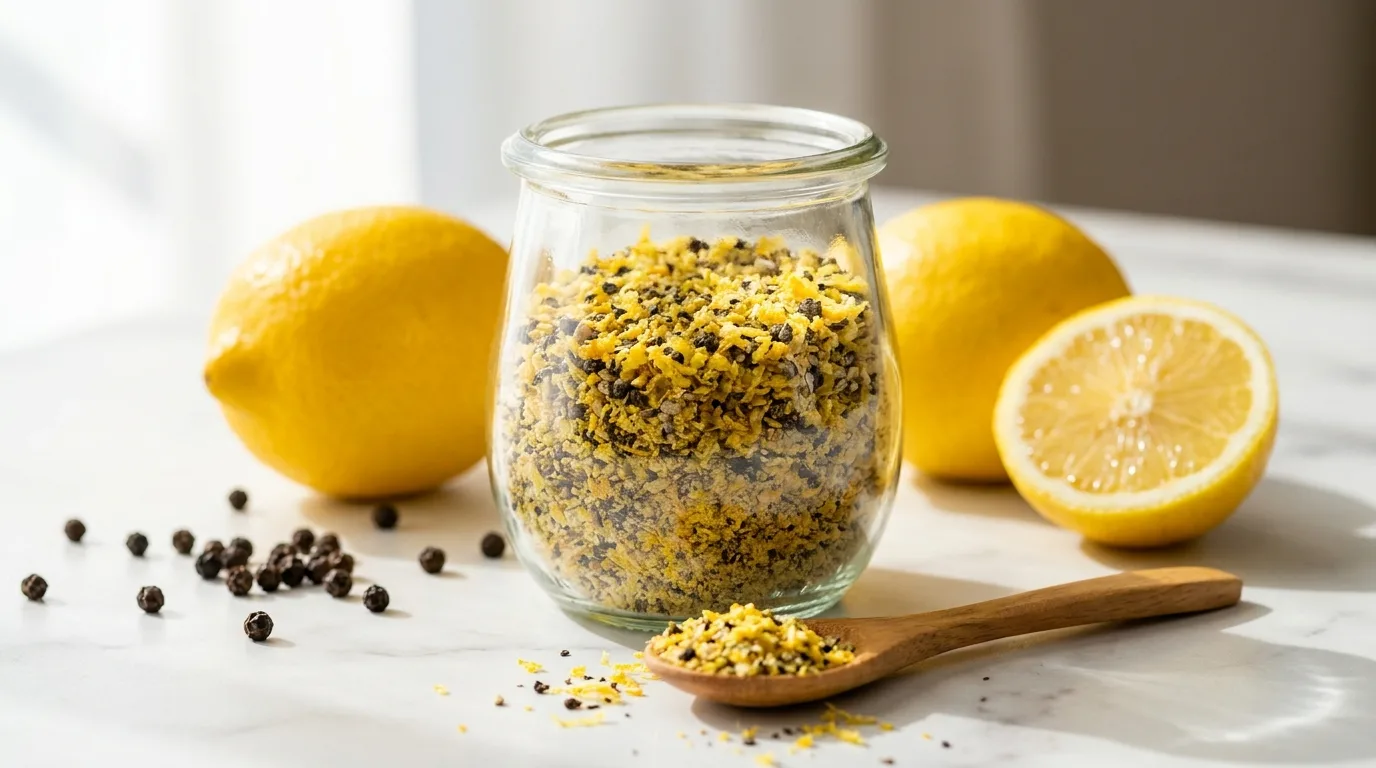
People always assume homemade lemon pepper seasoning is some big project, and it really isn’t, it’s zest and pepper and a little salt and that’s about it. Six lemons get zested, the zest sits in a 200°F (95°C) oven for half an hour-ish till it’s dry, then it goes in the grinder with freshly cracked peppercorns. You get maybe 1/3 cup, and the first time you open the jar you’ll notice it smells like a lemon. A real one!
I got into making it after squinting at the back of a store jar one day. Salt first. Then citric acid. Lemon peel somewhere way down the list. Hm. Then Doritos went and announced a Lemon Pepper chip on 15 October 2026 (shelves early 2027), and suddenly everyone’s talking about it again. No need to hang around till then. You can have it on chicken tonight.
Quick Facts
- Total time: about 50 minutes (10 minutes hands-on)
- Makes: about 1/3 cup (16 teaspoons)
- Difficulty: Easy
- Key ingredients: lemons, black peppercorns, kosher salt, garlic powder, onion powder
- Keeps: best within 3 months in a sealed jar
- Salt-free option: Yes
What’s in This Article
- What Is Lemon Pepper Seasoning Made Of?
- Why Homemade Beats Store-Bought
- Ingredients and Swaps
- How to Make Lemon Pepper Seasoning
- Oven, Air Fryer, Dehydrator or Microwave
- Why Lemon Pepper Is Trending in 2026
- How to Use Lemon Pepper Seasoning
- Lemon Pepper Wings, Atlanta Style
- Common Mistakes
- How to Store It
- FAQ
Bag of lemons going soft in the fruit bowl? This is what they’re for.
RECIPE
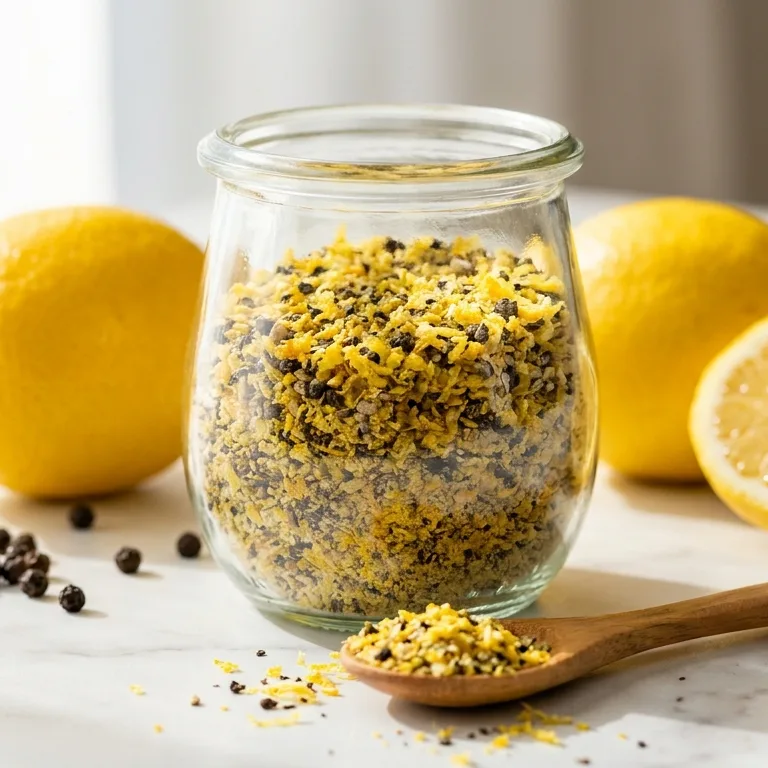
Homemade Lemon Pepper Seasoning
Ingredients
- 6 medium lemons unwaxed or scrubbed, about 6 tbsp fresh zest
- 3 tbsp whole black peppercorns 20 g
- 1 tbsp kosher salt 9 g Diamond Crystal, or 2 tsp Morton; optional
- 1 tsp garlic powder optional
- 1 tsp onion powder optional
Equipment
- Microplane zester
- Rimmed sheet pan and parchment paper
- Spice grinder or mortar and pestle
- Small airtight glass jar
Method
- Heat the oven to 200°F (95°C) or its lowest setting and line a sheet pan with parchment paper.
- Zest the lemons with a Microplane, taking only the yellow layer and leaving the bitter white pith behind.
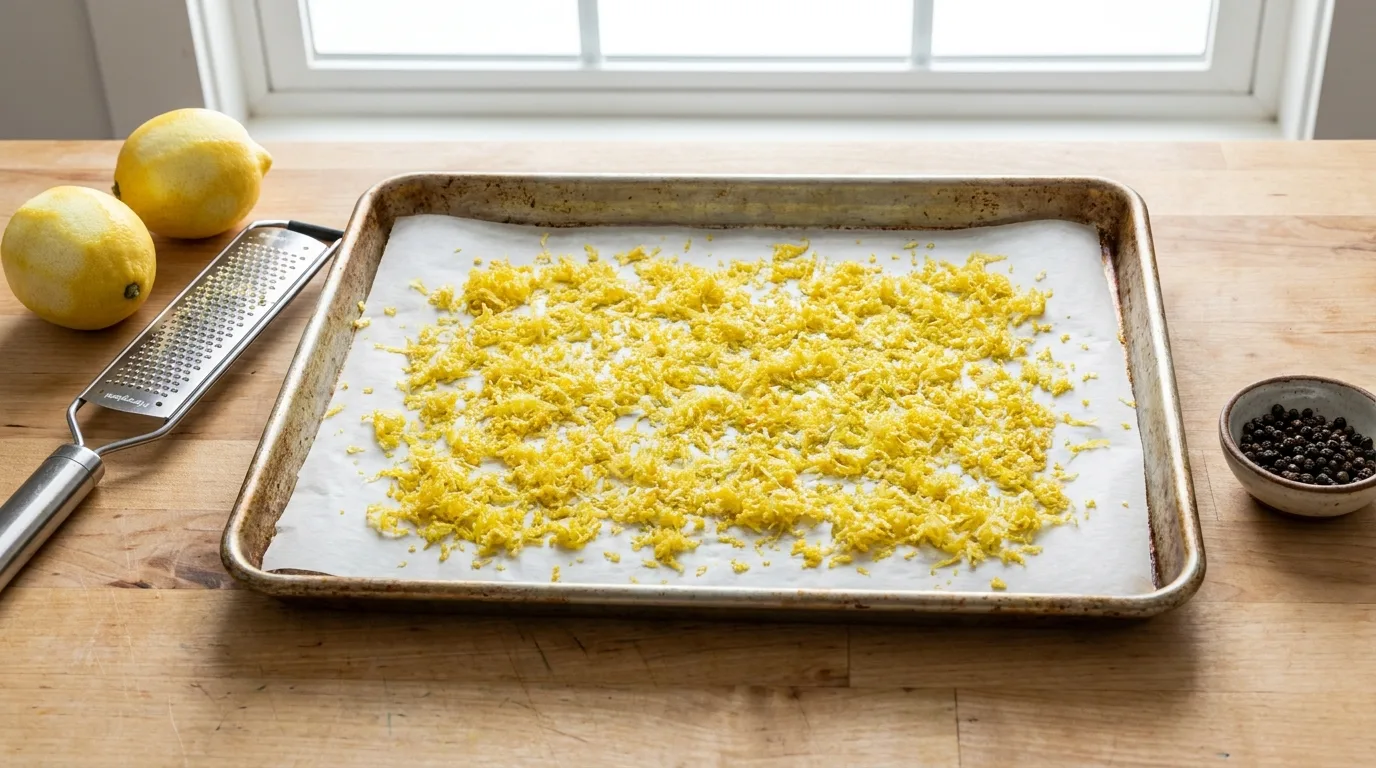
- Spread the zest in a thin, even layer on the parchment, breaking up any clumps with your fingers.
- Dry for 25 to 40 minutes, stirring every 10 minutes, until the zest feels completely dry, crumbles easily and is still bright yellow.
- Let the dried zest cool for 10 minutes so it does not clump in the grinder.
- Pulse the peppercorns a few times in a spice grinder, or crush with a mortar and pestle, until coarsely cracked.
- Add the dried zest, salt, garlic powder and onion powder and pulse 3 or 4 times, just until combined. Do not grind to a powder.
- Transfer to a small airtight jar, label with the date and store in a cool, dark cupboard.
Notes
Private Notes
Tried this recipe?
Let us know how it was!What Is Lemon Pepper Seasoning Made Of?
At its simplest it’s dried lemon zest and cracked black pepper. Most people add salt. Lots of blends throw in garlic or onion powder too. The supermarket ones often lean on citric acid for the sour hit, plus a little sugar.
Fun bit of trivia: it’s not that old. According to Wikipedia’s lemon pepper entry, a product engineer called William Shoffeitt launched it commercially in July 1967, out of Healdsburg, California. Chicken, fish, potatoes, wings… it’s been sprinkled on all of it ever since.
Weirdly the juice has nothing to do with it, the flavor’s all in the peel. Scratch a lemon with your nail and sniff, that’s the stuff, the thin yellow zest with all the oils in it. Underneath is the white pith, and that’s bitter. Leave it on the lemon.
Why Homemade Beats Store-Bought
Try a pinch of each, I dare you. Jar stuff: salt, then a sort of sour twang. Mine: lemon straight away, pepper sneaking up behind it a second later, warm and a bit nippy.
Plus you’re the boss of it. I’ve done a no-salt batch, a super-coarse one for steak, one with dried thyme that was lovely on roast potatoes. Your jar, your rules.
Quick side-by-side:
| Feature | Homemade | Typical store-bought |
|---|---|---|
| First ingredient | Lemon zest | Often salt (check the label) |
| Lemon flavor | Fresh, aromatic | Sour, from citric acid |
| Salt level | You choose, or none | Fixed, usually high |
| Additives | None | May include sugar, anti-caking agents |
| Best flavor window | About 3 months | Longer shelf life, milder over time |
And honestly? The smell while it dries. Half an hour of the whole kitchen smelling like a lemon grove. That alone is worth it.
Ingredients and Swaps
Short list. You’ve probably got most of it.
- 6 medium lemons: unwaxed or organic if you can. Each gives you roughly 1 tablespoon of fresh zest.
- 3 tablespoons (20 g) whole black peppercorns: crack them yourself. Pre-ground pepper is flat by comparison.
- 1 tablespoon (9 g) kosher salt: that’s Diamond Crystal. Morton is saltier by volume, so use 2 teaspoons of that.
- 1 teaspoon garlic powder and 1 teaspoon onion powder: optional, but they make it taste like the lemon pepper you grew up with.
Waxed lemons are fine, they just want a hot-water scrub with a veg brush and a proper towel-dry after. Damp zest sort of steams in the oven instead of drying, which is no good.
Zero lemons in the house? Grab dried lemon peel from the spice aisle, about a teaspoon for each lemon you’d have used. It’s a bit dull next to fresh but hey, it works.
How to Make Lemon Pepper Seasoning
If you can grate cheese, you can do this. Promise.
- Oven goes on at 200°F (95°C), or whatever its lowest setting is, and a sheet of parchment goes on a tray.
- Microplane time. Rotate each lemon as you go so you’re only skimming the yellow, and stop when you’ve got about 6 tablespoons.
- Scatter it over the parchment nice and thin, and break up the clumps with your fingers. Thin dries evenly, piles don’t.
- Then into the oven for anywhere from 25 to 40 minutes, depending on your oven, stirring it about every 10. When a pinch crumbles like dry leaves between your fingers and it’s still sunshine yellow, pull it. If it’s gone brown it’s been in too long and will taste a bit bitter.
- Give it 10 minutes on the counter to cool off, otherwise it gums up the grinder (learned that one the hard way).
- Peppercorns next. Couple of pulses in the spice grinder, or a few whacks in a mortar and pestle if you’ve got some frustration to work out. Leave them coarse.
- Add the dried zest, salt, garlic powder and onion powder and pulse 3 or 4 times. Just mixed and a touch finer. Not dust!
- Spoon it into a little airtight jar and write the date on it. You’ll forget otherwise. I always do.
Heads up, the zest shrinks a lot. Six tablespoons of fresh gives you about 3 dried. With the pepper and salt, the whole batch comes to roughly 1/3 cup.
Oven, Air Fryer, Dehydrator or Microwave
I mostly use the oven, but anything that dries gently works. Here’s how they stack up.
| Method | Setting | Time | Notes |
|---|---|---|---|
| Oven | 200°F / 95°C | 25–40 min | Stir every 10 min; most even result |
| Dehydrator | 125°F / 52°C | About 3 hours | Brightest color and aroma |
| Air fryer (dehydrate mode) | 125–140°F / 52–60°C | 1 1/2–3 hours | Use a mesh liner; zest can blow around |
| Microwave | High, 30-second bursts | 2–3 min total | Fastest; watch closely so it doesn’t scorch |
| Air dry | Room temperature | 1–2 days | Only in a dry kitchen; cover with a paper towel |
The dehydrator time comes from Cosori’s lemon pepper method for their machines. Air fryers vary a lot, so peek at your manual. Not all of them go that low.
Why Lemon Pepper Is Trending in 2026
It’s been a big year for lemon pepper. On 15 October 2026 PepsiCo announced Doritos Lemon Pepper, a limited-edition chip rolling out nationwide in early 2027, and they credited Atlanta’s wing scene for the flavor’s rise. Within a day or two, “doritos lemon pepper” was sitting near the top of food searches on Google Trends in both the US and Canada.
You’ll also spot it all over TikTok and Instagram right now, on tenders, popcorn, roasted veg. Curious before the chips land? Ten minutes of zesting beats waiting till 2027.
How to Use Lemon Pepper Seasoning
Rough rule, a teaspoon per pound (450 g) of food, then taste and fiddle. My usual suspects:
- Chicken: rubbed on thighs or breasts with a little olive oil before roasting or grilling. Also really good on crispy KFC-style chicken tenders tossed in melted butter.
- Fish and shrimp: salmon, cod, tilapia, a shake before baking. It’s kind of perfect on fish tacos with mango salsa too.
- Potatoes: roasted potatoes or fries, straight out of the oven.
- Vegetables: asparagus, green beans, broccoli, zucchini.
- Snacks: buttery popcorn. Roasted chickpeas.
- Pasta: butter, parmesan, lemon pepper, squeeze of fresh lemon. Ten-minute dinner.
Already making a lemony chicken dinner? A pinch in this honey lemon garlic chicken gives it a nice peppery kick at the end.
Lemon Pepper Wings, Atlanta Style
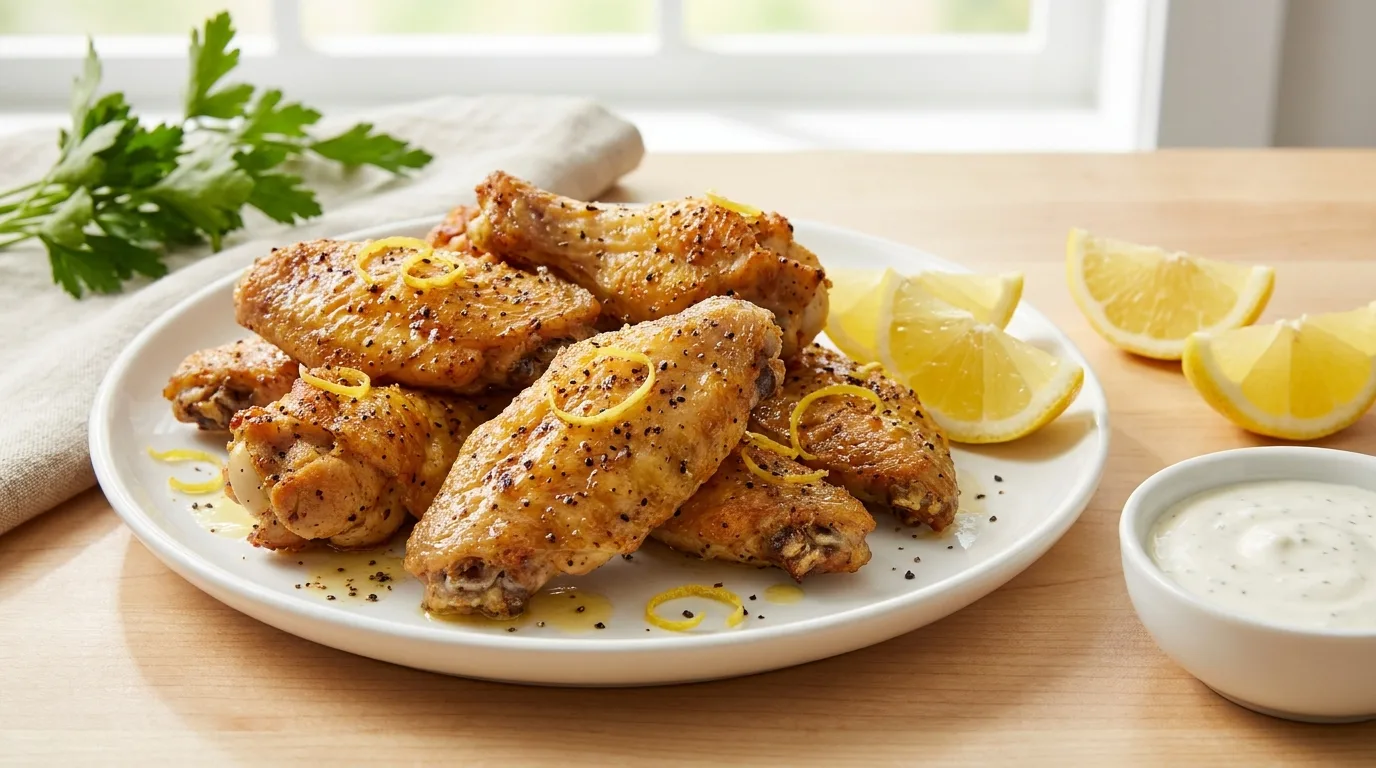
This is lemon pepper’s home turf. In Atlanta the move is “lemon pepper wet”: crispy wings tossed in melted butter and then absolutely showered in lemon pepper.
At home I bake or air fry about 2 pounds (900 g) of wings until they’re crunchy and hit at least 165°F (74°C), which is the safe minimum for chicken, though truthfully wings are juicier and less flabby nearer 175°F to 180°F once the fat’s had time to melt out. While they’re cooking I melt 4 tablespoons (56 g) of butter in a big bowl, then in go the hot wings for a toss, then 1 to 1 1/2 tablespoons of lemon pepper over the top, then another toss. Bit of fresh zest if there’s a lemon about.
Prefer them dry? Skip the butter and just dust the seasoning on while they’re hot. Cold drink, napkins, done.
Common Lemon Pepper Mistakes
Grating the White Pith
Pith is bitter, and drying makes it more bitter. See white on your zest? You went too deep. Lighter hand.
Using Fresh Zest Without Drying
Fresh zest and pepper together taste brilliant, I won’t lie, but that mix is still wet and it’ll go off. Fridge, and use it up in 3 or 4 days. Want a cupboard jar? Dry it first.
Drying Too Hot
Above about 225°F (105°C) the zest goes from yellow to brown alarmingly fast and ends up tasting like burnt toast, so low and slow with plenty of stirring is the way.
Grinding It to Powder
Go too long in the grinder and it clumps and loses all its texture. A few short pulses. That’s all.
How to Store Lemon Pepper Seasoning
Little airtight glass jar, cool dark cupboard, nowhere near the stove. It’ll be safe for a long while, but the lemon smell fades, so I try to use mine up within 3 months. Smells weak when you open it? Time for a fresh batch.
If it clumps, some moisture got in. Break it up with a fork or give it one quick pulse. A few grains of raw rice in the jar help keep it loose.
Lemon Pepper Seasoning FAQ
How do you make lemon and pepper seasoning?
Zest about 6 lemons, spread it thin on parchment and dry it at 200°F (95°C) for 25 to 40 minutes. Once it’s cool, pulse it with 3 tablespoons of cracked black peppercorns and a tablespoon of kosher salt. Garlic and onion powder are optional extras.
What is lemon pepper seasoning made of?
Dried lemon zest and cracked black pepper, almost always with salt. Store blends tend to add garlic, onion, citric acid and sometimes sugar. Make it at home and you skip all that and get real lemon peel, which tastes a lot brighter.
What can I use if I don’t have lemon pepper seasoning?
Grab a lemon. A teaspoon of fresh zest, half a teaspoon of cracked pepper and a pinch of salt, used right away. Dried lemon peel with pepper works too. Or just finish the dish with a squeeze of lemon and a few grinds of pepper.
How do you make lemon pepper seasoning with lemon juice?
You can’t really, not a dry one. Juice is mostly water. What you can do is make a wet lemon pepper butter sauce with juice, melted butter and pepper, which is great on wings. For a dry, shelf-stable blend you need the zest.
Is lemon pepper seasoning salty?
The store kind usually is, since salt is often the first thing on the label. Homemade is as salty as you make it. Drop it to a teaspoon, or leave it out and salt your food separately.
How long does homemade lemon pepper seasoning last?
Properly dried, it keeps for months in a sealed jar, but it tastes its best in the first 3 or so. If you made it with fresh, undried zest, that’s a fridge job, and you’ve got 3 to 4 days.
One Last Tip for Brighter Flavor
Right before you serve, grate a tiny bit of fresh lemon zest over whatever you seasoned. The dried stuff brings the depth, the fresh zest wakes it all up. Ten seconds. People will ask what you did.
Make a jar this week and let me know in the comments what you put it on first. If you liked it, a star rating on the recipe card helps other home cooks find it. Save it to your Pinterest spice board, and then go make those KFC-style tenders to try it on.

EMM