
Yes, you can make good pizza dough the same day. Really good, actually. My basic deal is 500 g bread flour and 330 g lukewarm water, plus a teaspoon of instant yeast, 2 of salt, little drizzle of olive oil. Rise for 3 or 4 hours. Ball it up. Another 90 minutes-ish, maybe two hours. Boom, three 12-inch pizzas, chewy, bubbly, the good stuff. Start around lunch and you’re eating by 6.
Will a dough that sat in the fridge for three days taste a bit deeper? Sure, I won’t lie to you. But who plans pizza on Wednesday for Saturday? Most of us wake up and just want pizza tonight. The thing that keeps a same-day dough from tasting flat is matching the yeast to how many hours you’ve actually got, so I made a little chart for that below. It’s also the dough I’m using for International Beer and Pizza Day on October 9, so yes, there’s a beer version.
Same Day Pizza Dough Recipe

Same Day Pizza Dough
Ingredients
- 500 g bread flour about 4 cups; all-purpose works too
- 330 g water about 1 1/3 cups, lukewarm (around 90°F)
- 3 g instant yeast 1 teaspoon; see the yeast chart for other timings
- 12 g fine salt 2 teaspoons
- 10 g olive oil 2 teaspoons, plus more for the bowl
- 5 g sugar 1 teaspoon, optional, helps browning in home ovens
Method
- Stir the yeast and sugar into the lukewarm water. Add the flour and mix with a spoon or your hand until no dry flour remains. Cover and rest 20 minutes.
- Add the salt and olive oil. Knead 5 to 8 minutes by hand (or 5 minutes on low with a dough hook) until smooth and stretchy.
- Place in an oiled bowl, cover and let rise at room temperature for about 3 to 4 hours, until roughly doubled and bubbly. Do 2 sets of stretch-and-folds in the first hour if you can.
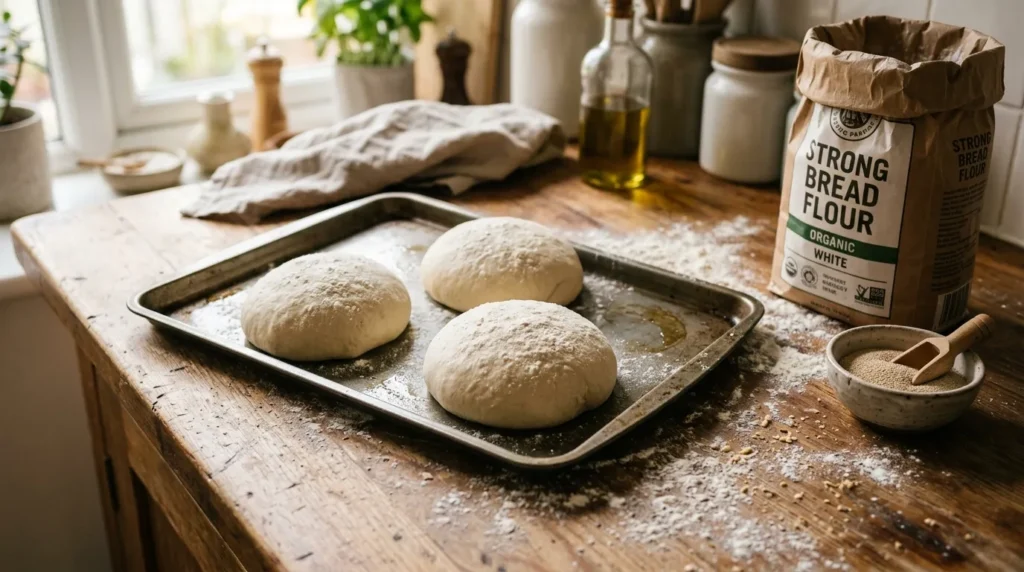
- Divide into 3 pieces (about 280 g each). Shape into tight balls, place on an oiled tray, cover and rest 1 1/2 to 2 hours until puffy and soft.
- At least 45 minutes before baking, heat a pizza steel or stone on the top-middle rack at your oven’s hottest setting, 500 to 550°F.
- Stretch each ball into a 12-inch round by hand, keeping the edge thicker. Top lightly and bake 6 to 9 minutes, until the crust is deep golden with some charred spots.
Notes
Private Notes
Tried this recipe?
Let us know how it was!How Much Yeast for How Much Time
Most quick dough recipes give you one yeast amount, one rise time, good luck. Then your kitchen’s cold, or you want to eat at 5 instead of 7, and you’re guessing. This is what I go by with 500 g flour in a kitchen that’s roughly 70°F:
| Time until pizza | Instant yeast | Schedule |
|---|---|---|
| About 4 hours | 6 g (2 tsp) | 2 1/2 hr bulk rise, 1 hr in balls |
| About 6 hours | 3 g (1 tsp) | 3 to 4 hr bulk rise, 1 1/2 to 2 hr in balls |
| 8 to 10 hours | 1.5 g (1/2 tsp) | 5 to 6 hr bulk rise, 2 to 3 hr in balls |
| Next day | 1 g (scant 1/2 tsp) | 2 hr on the counter, fridge overnight, 2 hr in balls |
Active dry instead of instant? Use about a quarter more and dissolve it in the water first. And watch the dough, not the clock. When it’s about doubled, domed, with bubbles poking through the top and sides, it’s ready. Warm kitchen, faster. Chilly one, slower. For comparison, Baking Steel’s same-day dough uses less yeast over an 8 to 10 hour stretch and says to adjust if your kitchen’s outside 65 to 75°F.
Bread Flour or All-Purpose?
Bread flour’s got more protein. Stretchier dough, chewier crust, closer to a New York slice. All-purpose bakes up a bit softer and it’s easier to stretch if you’re new at this. Both work here, no other changes needed. Got Italian “00” flour? It’s amazing in a super hot oven, but in a regular home oven at 500°F it can come out kinda pale. Hence my little teaspoon of sugar, it helps the color.
Why the 20-Minute Rest Matters
Flour, water, yeast, stir, then I literally go fold laundry for 20 minutes. Salt and oil after. Bread people call this an autolyse (fancy word, lazy technique). While you’re off doing laundry the flour’s soaking up water and the gluten kind of sorts itself out, which means less kneading for you later and a smoother dough quicker. Twenty minutes of doing nothing. On a same-day schedule, when you don’t have days of fermentation doing the work for you, it makes a real difference.
Stretching Without a Rolling Pin
Rolling pin? Nah. You’d be flattening every bubble you just spent hours growing. What I do is flour the counter a lot, poke the ball flat with my fingertips (stay off the outer inch, that’s your crust), then pick it up and drape it over my knuckles and keep turning, gravity does most of it. If it shrinks back like a rubber band, cover it and give it 10 minutes. It’s not you. It’s the gluten being dramatic.
Getting a Crisp Bottom in a Home Oven
Home ovens max out at about 500 to 550°F. A pizzeria oven is way hotter. Two things help close that gap.
Preheat longer than seems reasonable. A steel or stone wants 45 minutes minimum, an hour is better. When the oven beeps “ready,” that’s only the air.
Top-middle rack. Heat bounces off the oven ceiling and browns the cheese and rim while the steel crisps the bottom. A minute or two under the broiler at the end works too.
Don’t own a stone? Me neither for years. An old heavy sheet pan turned upside down, preheated just as long, does a decent job. Or press the dough into an oiled cast iron skillet for a thick, almost focaccia-ish pan pizza. Honestly that’s its own kind of great.
Beer Pizza Dough Version
Easy one. Whatever’s in the fridge, let it warm up, and pour in 330 g of it where the water would go. Light lagers and pale ales give a mild, slightly malty taste. Stouts and dark beers come through stronger and brown faster, keep an eye on the oven. Let the beer sit open 15 minutes first so it’s less foamy and easier to weigh. It usually rises a little quicker (extra sugars), so start checking early.
Making a whole pizza night out of it? This is the base I use for our hot honey pepperoni pizza and the simpler olive oil pizza. Sweet and salty fan? Try the honey goat cheese pizza.
Make Ahead and Freezing
Shaped balls keep covered in the fridge up to 2 days. Take them out 2 hours before baking so they loosen up. For the freezer, wrap each ball in lightly oiled plastic wrap, into a freezer bag, up to 3 months. Thaw overnight in the fridge, then about 2 hours on the counter.
FAQ
Can I make pizza dough in 1 or 2 hours?
You can, with a whole 7 g packet of instant yeast and very warm water. It’ll taste bready though, not many bubbles. Around four hours is where same-day dough starts tasting like real pizza.
Why is my dough so sticky?
It’s 66% hydration, it’s meant to be a little tacky. Wet hands or a bench scraper, not handfuls of flour. Totally soupy? Your flour’s probably lower protein, add 20 to 30 g more next time.
Why won’t my pizza dough rise?
Old yeast, or water that was too hot. Anything above about 120°F can kill it. A cold kitchen slows it down a lot too. Stick the bowl in the oven with only the light on.
Can I use this dough for calzones or garlic knots?
Both. Calzones at 475°F, roughly 15 to 18 minutes.
How thin should I stretch it?
About 12 inches across for a 280 g ball. Hold it up to the window. If you can just barely see light through the middle, that’s right.
Last tip: go easy on toppings the first time. A same-day crust is a bit more delicate than a long-fermented one, and piling on sauce and cheese is the number one reason for a soggy middle. Thin sauce, a handful of cheese, and you’ll get that crisp blistered crust.