
Here’s all a good pierogi dough recipe really needs. Two and a half cups of flour, one egg, half a cup of sour cream, 4 tablespoons of melted butter, some salt, and maybe a splash of warm water if it’s being stubborn. Knead it about 5 minutes till it’s soft and smooth, rest it 30 minutes, and it rolls out thin without fighting you or ripping when you fold it over the filling. The sour cream is the whole secret. Flour-and-water dough works, sure, but it gets chewy quick, especially once it hits a hot pan.
I only started making my own because the frozen box ones always tasted mostly like… dough. Homemade fixes that since you can roll it as thin as you want. National Pierogi Day is October 8, which is when a lot of people try this for the first time, so I’ve dumped everything in here I wish I’d known, including what to do when the dough cracks, shrinks, or just refuses to seal.
Pierogi Dough Recipe

Pierogi Dough (Sour Cream)
Ingredients
- 2 1/2 cups all-purpose flour about 315 g, plus more for rolling
- 3/4 tsp fine salt
- 1 large egg room temperature
- 1/2 cup sour cream full-fat, about 120 g
- 4 tbsp unsalted butter melted and slightly cooled
- 2 to 4 tbsp warm water only if needed
- 1 lb russet potatoes about 2 medium, peeled and cubed
- 1 cup sharp cheddar shredded, about 100 g
- 1 small onion finely diced
- 1 tbsp butter
- salt and black pepper to taste
- 3 tbsp butter
- 1 large onion thinly sliced
- sour cream and chives for serving
Method
- Whisk the flour and salt in a large bowl. Make a well, add the egg, sour cream and melted butter, and stir with a fork until shaggy.
- Knead for 5 to 7 minutes until smooth and soft, like an earlobe. If it feels dry and cracks, add warm water a tablespoon at a time. If it sticks, dust with a little flour.
- Wrap the dough and let it rest at room temperature for 30 minutes (or refrigerate up to 2 days and bring back to room temperature before rolling).
- Boil the potatoes in salted water until very tender, 12 to 15 minutes. Drain well and let them steam dry for a couple of minutes.
- Cook the diced onion in 1 tablespoon butter until soft and golden. Mash the potatoes with the onion and cheddar, season well, and let the filling cool completely.
- Roll half the dough on a lightly floured surface to about 1/16 to 1/8 inch thick. Cut 3-inch rounds. Re-roll scraps once.
- Place a heaping teaspoon of filling in the center of each round, fold in half and pinch the edges firmly to seal. Keep finished pierogi under a towel.
- Boil in a large pot of salted water, about 10 at a time. Once they float, cook 2 to 3 minutes more, then lift out with a slotted spoon.
- Melt 3 tablespoons butter in a skillet, cook the sliced onion until golden, add the boiled pierogi and fry 2 to 3 minutes per side until crisp. Serve with sour cream and chives.
Notes
Private Notes
Tried this recipe?
Let us know how it was!Why Sour Cream Makes Better Pierogi Dough
You’ll run into three kinds of dough. Hot water and flour. Egg and water. And this richer sour cream one. I’ve made all three plenty. The water one is the most old-school and the cheapest, but it’s stiff to roll and turns tough if you’re slow. Egg dough stretches better, it can still dry out on the counter while you’re filling though.
Sour cream brings fat and a bit of tang. The fat shortens the gluten, which is just a nerdy way of saying it stays soft and doesn’t snap back every time you roll it. It also browns really nicely in butter. Downside, it’s a little tackier, so keep some flour close. And use full-fat. Light sour cream is wetter, and when I tried it the dough stuck to literally everything.
King Arthur’s version uses about the same egg, sour cream and butter combo and rests it in the fridge 30 to 60 minutes, or up to 48 hours, handy if you want to split the job over two days.
How the Dough Should Feel
Recipes never really explain this part. After kneading it should be soft, smooth, a tiny bit tacky. Kind of like your earlobe, weird as that sounds. Poke it and the dent should slowly fill back in.
- Edges cracking, crumbly? Too dry. Wet hands, knead it some more, or drip in warm water bit by bit.
- Sticking to the counter and your fingers? Too wet. Dust in flour, a spoon at a time. Dump in a lot and it goes tough.
- Shrinks back when you roll? It needs more rest. Cover it, go do something else for 10 minutes.
Every flour drinks water differently, and a dry January day isn’t a humid August one, so I treat that water as a maybe. Most days it’s 2 tablespoons.
Rolling, Cutting and Sealing
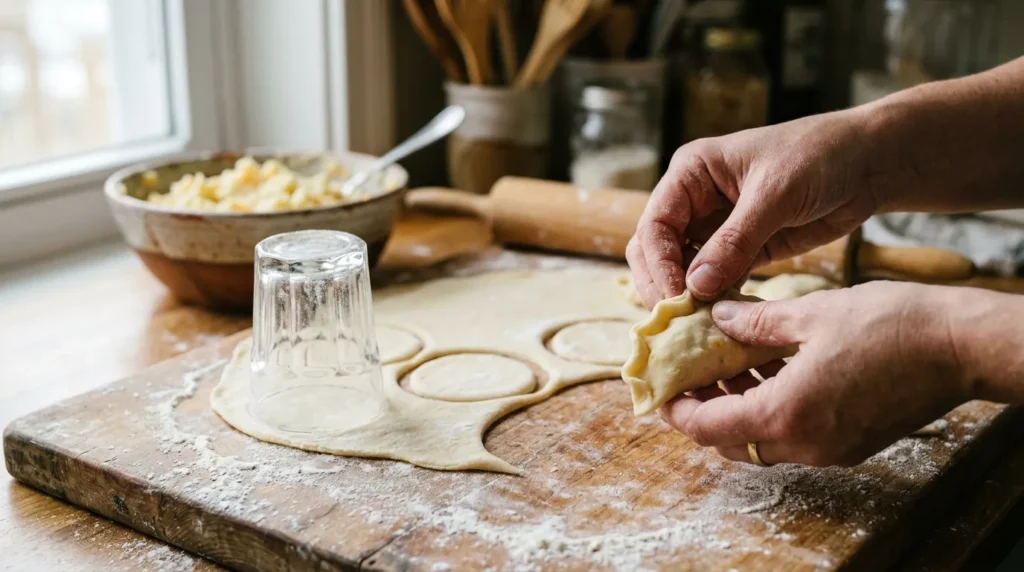
Roll it to somewhere between 1/16 and 1/8 inch. Thinner is more delicate and the filling shines, thicker is more forgiving if you’re new. I cut 3-inch circles with a drinking glass, which gives you a two-bite pierogi. I went through a 2-inch cutter phase once. Adorable. Took me most of a Sunday afternoon to fill them all, never again.
Half the dough out, half stays wrapped, otherwise it skins over on you. Same deal with the circles once they’re cut, they dry out crazy fast, so I keep a damp-ish tea towel over the pile.
Sealing: fold, then pinch the edge shut all the way along, pushing the air out as you go. Dough dried out and won’t stick? Dab the edge with a wet fingertip. A tight seal is the difference between pierogi and potato soup in your pot! Fork crimp or little finger pleats? Doesn’t matter much. Pleats look prettier on Instagram, that’s about it.
Filling Ideas
The potato-cheddar in the recipe card is the one most Americans grew up with, especially around Pittsburgh and the Great Lakes. A few others I make all the time:
- Farmer’s cheese and potato, aka ruskie. The classic Polish one, fried onion, lots of black pepper.
- Sauerkraut and mushroom. Squeeze the kraut really dry, then cook it down with mushrooms and onion.
- Sweet cheese ones! Farmer’s cheese mashed up with a yolk, a spoonful of sugar, splash of vanilla. I eat these with sour cream and honey and call it dessert.
- Blueberry, which sounds odd if you’ve never had it. Berries, teaspoon of sugar, pinch of cornstarch for each cup so the juice doesn’t run everywhere.
One thing, the filling has to be cold. Like actually cold. Warm filling makes the dough go soft and floppy and then the edges won’t hold.
Boil, Then Fry (or Just Boil)
Big pot, lots of salt, gentle boil. Not a crazy rolling one, that can split them. About 10 at a time. They sink, then pop up after a few minutes. When they float I count to about two minutes, maybe three, then scoop them out with a slotted spoon.
Straight from the water with butter poured over is totally legit. Me though? I’m frying them, every time. Into a skillet with butter and sliced onions until both sides are golden and crisp, that’s the move, soft inside and crunchy outside. They’re great next to something saucy like our dirty cabbage with sausage, or with a bowl of crockpot loaded potato soup if it’s full carb night.
Bonus: Lazy Pierogi (No Rolling)
“Lazy pierogi” searches keep creeping up this fall and yeah, I get it. In Poland they’re called leniwe and they skip the whole dough-plus-filling routine. Mix about 1 pound farmer’s cheese, 1 egg, a pinch of salt and roughly 1 cup flour into a soft dough. Roll into a rope about an inch thick, cut diagonal pieces, boil till they float, about 2 minutes. Brown butter and toasted breadcrumbs, or sugar and cinnamon if you want it sweet. Twenty-minute dinner. Kids go nuts for them.
Make Ahead and Freezing
Wrapped well, the dough keeps 2 days in the fridge. Let it sit out 20 to 30 minutes before rolling or it’ll be stiff.
For the freezer I go uncooked. Lay the filled pierogi on a floured sheet pan, not touching, freeze till hard (about 2 hours), then bag them. Cook straight from frozen, just add 2 or 3 minutes to the boil. Don’t thaw them first, they get soggy and glue together. Best within a month or two.
Boiled ones freeze fine too. Toss them in a little melted butter so they don’t stick together, then reheat in a skillet.
FAQ
Is it pierogi or pierogies?
In Polish “pierogi” is already plural, one is a “pieróg.” In the US you’ll see pierogies and perogies on every package though, and everyone knows what you mean.
Why is my pierogi dough tough?
Usually too much flour while kneading or rolling, or not enough rest. Go easy on flour and give it the full 30 minutes.
Can I make pierogi dough without sour cream?
Yep. Plain full-fat Greek yogurt swaps in fine. Or a basic one with 2 cups flour, 1 egg, about 3/4 cup warm water and a tablespoon of oil. A bit less tender.
Can I make the dough in a stand mixer?
Sure, dough hook on low for 5 to 6 minutes. Finish with a few kneads by hand so you can feel if it wants more water or flour.
How do I keep pierogi from opening while boiling?
Seal tight with no air inside, don’t overfill (a heaping teaspoon is plenty for a 3-inch circle), and keep the water at a gentle boil.
How many pierogi does this make?
Around 36 with a 3-inch cutter. Enough for 4 to 6 people as dinner.
Last tip: cook one test pierogi before you fill the rest. If it bursts, work on your seal. If it tastes bland, salt the water more. Two minutes and you know exactly how the other 35 will go.