
The first Christmas I hosted was a disaster. I attempted to prepare all the meals on December 25th. At noon the oven was packed, the turkey was running late, and I was eating cold stuffing straight from the pan, while my family opened their gifts. Christmas hosting doesn’t have to turn out this way. There’s a very easy solution to avoid a repeat of this scenario. Plan backwards from the time you will serve dinner. Prepare as much of the meal in advance as possible. Choose a main course that will allow you to share the oven with other items.
This guide will show you what I currently do. I’ll provide you with a weekly timeline that is based upon the 2026 calendar; a chart showing how much food to purchase per person attending; a cooking schedule if you only have one oven; the USDA’s food safety standards; and my make-ahead brown sugar honey glazed ham. This year can be the first time in memory that you can sit down at the dinner table with your family.
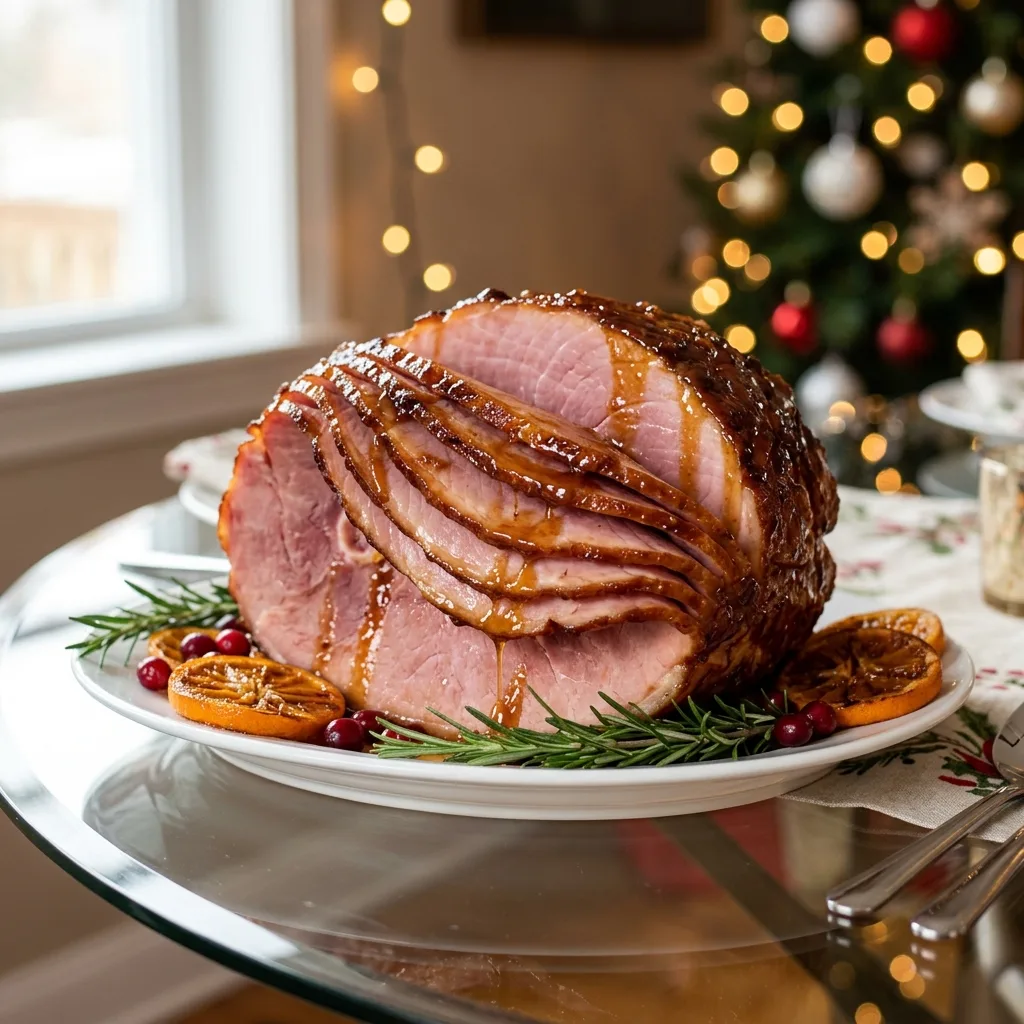
Christmas hosting at a glance
• Christmas Day 2026: Friday, December 25
• Start planning: the weekend after Thanksgiving (November 27-29)
• Food per guest: 1/3 to 1/2 lb bone-in ham or about 1 lb whole turkey
• Easiest main for one oven: a fully cooked spiral ham, warmed and glazed
• Golden safety rule: nothing perishable sits out longer than 2 hours
In this guide:
- What Christmas Hosting Looks Like in 2026
- Your 4-Week Christmas Hosting Timeline
- How Much Food Do You Need Per Guest?
- Plan a Christmas Menu That Fits One Oven
- Christmas Day Oven Schedule, Hour by Hour
- What Do You Need to Host Christmas?
- Easy Christmas Hosting Ideas Guests Remember
- Hosting Christmas in a Small Home
- Christmas Hosting on a Budget
- Food Safety Rules for a Long Christmas Day
- Christmas Hosting Mistakes I’ve Made (So You Don’t)
- Featured Recipe: Make-Ahead Glazed Christmas Ham
- Christmas Hosting FAQ
Do you want the entire menu? Our collection of easy Christmas recipes includes main dishes, side items, beverages, and desserts.
What Christmas Hosting Looks Like in 2026
The feeling of being overwhelmed when hosting a holiday party is real. According to an August 2026 Omnisend survey, approximately 53-54 percent of shoppers intend on either hosting a holiday celebration or cooking during the holidays. Additionally, roughly half of all American respondents indicated that they are experiencing significantly more stress about hosting as compared to previous years.
A major contributor to the stress experienced by many hosts is the price of groceries. For this reason, the plan below is designed around three main ways to reduce both financial strain and stress: a small selection of menu items; meals prepared in advance; and allowing guests to bring some of the food.
The calendar also gives you some help. In 2026 Thanksgiving is on Nov. 26th and there will be exactly 29 days left before Christmas. Because Christmas falls on a Friday, many people will get a long weekend. Christmas Eve is on a Thursday, giving you a complete night to finish your preparation.
Your 4-Week Christmas Hosting Timeline
This is my timeline of when I complete each task for a calm Christmas morning. The timeline is based on the 2026 calendar. Every step on this list is very small. By completing these tasks in order, I can have a relaxing Christmas morning.
| When (2026) | What to do |
|---|---|
| Nov 27-29 (4 weeks out) | Lock in the guest list and dinnertime. Write the menu. Ask guests what they’d like to bring. Order the ham or turkey. |
| Dec 4-6 (3 weeks out) | Count plates, glasses, chairs and serving dishes, then borrow or buy what’s missing. Buy drinks and pantry staples. |
| Dec 11-13 (2 weeks out) | Bake and freeze cookies or cookie dough. Write your Christmas Day oven schedule on paper. |
| Dec 18-20 (1 week out) | Clean out the fridge. Start thawing a frozen turkey: a 16 to 20 lb bird needs 4 to 5 days, so it goes in the fridge by Sunday, Dec 20. |
| Dec 21-22 | Buy fresh produce, dairy and bread. Make cranberry sauce and the ham glaze. |
| Dec 23-24 | Assemble casseroles and refrigerate them unbaked. Set the table. Chill the drinks. |
| Fri, Dec 25 | Follow the oven schedule. Warm, glaze, bake, serve. |
One comment about when to start thawing your turkey. According to the CDC’s holiday turkey guide, you should give your turkey about 24 hours of refrigerated thawing time for every four or five pounds. You must never thaw your turkey at room temperature on the counter.
How Much Food Do You Need Per Guest?
Short answer: you should prepare approximately 1/3 to 1/2 lb of bone-in ham (or about 1 lb of whole turkey) for every guest attending your dinner. You will also need to prepare approximately 1/2 cup of each side dish that you intend to serve. To have leftovers, you should increase the amount of turkey to approximately 1 1/2 lbs per guest.
Every host dreads running out of food, which is why many hosts prepare twice as much food as they think will be consumed. The table below will help you find that perfect amount of food. The number of pounds for a ham came from the USDA’s ham guide. The number of pounds for a turkey was determined by the longtime rule of thumb used by Butterball. I developed the other numbers based on my experiences with hosting over the years.
| Food | Per guest | For 12 guests |
|---|---|---|
| Bone-in ham | 1/3 to 1/2 lb | One 6 to 8 lb ham |
| Boneless ham | 1/4 to 1/3 lb | 3 to 4 lb |
| Whole turkey | About 1 lb (1 1/2 lb for leftovers) | 12 to 18 lb bird |
| Each side dish (3 to 4 sides) | About 1/2 cup | About 6 cups of each |
| Dinner rolls | 1 1/2 to 2 | 2 dozen |
| Dessert | 1 slice of pie or cake plus 2 to 3 cookies | 2 pies and 3 dozen cookies |
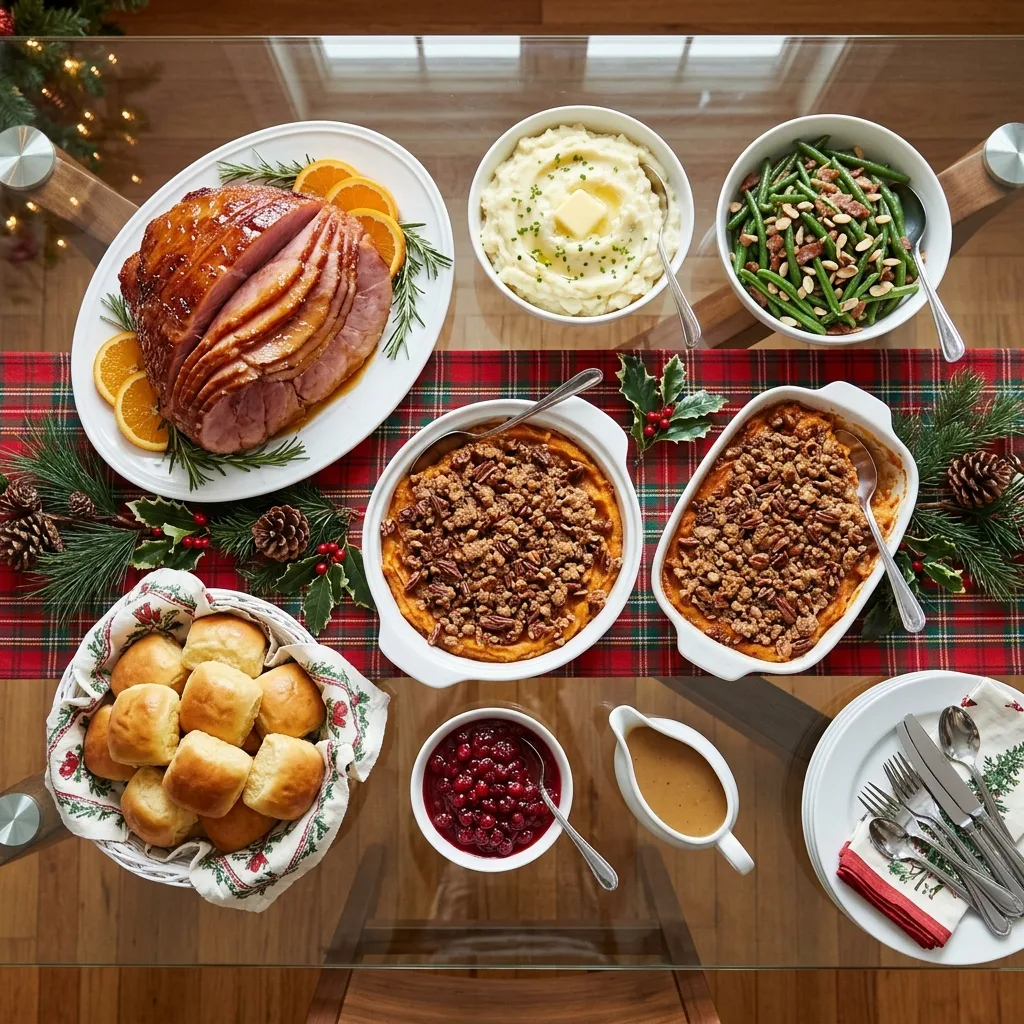
Children generally consume approximately one-half of what adults do. Therefore, for every two kids eating, you should consider that equivalent to one adult. Additionally, when the appetizers are served prior to the entrees, you may be able to slightly decrease the size of your side dishes.
Plan a Christmas Menu That Fits One Oven
On Christmas Day, the only thing that will really stop you from cooking up a storm is having only one oven. Therefore, before you become too attached to any recipe, find out exactly how much time the recipe requires the use of your oven, and what temperature it needs to be set to.
Here’s the formula I use for a sit-down dinner of 8 to 16 people:
- One main. A spiral ham is the easiest option for you as it is pre-cooked. All you need to do with a spiral ham is warm it up. On the other hand, turkeys and prime ribs take many hours to cook in an oven, as well as require close monitoring during cooking.
- Two oven sides that bake at the same temperature. For example, a casserole and a gratin that both work at 375°F (190°C).
- Two stovetop or no-cook sides. Green beans, mashed potatoes, a salad, cranberry sauce.
- One bread. Rolls only need about 10 minutes, so they slide in at the end.
- Two desserts made ahead. Pie and a cookie tray. Nothing that bakes on the day.
An excellent example of this type of dish would be our make-ahead sweet potato casserole with pecan topping. This can be assembled on December 23rd, stored in the refrigerator prior to being baked, and then baked while the ham is resting.
But the real secret to one-oven hosting is the order things go in. That’s next.
Christmas Day Oven Schedule, Hour by Hour
The following schedule is for a dinner at 3:00 pm with an 8 to 9 lb. spiral ham and two make-ahead casseroles. If your meal will be served later than 3:00 pm, then all of the times should be adjusted accordingly.
- 11:30 a.m. Remove the casseroles from the refrigerator and allow them to warm up slightly. Preheat the oven to 325 degrees Fahrenheit (165 degrees Celsius).
- 11:45 a.m. The ham goes in, covered tightly with foil, for about 10 minutes per pound.
- 1:15 p.m. Check the temperature of the ham. If the temperature reaches 130°F (54°C) in the thickest section of the meat, remove the foil covering and increase the oven temperature to 400°F (205°C).
- 1:20 to 1:40 p.m. Glaze the ham twice and let it caramelize until it reaches 140°F (60°C).
- 1:45 p.m. Move the ham to the counter and loosely cover with foil. Lower the temperature of your oven to 375 degrees Fahrenheit (190 degrees Celsius) and allow the casseroles to cook in the oven for approximately 35-45 minutes.
- 2:30 p.m. Start the stovetop sides. Warm the gravy or pan juices.
- 2:45 p.m. Rolls go in for 8 to 10 minutes. Slice the ham.
- 3:00 p.m. Everything hits the table at once.
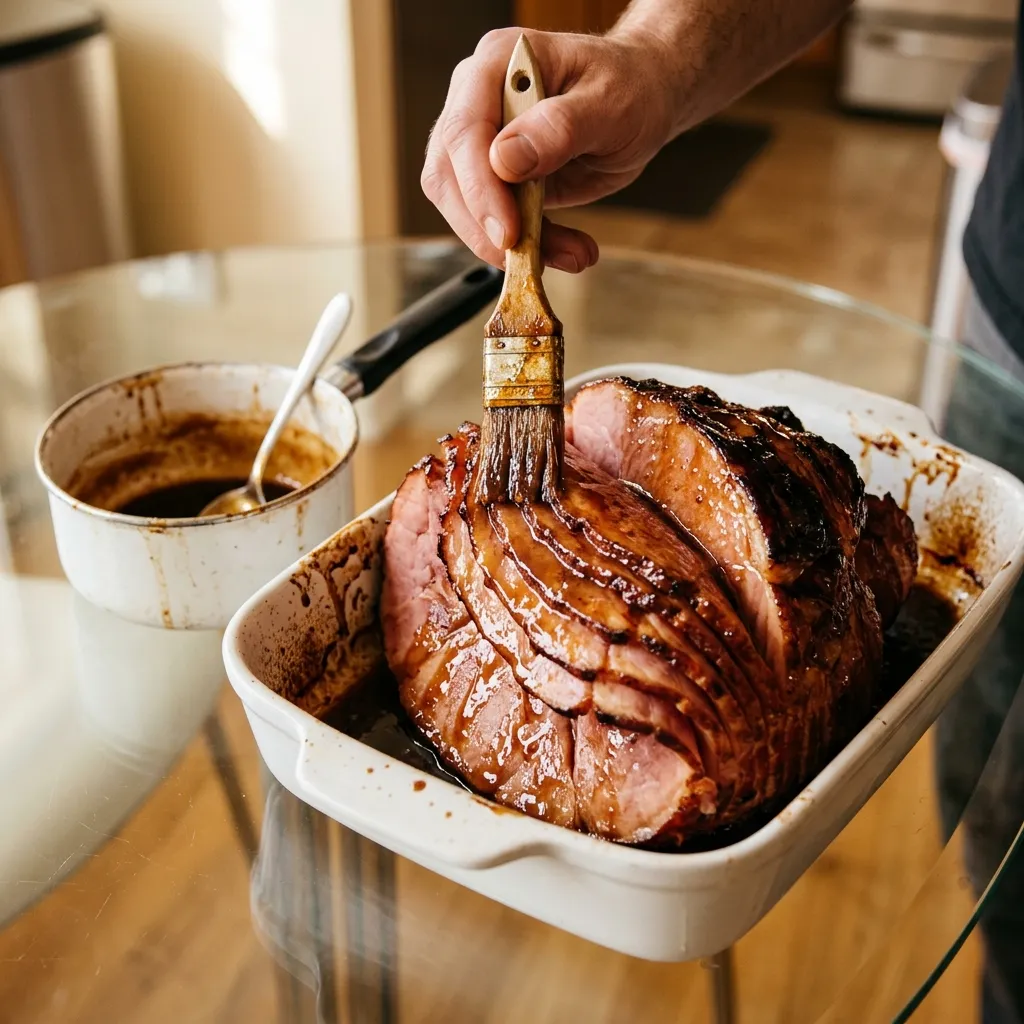
Can a large ham remain hot for one hour if covered with foil? Yes, a large bone-in ham retains heat effectively. If your meal will be served later than planned, the FDA’s buffet guidance recommends that you place any hot food into the oven at 200°F – 250°F (95°C – 120°C) until ready to serve.
What Do You Need to Host Christmas?
To be able to host Christmas, there will need to be enough chairs, plates and glasses for each person who will attend your event. In addition to these items, you should have a few large serving dishes; a meat thermometer; aluminum foil; and containers to store any leftover food. All other items are optional to purchase.
Here’s my checklist, sorted by what you’ll actually miss if you don’t have it.
Must-haves
- An instant-read meat thermometer. This is the one tool you can’t skip.
- A roasting pan big enough for your main.
- Heavy-duty foil and plastic wrap.
- Serving spoons for every dish (count them; they always run out).
- Shallow food storage containers for leftovers.
- An extra roll of paper towels and a full trash bag supply.
Nice to have
- A slow cooker to keep mashed potatoes or a hot drink warm.
- A cooler with ice for drinks, which frees up fridge space.
- Sticky notes on each empty serving dish, labeled with what goes in it.
- Take-home containers so guests can bring leftovers home.
Easy Christmas Hosting Ideas Guests Remember
People will not remember if the napkins were a match. However, what people will remember are those little moments of warmth. These are some of the easiest Christmas hosting ideas, and they get the most attention from visitors to my home.
A welcome drink at the door. Have each person receive a hot cup of apple cider or a non-alcoholic holiday drink when they remove their coats. This will establish an inviting atmosphere within 5 seconds and provide shy individuals with something to hold.
One snack board, out early. People arrive hungry, and you’re still working in the kitchen. To give yourself about an hour of time without interruptions, put out a simple board with some cheese, crackers, grapes and nuts.
A hot chocolate station for the kids. Put the hot chocolate in a slow cooker set to “warm” with mugs, mini marshmallows and candy canes. The little ones will be occupied and out of the way.
A cookie box to take home. This is the best way for me to finish off the evening. Our Christmas cookie box has 4 different types of cookies that are made using the same dough, and it’s all done several days ahead.
A playlist you set up the day before. Make it last about three hours so you won’t need to touch your phone at all while eating.
Hosting Christmas in a Small Home
Hosting Christmas in a small space is always an option. However, it will require a different strategy than hosting in a large space. Small-space hosting has been on many people’s minds recently: House Beautiful published an article this week that featured space-saving furniture to make Christmas hosting easier in a small home.
But you don’t have to buy anything new. Here’s what works in my small place:
- Serve buffet style from the kitchen counter. The table is then only for eating, so it fits more people.
- Use the bed for coats and keep the entryway clear.
- Borrow folding chairs or ask a couple of guests to bring one.
- Put drinks in a cooler on the balcony or in the hallway, away from the kitchen traffic.
- Pick a ham over a turkey. It takes less room in the oven and less room in the fridge.
Christmas Hosting on a Budget
The least expensive holiday meal is one that is shared. Sharing the cost is also becoming more common, not less. In the survey conducted by Omnisend, 50% of American participants indicated that increased food prices have caused them to feel greater stress when hosting during the holidays.
Here’s how to keep the bill down without the meal feeling cheap:
- Host a potluck with a plan. You will prepare the main course and beverages. Next, assign a different type of food item (a side dish, a salad, or a dessert) to each individual attending your gathering; this will help ensure that you do not have four desserts but no vegetables.
- Buy one main, not two. One generous ham costs far less than a ham plus a turkey.
- Cook from scratch where it’s cheap. Cranberry sauce, mashed potatoes, and rolls can be made for very little money and will be tastier than anything you can buy in the grocery store.
- Use what you own. Real plates and a few candles create a better atmosphere than a bunch of themed paper items, and they cost nothing.
- Plan the leftovers. A ham bone becomes soup. Leftover sides become a breakfast hash on the 26th.
Is it bad manners to request that your guests contribute something? No, most guests will be happy to assist you if you provide them with enough notice and tell them exactly what you need.
Food Safety Rules for a Long Christmas Day
Christmas dinner is a very long meal. The guests will be grazing for most of the day, which is exactly when food safety slips. I have put together all of the official food safety guidelines in one chart. Take a picture of it and place it on your refrigerator.
| Rule | The number | Source |
|---|---|---|
| Perishable food at room temperature | 2 hours max (1 hour above 90°F) | FDA |
| Keep hot food at | 140°F (60°C) or above | FDA |
| Reheat a fully cooked, plant-packaged ham to | 140°F (60°C) | USDA FSIS |
| Reheat leftovers to | 165°F (74°C) | USDA FSIS |
| Leftovers in the fridge | 3 to 4 days | USDA FSIS |
| Thawing a turkey in the fridge | 24 hours per 4 to 5 lb | CDC |
The simplest way to follow all of this is to set a phone timer for 2 hours when dinner is served. When it goes off, pack all of the leftover food into shallow containers and put them in the refrigerator. As the USDA leftovers guide explains, shallow containers help food cool faster than deep ones.
Christmas Hosting Mistakes I’ve Made (So You Don’t)
Trying a brand-new recipe on the day. The holidays are not the best time to try anything out. If you are looking to do some experimenting, it would be better to prepare a small amount of the dish on a typical week night during the month of December.
Forgetting the fridge. One year I purchased all my groceries and brought them home only to find that my ham would not fit into my refrigerator. Since that time, I have cleared out my refrigerator the weekend prior to purchasing my groceries, and moved all of my beverages to a cooler.
Saying no to help. When a guest says “What can I do?”, give them something to work on. Let them fill the water glasses, cut up the bread, or put things in the dishwasher. They want to be helpful and you will have time to do other things.
Guessing whether the meat is done. The times listed above are merely approximations. Ovens can run hot or cold, and each ham has a unique shape. Using a meat thermometer will eliminate any uncertainty as to when the ham is done.
Doing all the dishes alone at midnight. Run the dishwasher once prior to dinner, and fill one side of your sink with hot soapy water to clean your pots and pans.
Featured Recipe: Make-Ahead Glazed Christmas Ham
If there is anything you remember about this Christmas hosting guide, let it be the ham. This type of ham (spiral sliced, fully cooked) is the most forgiving of all the main dishes that I have ever worked with. The ham has been pre-cooked; therefore, you can’t really ruin it. Your only task is to heat the ham slowly, while applying a sticky, shiny glaze to the ham.
This glaze has brown sugar, honey, butter and Dijon, plus some orange juice and warm spices. It can be made ahead of time (up to five days), then stored in a jar in the refrigerator. Your total preparation time on Christmas Day will be approximately fifteen minutes.
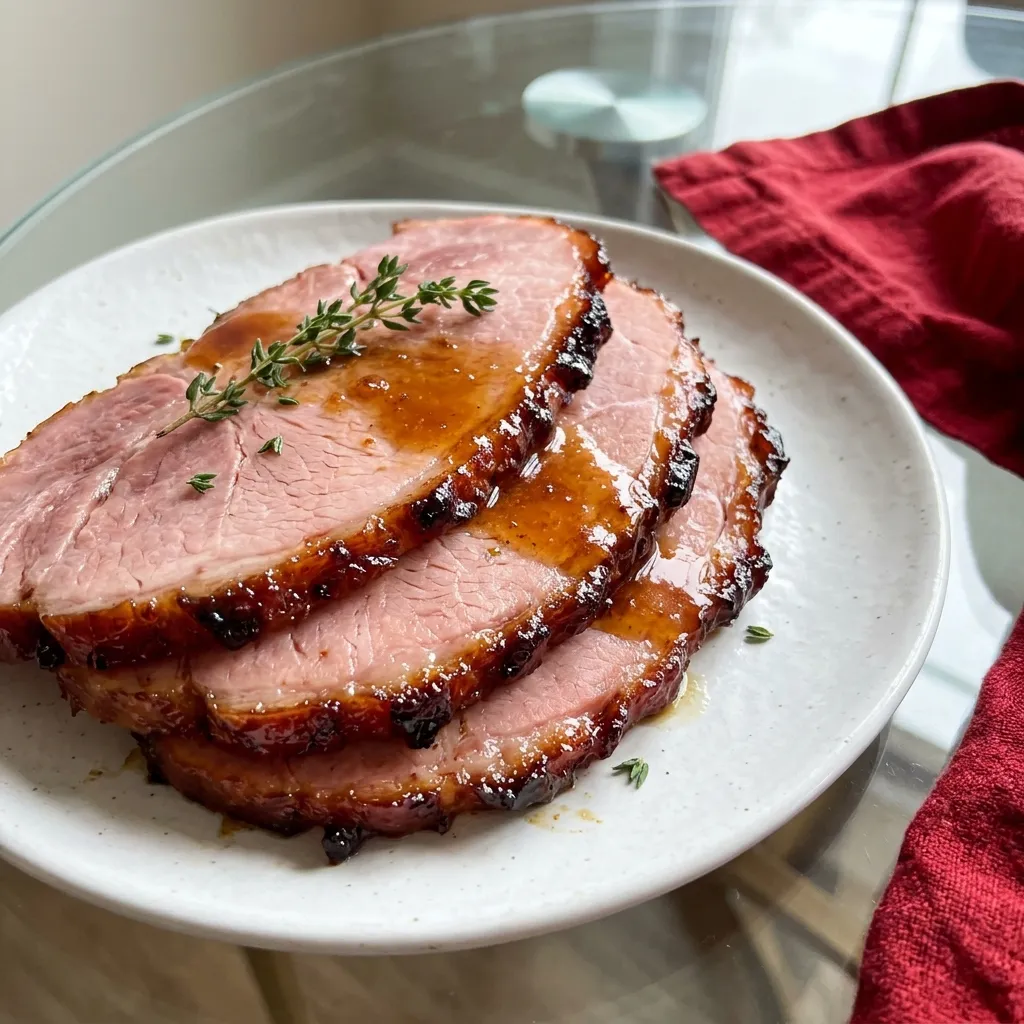
Tips for a Juicy Glazed Ham
Cover it tightly. Slices of spiral ham will quickly lose their moisture. Securely wrap the foil around the outer edge of the roasting pan to contain the steam and maintain the temperature as the ham heats up.
Put it cut side down. That keeps the slices pressed together and stops the open face from drying.
Glaze at the end, not the start. Sugar will burn when left in the oven for 1.5 hours. To caramelize sugar, you only need to bake it at a very hot temperature for the final 15-20 minutes.
Toss the packet. Homemade glaze is much fresher than store-bought, and only requires about 4 minutes to make.
Save the bone. Freeze it for split pea or bean soup in January.
Cooking a ham for the first time? No need to stress. This is truly the simplest entree that you will serve during any holiday dinner.
Brown Sugar Honey Glazed Ham (Make-Ahead Christmas Ham)
Ingredients
- 1 fully cooked bone-in spiral-cut ham 8 to 9 lb / 3.6 to 4 kg, glaze packet discarded
- ½ cup water or apple juice 120 ml
- 1 cup light brown sugar 213 g, packed
- ⅓ cup honey 113 g
- ¼ cup unsalted butter 57 g
- 3 tbsp Dijon mustard 45 g
- 2 tbsp orange juice 30 ml, fresh or bottled
- ½ tsp ground cinnamon
- ¼ tsp ground cloves
Equipment
- Large roasting pan with a rack
- Heavy-duty aluminum foil
- Instant-read meat thermometer
- Small saucepan
- Silicone pastry brush
Method
- Heat the oven to 325°F (165°C). Set the ham cut side down on a rack in a roasting pan and pour the water or apple juice into the bottom of the pan.

- Cover the ham tightly with heavy-duty foil so no steam escapes. Warm it for 80 to 100 minutes, about 10 minutes per pound, until a thermometer in the thickest part, away from the bone, reads 130°F (54°C).
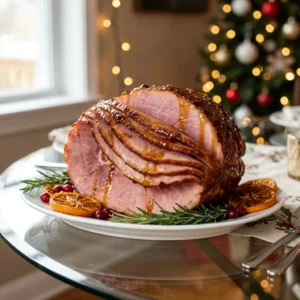
- While the ham warms, combine the brown sugar, honey, butter, Dijon, orange juice, cinnamon and cloves in a small saucepan. Simmer over medium heat for 3 to 4 minutes, stirring, until glossy and slightly syrupy.

- Remove the foil and raise the oven to 400°F (205°C). Brush half of the glaze over the ham, letting it drip down between the slices.
- Bake uncovered for 10 minutes. Brush on the rest of the glaze and bake 5 to 10 minutes more, until the glaze bubbles, the edges darken and the center reaches 140°F (60°C).
- Tent the ham loosely with foil and let it rest for 15 minutes. Cut along the bone to release the slices and spoon the pan juices over the top before serving.

Nutrition
Notes
- Make the glaze up to 5 days ahead and keep it covered in the fridge. Warm it for 30 seconds before brushing.
- Buying guide: plan on 1/3 to 1/2 lb of bone-in ham per person, so an 8 to 9 lb ham feeds 16 to 24.
- No thermometer? Plan on about 10 minutes per pound at 325°F, but a thermometer is the only way to be sure the center reaches 140°F.
- Leftovers keep 3 to 5 days in the fridge or 1 to 2 months in the freezer. Reheat slices to 165°F (74°C).
- Save the bone for split pea or bean soup. Nutrition is an estimate.
Private Notes
Tried this recipe?
Let us know how it was!Christmas Hosting FAQ
How do you host Christmas dinner without stress?
Plan backward from dinnertime. Decide on your menu at least four weeks before, prepare dessert and sauce days ahead, make casserole dishes on December 23rd, and use a written schedule for using the oven. Choose a pre-cooked ham for your main course, and have each guest bring a side dish.
What are some easy Christmas hosting ideas?
Greet guests with a warm beverage; put out one snack board early; create a hot chocolate station for children; provide each guest with a small cookie box upon their departure; create a 3-hour playlist prior to the event. Warm, small touches are what will count, not the decorations.
How much ham do I need for 12 people?
You should purchase a 6-to-8-pound bone-in ham for 12 people (based upon the USDA’s 1/3-to-1/2 pound of meat per person). A boneless ham would be 3-to-4 pounds. Purchase the larger portion of ham if you wish to have leftover portions for sandwich making and soup preparation.
How long does it take to warm a spiral ham?
An 8-9 pound spiral sliced ham will take about 80-100 minutes to bake in a 325 degree Fahrenheit (165 degree Celsius) oven when baked with heavy aluminum foil covering the ham. Bake until the internal temperature of the ham reaches 140 degrees Fahrenheit (60 degrees Celsius), measured by using a thermometer to check the center of the ham.
What should the host make, and what can guests bring?
The host will typically prepare the main course along with the drinks and the gravy or sauce for the main course. Guests are able to bring side dishes, salads, rolls, and/or desserts. It would be helpful to assign categories to each guest when you invite them so that there is no duplication of items.
How long can Christmas dinner sit out?
Food can be left at room temperature for two hours at most, and one hour when temperatures exceed 90 degrees Fahrenheit. After that, leftovers should be refrigerated in shallow containers. They keep three to four days in the refrigerator, and must be heated to a minimum of 165 degrees Fahrenheit before eating.
Is it OK to ask guests to chip in for Christmas dinner?
Yes, especially at today’s high price for groceries. The easiest way to do this is a potluck; you provide the main course and beverages, and every person coming brings a side item. You should make your request well in advance, and clearly explain what everyone will need to bring. This way no one will feel uncomfortable.
I have shared with you all of my plans for hosting Christmas, from creating the first list of things to do in November to putting the final dish into the dishwasher. Now, choose one task to complete this weekend. You could create your guest list, or you could mix up the ham glaze. After making the ham, return here and provide a rating for the recipe on the recipe card. In the comment section below, let me know how many guests were served. Save this guide to your Pinterest board so that it will be easily accessible on December 23rd. To find additional ideas for the rest of your menu, please check out the Christmas recipes that are available on our site.