

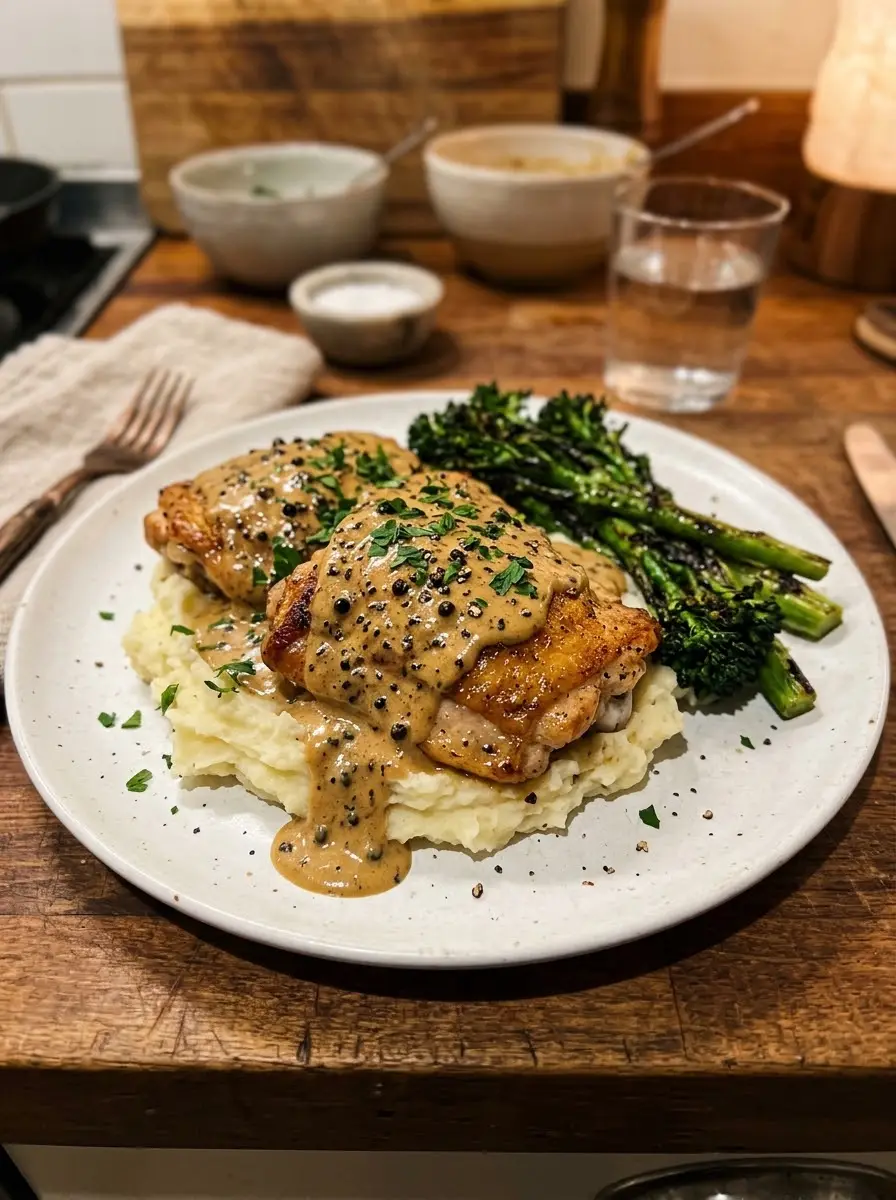
Chicken au poivre is the French bistro classic steak au poivre, made with chicken instead of beef. You sear the chicken hard, flame the pan with a splash of brandy, then build a creamy sauce loaded with coarsely cracked black pepper. It takes about 30 minutes, it’s made in one skillet, and it tastes like something you’d pay $28 for.
If you’ve seen it all over your feed lately, you’re not imagining it. On Pinterest, searches for “chicken au poivre recipe” in the US jumped more than 1,500% between late June and late September 2026, and they’re up over 10,000% compared with the same time last year. Most of that buzz traces back to a whole roasted version that went viral this spring. I’ll give you that method too, further down. But the skillet version is the one I make on a Tuesday.
RECIPE
Chicken au Poivre
Ingredients
- 1 1/2 lb boneless chicken breasts or thighs (700 g) breasts sliced in half horizontally
- 1 tsp kosher salt
- 1 tbsp whole black peppercorns coarsely cracked, divided
- 1 tbsp neutral oil avocado, canola or light olive oil
- 2 tbsp unsalted butter divided
- 1 large shallot finely chopped
- 2 garlic cloves minced
- 1/3 cup brandy or cognac (80 ml)
- 3/4 cup chicken stock (180 ml) or beef stock
- 3/4 cup heavy cream (180 ml)
- 1 tsp Dijon mustard
- 1 tsp brined green peppercorns lightly crushed, optional
- fresh thyme sprigs and chopped parsley to finish
Method
- Pat the chicken very dry. Slice thick breasts in half horizontally so each piece is about 3/4 inch thick. Season all over with the salt and half the cracked pepper, pressing it in.
- Heat the oil in a large skillet over medium-high until it shimmers. Sear the chicken for 4 minutes without moving it. Flip, add 1 tbsp butter and cook 3 to 4 minutes more, until the thickest piece reads 165°F (74°C). Thighs take a minute or two longer. Move to a plate.
- Lower the heat to medium. Add the remaining butter, the shallot and thyme and cook for about 90 seconds, scraping up the browned bits. Add the garlic for 30 seconds.
- Take the pan off the heat and pour in the brandy (measure it into a cup first, never pour from the bottle). Return to the heat and let it bubble for 30 seconds.
- Add the stock and simmer 3 to 4 minutes, until reduced by about half. Stir in the cream, Dijon, the remaining cracked pepper and the green peppercorns. Simmer 2 to 3 minutes until the sauce coats a spoon. Taste and add salt if needed.
- Return the chicken and its juices to the pan and spoon the sauce over for 1 minute. Remove the thyme stems, sprinkle with parsley and serve right away.
Notes
Private Notes
Tried this recipe?
Let us know how it was!What Makes This Version Work
Most recipes stop at “crush some peppercorns.” The difference between a sauce that tastes pleasantly peppery and one that makes you cough is how you handle the pepper. Three things matter:
- Crack it, don’t grind it. You want pieces about the size of coarse sand, with a few bigger bits. Fine pre-ground pepper turns the sauce gray and harsh.
- Split the pepper. Half goes on the chicken before searing, half goes into the sauce. The seared pepper turns toasty and mellow; the pepper in the cream stays bright.
- Add a spoon of green peppercorns if you can find them. The brined kind, sold in small jars near the capers. They’re softer and fruitier, and they’re what a lot of French bistros actually use.
Ingredients
Serves 4 · Prep 10 minutes · Cook 20 minutes
- 1 1/2 lb (700 g) boneless chicken: 2 large breasts sliced in half horizontally, or 6 boneless skinless thighs
- 1 tsp kosher salt
- 1 tbsp whole black peppercorns, coarsely cracked (divided)
- 1 tbsp neutral oil (avocado, canola or light olive oil)
- 2 tbsp unsalted butter
- 1 large shallot, finely chopped
- 2 garlic cloves, minced
- 1/3 cup (80 ml) brandy or cognac
- 3/4 cup (180 ml) chicken stock (store-bought or homemade chicken bone broth) (beef stock gives a deeper, more steakhouse flavor)
- 3/4 cup (180 ml) heavy cream
- 1 tsp Dijon mustard
- 1 tsp brined green peppercorns, lightly crushed (optional)
- A few thyme sprigs, plus chopped parsley to finish
No alcohol? Swap the brandy for the same amount of extra stock plus 1 tsp lemon juice or a splash of apple cider vinegar. You lose a little depth but the sauce still works.
How to Make Chicken au Poivre
1. Prep and season the chicken
Pat the chicken very dry. If you’re using breasts, slice them in half horizontally so each piece is about 3/4 inch thick; thick breasts dry out on the edges before the middle is done. Season all over with the salt and half the cracked pepper, pressing it in with your palm.
2. Sear
Heat the oil in a large stainless or cast-iron skillet over medium-high until it shimmers. Lay the chicken in and leave it alone for 4 minutes. Flip, add 1 tbsp of the butter, and cook another 3 to 4 minutes until the thickest piece reads 165°F (74°C), the USDA safe temperature for poultry. Thighs take a minute or two longer. Move the chicken to a plate.
3. Soften the aromatics
Turn the heat down to medium. Add the remaining butter, the shallot and the thyme. Stir for about 90 seconds, scraping at the brown bits, then add the garlic for 30 seconds more.
4. Deglaze with brandy
Take the pan off the heat before you pour in the brandy. This is the one step where people get hurt: pouring straight from the bottle into a hot pan near a flame is how you get a flare-up up the neck of the bottle. Measure it into a cup first. Put the pan back on the heat and let it bubble for 30 seconds, until the sharp alcohol smell fades. If it catches on a gas stove, don’t panic; it burns off in a few seconds.
5. Build the sauce
Add the stock and simmer for 3 to 4 minutes, until it’s reduced by about half. Stir in the cream, Dijon, the rest of the cracked black pepper and the green peppercorns. Simmer 2 to 3 minutes until it coats the back of a spoon. Taste it now. It usually needs a pinch of salt.
6. Finish
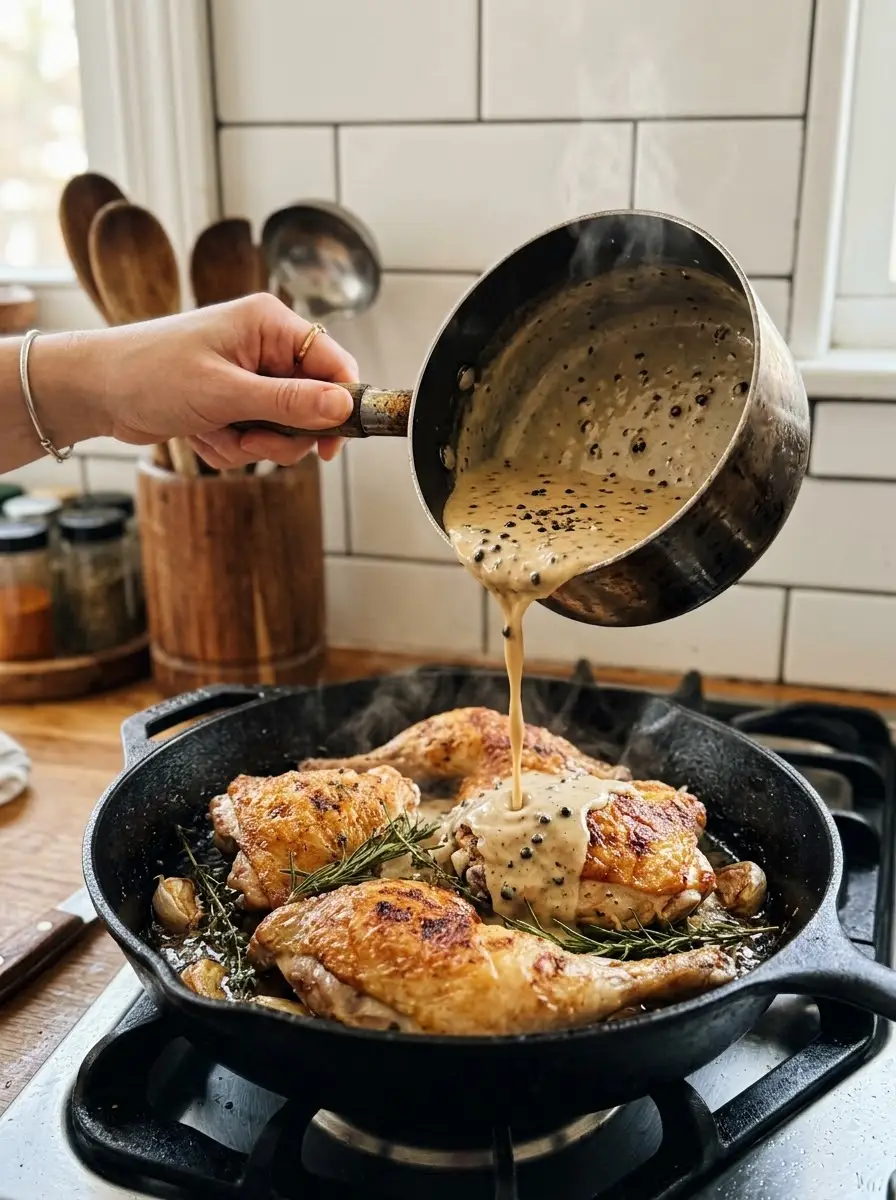
Slide the chicken and any juices from the plate back into the pan. Spoon the sauce over for a minute to warm everything through. Pull out the thyme stems, scatter parsley, and serve right away while the sauce is glossy.
The Viral Roast Chicken au Poivre (Whole Bird Method)
The version that set off the trend is a whole spatchcocked chicken roasted in the peppercorn cream instead of seared. Home cook Corre Larkin first posted it in February 2026, and by September it had been remade across social media enough that Tasting Table wrote it up. The rough shape of it:
- Spatchcock a 4 to 4 1/2 lb chicken and salt it well (overnight in the fridge if you have time).
- Roast skin-side up at 375°F for 15 minutes.
- Pour a mix of heavy cream, cracked pepper, shallots, garlic and rosemary around the bird, plus a splash of dry sherry, then raise the oven to 400°F.
- Roast about 30 to 35 minutes more, basting twice, until the thickest part of the breast hits 165°F.
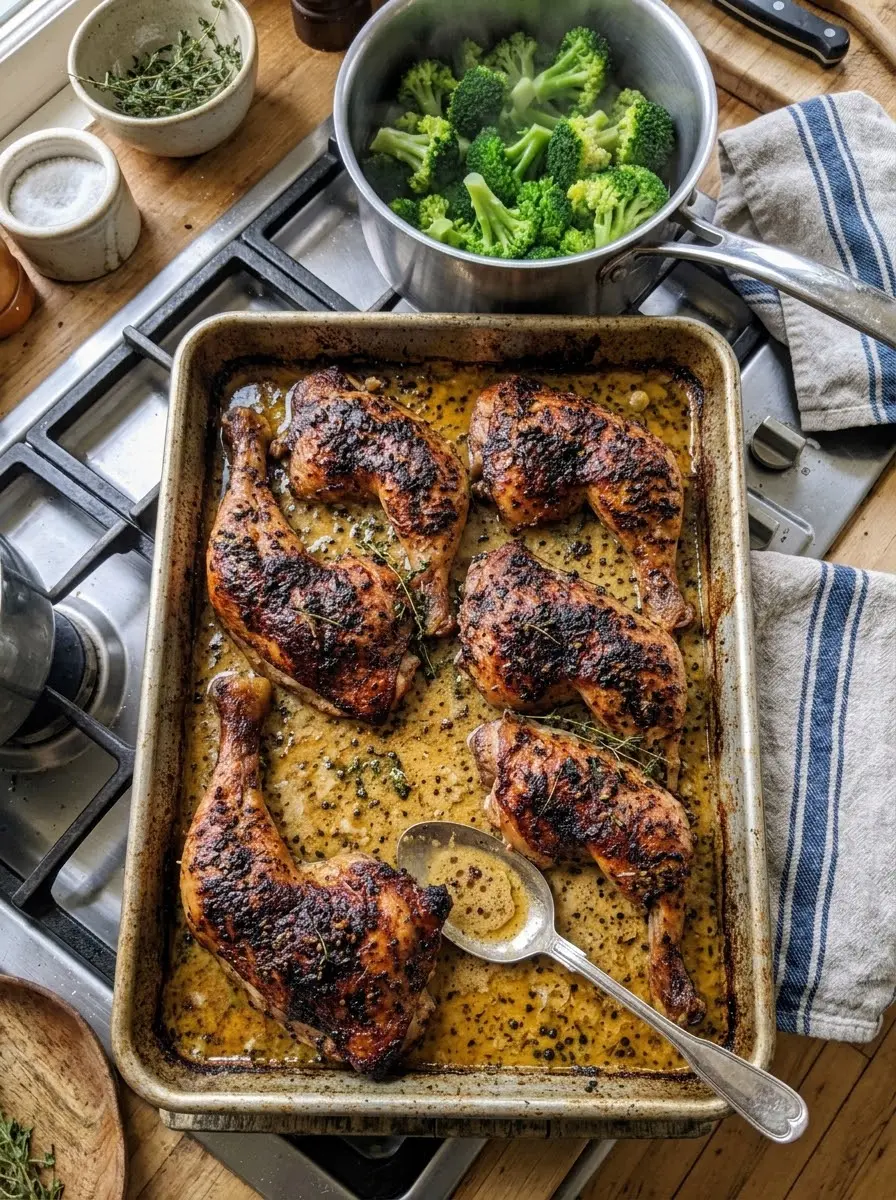
It’s a Sunday project, not a weeknight one, but the cream reduces into the pan juices and turns into something close to gravy. If you want to try it, the skillet sauce above is a good trial run for the flavors.
What to Serve With It
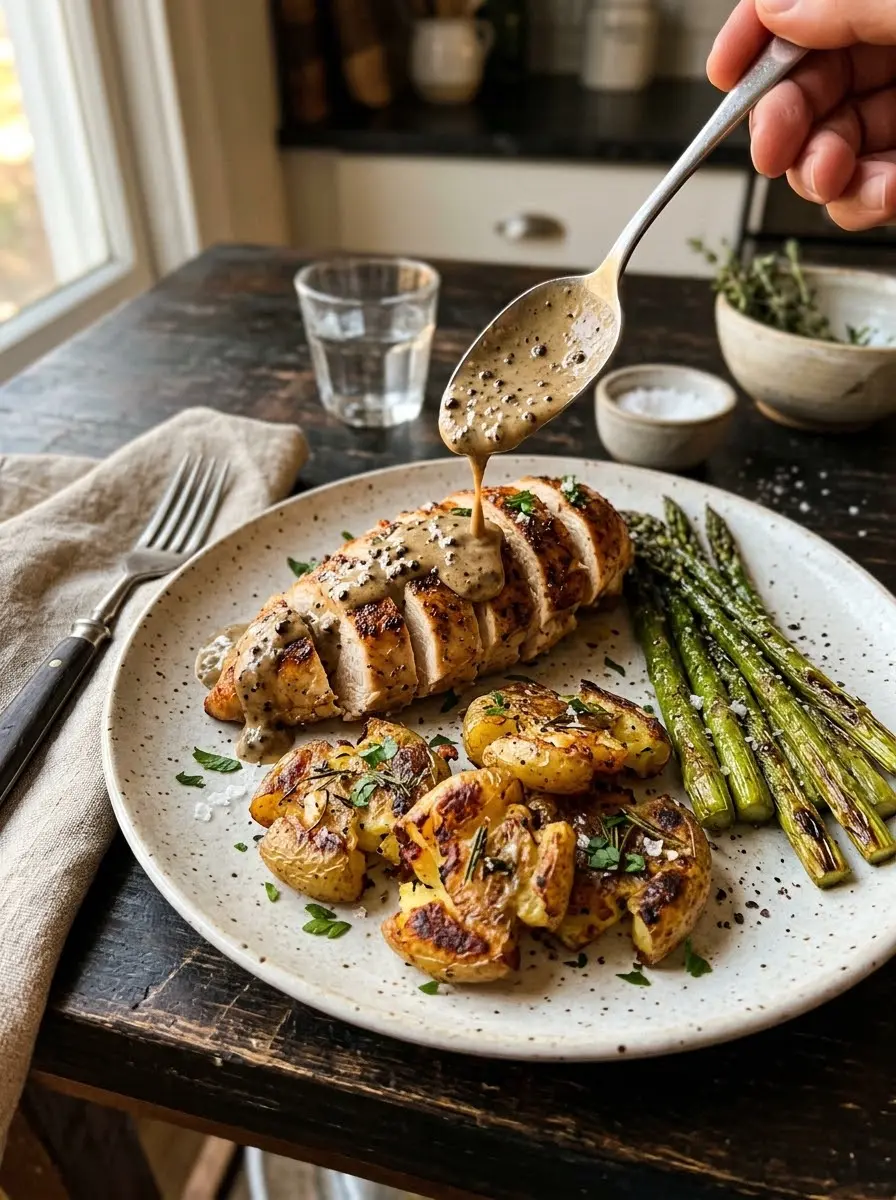
- Potatoes, any kind. Mash is the classic, crispy smashed potatoes or oven fries (steak-frites style) are just as good.
- Green beans or asparagus, blanched or roasted, to cut the richness.
- Crusty bread for the sauce. Not optional in my house.
- A sharp green salad with a mustardy vinaigrette.
Since it’s fall, roasted squash or a pan of sautéed mushrooms fits right in too. Our chicken mushroom onion recipe uses a similar pan-sauce technique if you want another one for the rotation, and our honey butter garlic chicken is a sweeter skillet option. Planning a full fall dinner? Start with a bowl of roasted tomato soup made with fresh tomatoes.
Tips and Fixes
- Sauce too thin? Keep simmering. Cream reduces fast; give it another minute before reaching for flour or cornstarch.
- Sauce too peppery? Stir in another splash of cream and a small knob of butter. Next time, sift the cracked pepper through a fine sieve to knock out the dust, which carries most of the harsh heat.
- Sauce split or greasy? It boiled too hard or you used light cream. Take it off the heat and whisk in a tablespoon of cold cream or stock.
- Chicken dry? The breasts were too thick or went too long. Slicing them in half, or switching to thighs, fixes this almost every time.
- How to crack peppercorns without a mortar: put them in a zip-top bag and press down with the bottom of a heavy pan, rocking it back and forth.
Storage and Reheating
Keep leftovers in an airtight container in the fridge for up to 3 days. Reheat gently in a covered skillet over low heat with a tablespoon or two of water or stock, since cream sauces thicken in the fridge. The microwave works at half power, stirring halfway. I don’t recommend freezing; the cream sauce turns grainy when it thaws. Plain leftover chicken (without the sauce) is great chopped into a high-protein chicken salad the next day.
FAQ
What does “au poivre” mean?
It’s French for “with pepper.” The name refers to the crust of cracked peppercorns on the meat and in the sauce.
What’s the difference between chicken au poivre and steak au poivre?
The sauce is basically the same: shallots, brandy, stock, cream and cracked pepper. Steak au poivre uses a thick beef steak cooked to medium-rare. Chicken has to be cooked through to 165°F, so it’s usually sliced thinner or made with thighs to stay juicy.
Can I make chicken au poivre without cream?
Yes. Use extra stock and finish the sauce with 2 to 3 tablespoons of cold butter swirled in off the heat. For a lighter creamy sauce, half-and-half works as long as you keep it at a gentle simmer so it doesn’t split.
Can I use chicken thighs?
Thighs are more forgiving than breasts and stay juicy even if you overshoot a little. Use boneless, skinless thighs and cook them 5 to 6 minutes on the first side and 4 to 5 on the second.
What can I use instead of brandy?
Cognac, dry sherry or bourbon all work. For no alcohol, use extra stock with a little lemon juice or vinegar for acidity.
Is chicken au poivre spicy?
It’s peppery, not chili-hot. The cream softens the bite a lot. If you’re cooking for kids, cut the pepper in the sauce by half and keep the rest on the chicken.

One last tip: make the sauce once with steak and once with chicken in the same month. You’ll find it’s the pan sauce you reach for with pork chops, salmon, even roasted mushrooms. Keep a jar of whole peppercorns next to the stove just for it.