
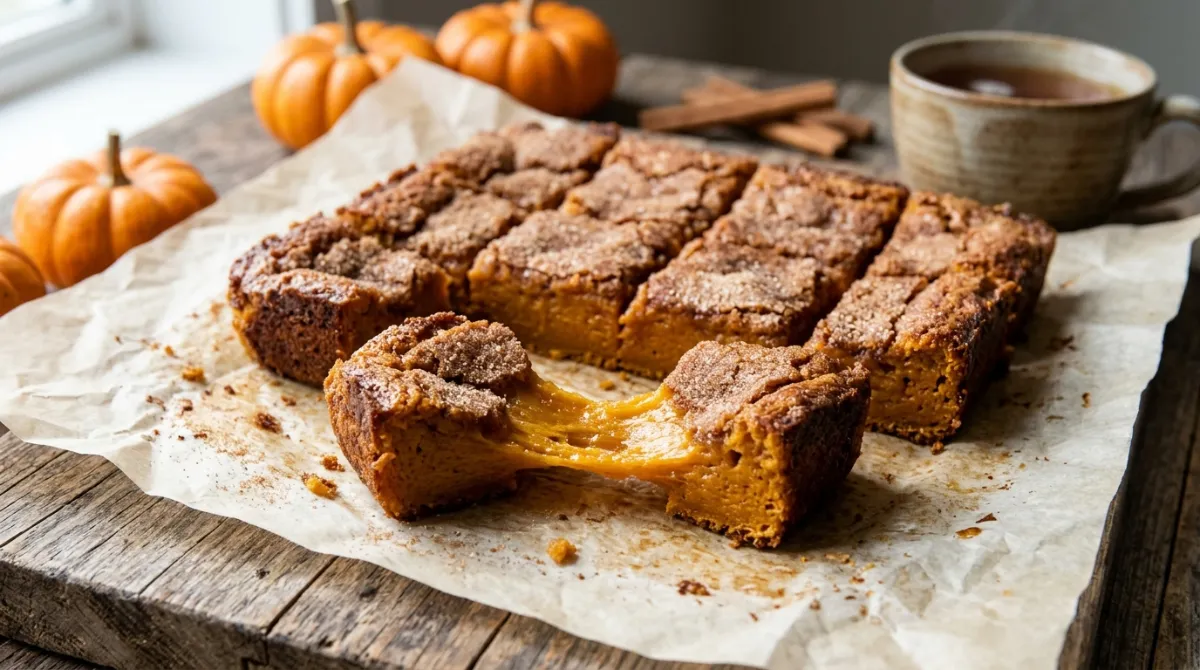
So pumpkin mochi. You know those crackly brownie corners people fight over at parties? Picture that outside, and then inside it’s soft, bouncy, chewy, kinda like pumpkin pie had a baby with a rice cake. My version is the Hawaiian butter mochi kind: sweet rice flour, a can of pumpkin, coconut milk, spice, one bowl, one 9×13 pan. No mixer. No rolling or shaping either, which is what most people picture when they hear “mochi.”
The first time I made it, I cut it way too early and it was a gooey disaster. Tasted amazing, looked like a crime scene. So yes, I’ll be bossy about the cooling part later on.
It’s also a sneaky good Thanksgiving dessert (November 26 this year), especially for anyone avoiding wheat. More fall ideas are waiting on our pumpkin recipes page.
Quick Facts
- Makes: one 9×13 pan, 24 pieces
- Hands-on: 15 minutes
- Bake: 55 to 65 minutes at 350°F (175°C)
- Cool: at least 2 hours (don’t skip it!)
- Naturally wheat-free: yes, sweet rice flour has no gluten
On this page: What it is · The flour that matters · Ingredients · How to make it · When it’s done · Japanese kabocha mochi · Storing · FAQ
What Is Pumpkin Mochi, Exactly?
The word “mochi” gets used for a bunch of stuff. Over in Japan it’s usually the sticky rice cakes, where cooked glutinous rice gets pounded (there are videos, they’re mesmerizing) or a sweet rice flour dough gets steamed. Wikipedia’s mochi page goes deep on all the traditional types.
Here in the States though? When people say pumpkin mochi they almost always mean the baked one. That comes from Hawaiian butter mochi, which is a total potluck staple over there, Japanese mochi flour plus coconut milk and butter, kind of a mash-up of everybody’s kitchens. You get a chewy, custardy cake that’s somewhere between mochi, blondie and pumpkin pie. Bake sale gold.
Further down I’ve also got a quick Japanese-style version made with kabocha squash, for anyone looking for the chewy pan-fried patties instead.
The One Ingredient You Can’t Swap: Sweet Rice Flour
People mess this up constantly, so, quick PSA. What you want is glutinous rice flour. Some bags say sweet rice flour, some say mochiko, it’s all the same. The famous one comes in a white box with blue stars, Koda Farms’ Mochiko, usually in the Asian foods aisle or online. Thai brands in clear bags with green writing work too.
Regular rice flour won’t do it. Confusing names, I get it! Plain rice flour comes from normal everyday rice, and baked? Sandy. Crumbly. Not one bit of chew. Glutinous rice is a different variety packed with amylopectin (a starch), and that’s what makes mochi all stretchy. Despite the name, it doesn’t contain gluten at all (more on glutinous rice here).
Pumpkin Mochi Ingredients and Swaps
Exact amounts in cups and grams are in the recipe card. This table covers what each ingredient is doing and what you can use instead:
| Ingredient | Job | Swap |
|---|---|---|
| Mochiko (16 oz / 454 g box) | The chew | Any glutinous rice flour, same weight |
| Canned pumpkin puree | Flavor, moisture, color | Thick, drained homemade puree |
| Full-fat coconut milk | Richness, tropical note | Whole milk (less rich, a bit more cakey) |
| Unsalted butter | Crispy, browned edges | Salted butter (skip the added salt) |
| Granulated + brown sugar | Sweetness, caramel edges | All white sugar |
| Pumpkin pie spice | Warm spice | Cinnamon, ginger, nutmeg mix |
Using homemade puree? Make sure it’s thick, or the middle stays gummy. My guide on how to make pumpkin puree from fresh pumpkin has the draining trick that gets it to canned-thickness.
How to Make Pumpkin Mochi (One Bowl)
Honestly this is mostly whisking. Oven goes to 350°F (175°C). My 9×13 metal pan gets a sheet of parchment with extra hanging off two sides, like handles, so the whole slab lifts out later. And yes, I grease the parchment too. It’s mochi. It sticks.
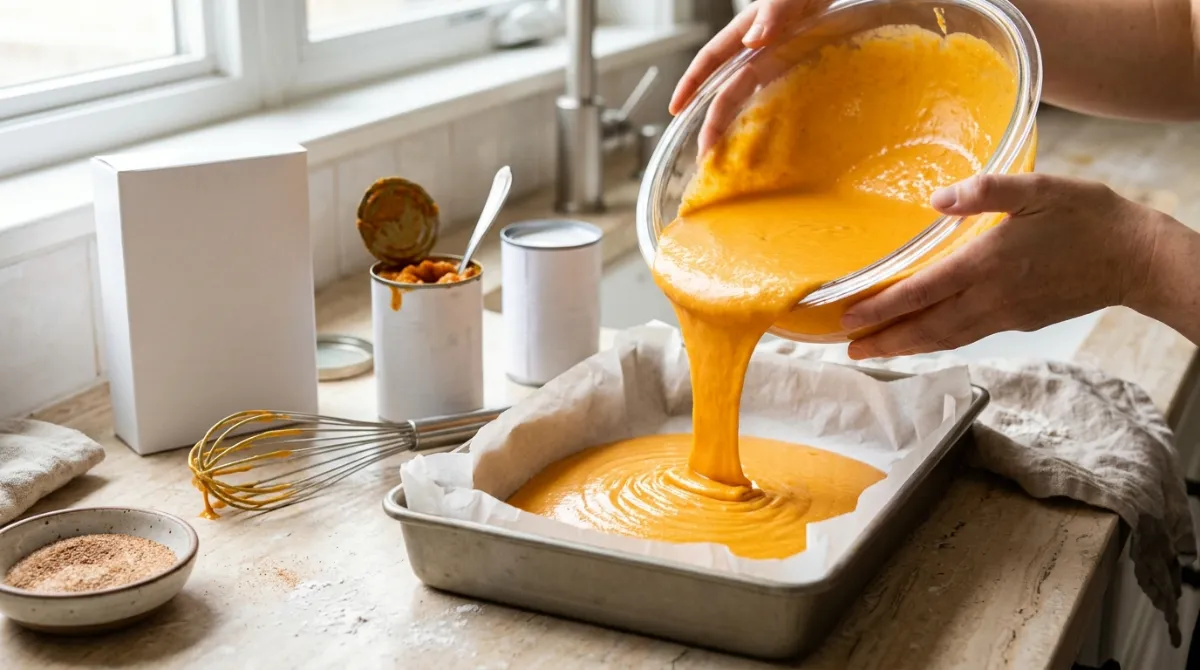
Big bowl. Dry stuff first, so mochiko, the two sugars, baking powder, spice, salt, quick whisk. Wet stuff right on top of that: coconut milk (give the can a real hard shake before opening, it separates), pumpkin, eggs, the melted butter, vanilla. I whisk for a solid minute until there are no flour streaks. The batter ends up thin and pourable, almost like pancake batter. That’s correct, don’t panic.
Into the pan it goes, then a sprinkle of cinnamon sugar over the top. Then 55 to 65 minutes in the oven. Somewhere around minute 40 you’ll notice the sides pulling off the pan and getting really golden, and your house will smell like one of those fancy fall candles.
First time working with mochi flour? It’s honestly one of the most forgiving batters out there. No folding, no overmixing worries, since there’s no gluten to toughen up.
RECIPE
Pumpkin Mochi (Hawaiian Butter Mochi Style)
Ingredients
- 1 box glutinous rice flour (mochiko) 16 oz / 454 g, about 3 cups
- 1 1/4 cups granulated sugar 250 g
- 1/4 cup packed light brown sugar 55 g
- 2 tsp baking powder
- 2 tsp pumpkin pie spice
- 1/2 tsp fine salt
- 1 can full-fat coconut milk 13.5 oz / 400 ml, shaken well
- 1 can pumpkin puree 15 oz / 425 g, not pumpkin pie filling
- 3 large eggs room temperature
- 1/2 cup unsalted butter, melted and slightly cooled 113 g
- 2 tsp vanilla extract
- 3 tbsp granulated sugar 36 g
- 1 tsp ground cinnamon
Equipment
- 9×13-inch metal baking pan
- Parchment paper
- Large mixing bowl
- Whisk
- Plastic knife or bench scraper
Method
- Heat the oven to 350°F (175°C). Line a 9×13-inch metal pan with parchment, leaving an overhang on two sides, and grease the parchment.
- In a large bowl, whisk the glutinous rice flour, granulated sugar, brown sugar, baking powder, pumpkin pie spice and salt until evenly mixed.
- Add the coconut milk, pumpkin puree, eggs, melted butter and vanilla. Whisk about 1 minute, until smooth with no dry streaks. The batter will be thin and pourable.
- Pour the batter into the pan and smooth the top. Stir the topping sugar and cinnamon together and sprinkle evenly over the batter.
- Bake 55 to 65 minutes, until the edges are deep golden and pulling away, the top looks set and dry, and a toothpick comes out sticky but without wet batter.
- Cool in the pan on a rack for at least 2 hours, until completely room temperature, so the mochi sets and turns chewy instead of gummy.
- Lift the slab out using the parchment and cut into 24 pieces with a plastic knife or bench scraper, wiping the blade as needed.
Nutrition
Notes
Private Notes
Tried this recipe?
Let us know how it was!How to Tell When Pumpkin Mochi Is Done
The toothpick test is a little weird with mochi, because even a fully baked one feels a bit tacky. Sticky toothpick? Fine. Wet, drippy batter on it? Not fine, back in it goes. The top looks dry, maybe a little cracked, and a gentle poke kinda springs back in slow motion. And the edges are dark gold and crunchy.
Underbaked mochi is dense and wet in the middle, even after it cools. Overbaked mochi just gets a bit firmer and darker on the edges, which plenty of people (me) actually prefer. So when in doubt, give it 5 more minutes.
Your pan matters too. Here’s how the bake time shifts:
| Pan | Bake time at 350°F (175°C) | Result |
|---|---|---|
| 9×13 metal (recommended) | 55 to 65 min | Thinner, crispiest edges, 24 pieces |
| 9×13 glass | 65 to 75 min | Softer edges, check middle carefully |
| Two 8×8 metal pans | 45 to 55 min | More edge pieces for the edge lovers |
| Muffin tin, 24 cups, greased | 25 to 30 min | Mochi muffins, crispy all over |
Why You Have to Let It Cool (Seriously)
Hot mochi is basically lava glue. Cooling is when the magic happens. The starch sets, goo becomes chew. Cut too soon and it’s smeared all over your knife and board, and every bite is gummy. Ask me how I know (see: crime scene, above).
Two hours on the counter. Minimum! Then I pull the whole thing out by those parchment flaps. I cut mine with a plastic knife. Weird tip, I know, but it really does drag less than steel. If all you’ve got is a regular knife, just wipe it off every couple of cuts.
What’s Trending: Butter Mochi Goes Global
Butter mochi has had a huge year online. Back in March 2026, The Korea Times reported on “butter rice cakes” blowing up all over TikTok and Instagram in South Korea. People were literally lining up outside little bakeries in Seongsu and Hongdae for them. The paper pointed out they’re really close to Hawaiian butter mochi and Filipino bibingka.
And pumpkin mochi is riding that wave here in the US. Google Trends shows searches for it up roughly 40% over the past year, which is a lot for a dessert most people couldn’t name a few years ago. Fair, it’s fun to eat.
Common Pumpkin Mochi Mistakes
Gritty, Crumbly Texture
Nine times out of ten? Wrong flour. If the bag doesn’t say glutinous, sweet, or mochiko somewhere, that’s your culprit.
Gummy, Wet Middle
Pulled it too soon, or couldn’t resist cutting it warm. (Been there.) Runny homemade puree does this too. Wait for a set top, then wait out the whole 2 hours.
Pale, Soft Edges
Glass pan, or the oven runs cool. A metal pan and a few extra minutes get you those caramelized corners.
Rock Hard the Next Day
Yep, that’s the fridge. The starch tightens up in the cold. Ten or fifteen seconds in the microwave and it’s chewy again, promise.
Prefer Japanese-Style Kabocha Mochi?
Maybe when you hear “pumpkin mochi” you’re picturing little golden pan-fried patties instead. Totally different thing, and also delicious. Those are usually kabocha mochi, kabocha being that dark green, super sweet squash people call Japanese pumpkin.
I don’t measure super carefully for these, but it goes roughly like this. Around 1 cup (225 g) peeled kabocha gets steamed (or microwaved, lazy days) till soft and then mashed. Knead that with 3/4 cup (95 g) glutinous rice flour and a little sugar, and if your hands get sticky, more flour. I make about 12 little discs and fry them in a nonstick pan, little oil, medium heat, maybe 3 or 4 minutes each side so they go golden. Soy sauce plus sugar plus a splash of water, bubbled till it’s syrupy, makes a glaze that’s honestly addictive.
Fun Ways to Change It Up
Ooh, and white chocolate chips scattered on before baking sink in and go all melty. Toasted pecans for crunch, sure. I’ve also gone half cinnamon sugar, half shredded coconut on top, and the coconut toasts up in the oven, very tropical. Salted caramel over the cooled squares is never a bad idea either.
Love the Hawaii connection here? Then you’ve gotta try my Hawaiian pumpkin crunch, another island-style pumpkin dessert that shows up at every potluck over there.
How to Store Pumpkin Mochi
Covered on the counter is fine for the day you bake it. It’s a moist one though, with pumpkin, eggs and coconut milk, so after that the leftovers go in the fridge in a sealed container, good for up to 4 days. On a buffet table, I pull it after 2 hours (the USDA danger zone rule).
Cold mochi goes firm, like I said, so a few seconds in the microwave fixes it. Want to save some for December? Wrap squares one by one and freeze up to 2 months. Thaw them on the counter, quick zap, done.
Pumpkin Mochi FAQ
Is pumpkin mochi gluten-free?
Ingredient-wise, yes! “Glutinous” just means sticky, there’s no actual gluten in it. If someone you’re feeding has celiac though, read the labels on your flour, baking powder and spices, since some brands share equipment with wheat.
Can I use regular rice flour instead of mochiko?
Sadly, no. Regular rice flour turns out gritty and crumbly, nothing chewy about it. Look for glutinous or sweet rice flour, like the Koda Farms Mochiko box or a Thai bag that says glutinous on it.
Why is my pumpkin mochi gummy?
Usually someone (hi) cut it warm, or it came out a little early. Two hours of cooling lets the starch set up. Thin homemade puree is the other sneaky cause, so drain it before you start.
Can I make pumpkin mochi dairy-free?
Yep, easy one. It’s already got coconut milk, so melted coconut oil or vegan butter in place of the butter is all it takes. You’ll lose a little of that deep browning on the edges. Still chewy, still great.
What does pumpkin mochi taste like?
Pumpkin pie meets coconut, mostly. The middle’s bouncy and chewy, the edges go crisp and caramel-y, and it’s not as sugary as you’d guess. Think chewy blondie, kind of.
Can I make it ahead for Thanksgiving?
Yep, I bake mine the day before. Once it’s cooled and cut, it goes in the fridge covered, and on the big day I either zap pieces for a few seconds or let them sit out for half an hour so they soften back up.
Bake a Pan This Weekend
My last tip is the boring-but-true one: buy two boxes of mochiko. Once people taste this, someone’s going to ask you to make it again. If you try it, leave a star rating on the recipe card and tell me in the comments whether you went 9×13 or muffin tin. Pin it for Thanksgiving, too.