
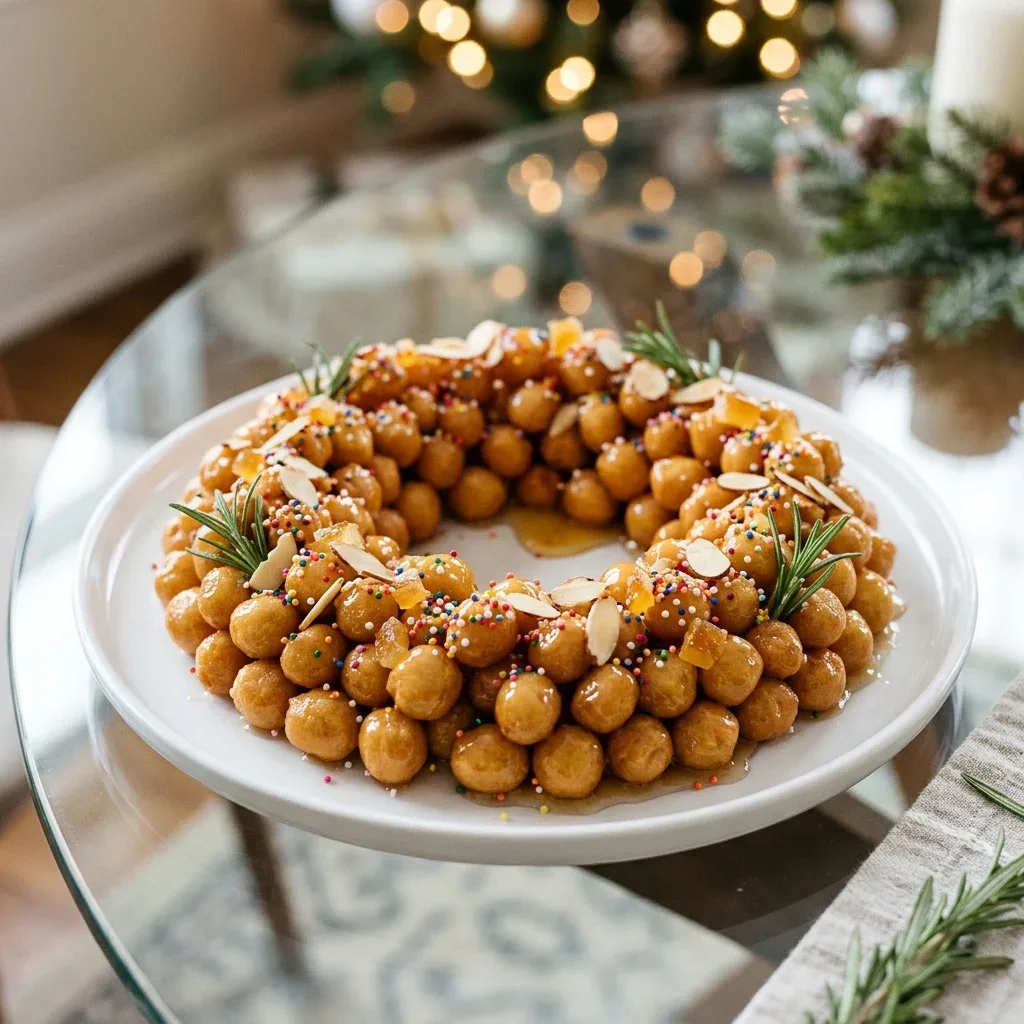
The two best-known Italian Christmas desserts are panettone and pandoro. In fact, they’re the tall sweet breads you’ll see on almost every dinner table in Italy in December. Besides that, each region has its own treats: honey-soaked struffoli in Naples, spiced panforte in Siena, torrone (nougat), crisp pizzelle and fig-filled cuccidati from Sicily. Here’s a list of 15 classic Italian Christmas desserts, where each one comes from, and my simple struffoli recipe.
I began making struffoli when a friend from Naples brought a dish of them to a December dinner. Within 10 minutes, however, they were all gone. They look hard to make, but they’re really just small pieces of dough, fried and coated in warm honey. In other words, if you can roll play dough into balls, you can make struffoli.
What Is the Most Popular Italian Christmas Dessert?
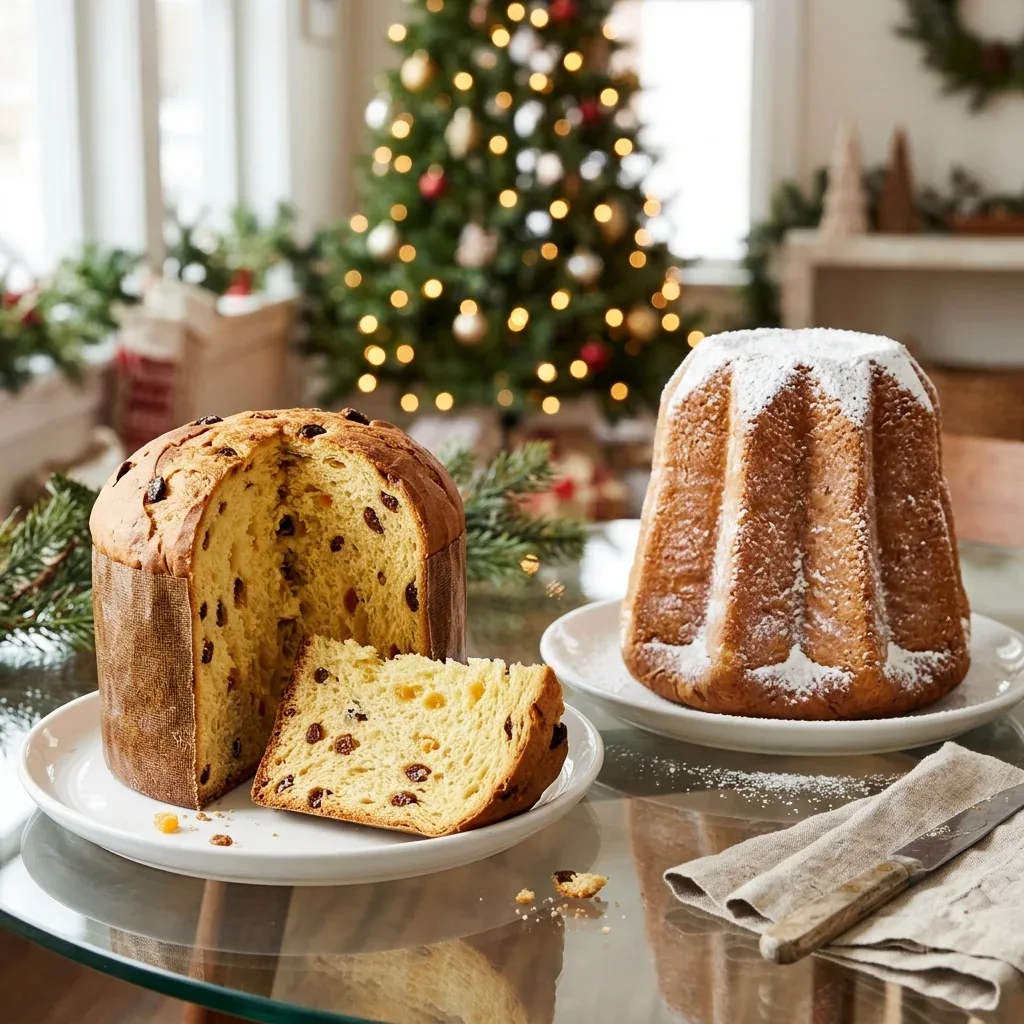
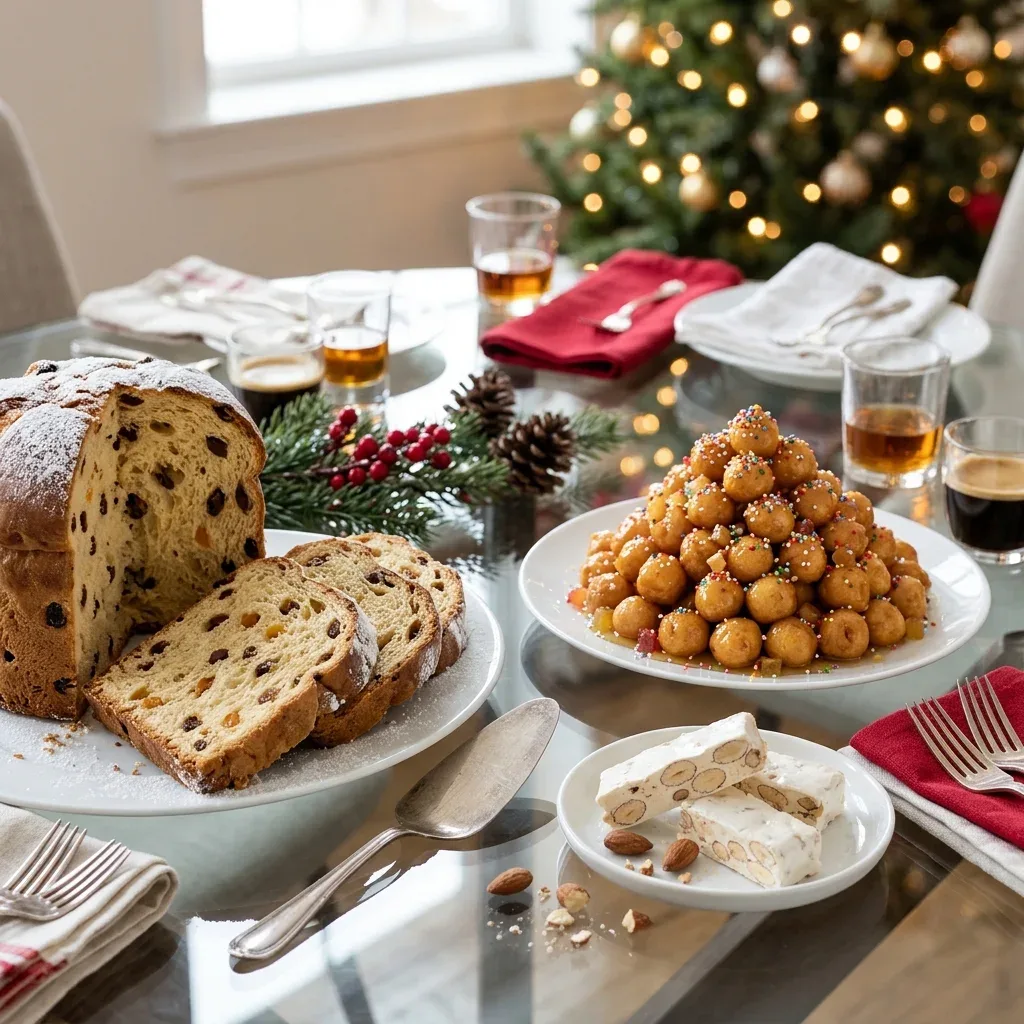
Panettone is the most popular, both in Italy and abroad. Meanwhile, pandoro is a very close second. Actually, many Italian families buy both and then argue over which one is better. Both are soft, buttery yeast breads. Still, they’re quite different:
| Panettone | Pandoro | |
| From | Milan (Lombardy) | Verona (Veneto) |
| Shape | Tall dome | Eight-pointed star |
| Inside | Raisins and candied citrus | Plain, golden and very buttery |
| Topping | Usually none, sometimes a sugar glaze | A shower of powdered sugar |
| Best for | Fruit lovers, Christmas breakfast | Kids and anyone who hates raisins |
You can read more about the history of panettone on Wikipedia. Want to bake one yourself? My homemade panettone recipe walks you through it step by step.
15 Traditional Italian Christmas Desserts
These are the Italian Christmas desserts you’ll find most often in Italy from December through January 6, the day of Epiphany. To help you choose a few for your own table, I’ve sorted them into groups.
Sweet Breads and Cakes
- Panettone. A dome-shaped bread from Milan, filled with raisins and candied orange. Italians eat it after dinner and then again with their morning coffee.
- Pandoro. The golden, star-shaped bread of Verona. Just before serving, shake it in its bag with powdered sugar, so it looks like a snowy mountain.
- Panforte. A dense, chewy cake from Siena made with honey, nuts, candied fruit and warm spices like cinnamon and pepper. It’s closer to candy than cake, so cut thin slices. Learn more about panforte.
- Torta caprese. A flourless chocolate and almond cake from Capri. It’s not only a holiday cake. Still, it’s naturally gluten-free, so it’s a favorite at holiday meals.
- Tiramisu. Ladyfingers soaked in espresso, layered with mascarpone cream. It’s an all-year dessert, but many families make a big tray for Christmas Day. My family version uses only strong coffee, so everyone at the table can enjoy it.
Fried and Honey Desserts
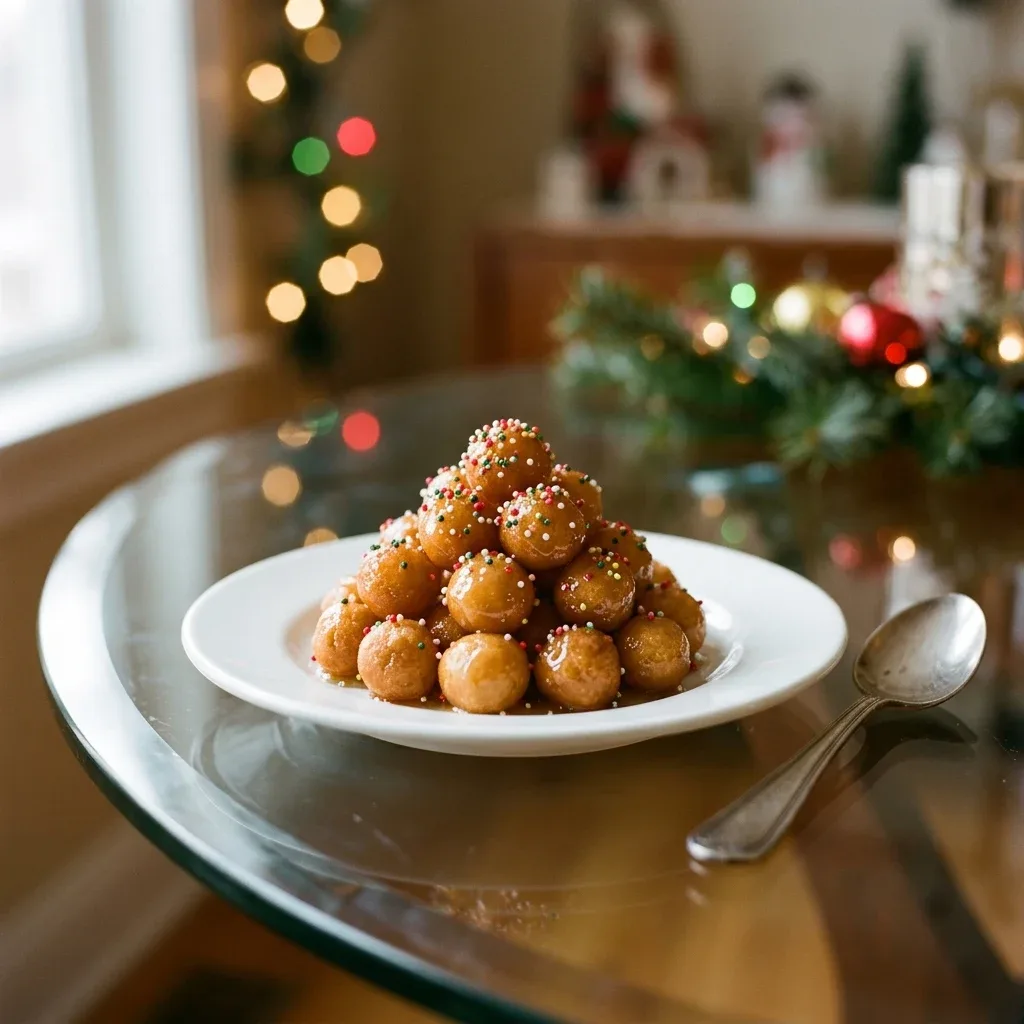
- Struffoli. The star of Christmas in Naples. Small pieces of fried dough are rolled in honey, piled into a mound or ring, then topped with colorful sprinkles. In addition, you’ll find the full recipe below.
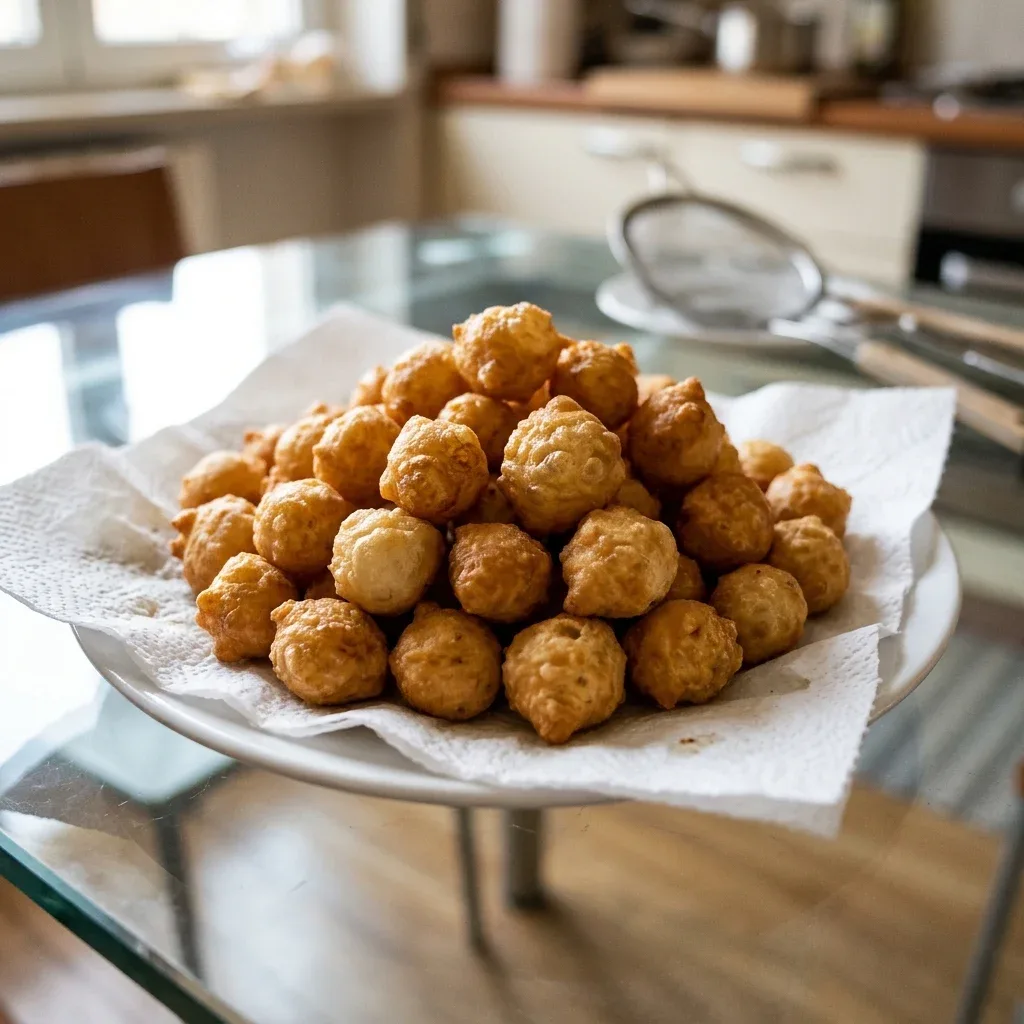
- Zeppole (or frittelle). Light, sweet fried dough, often served on Christmas Eve. Then they’re dusted with sugar. They taste best warm.
- Cartellate. Thin ribbons of dough from Puglia, pinched into rose shapes and fried. Afterward, they’re topped with honey or vincotto, a thick, sweet cooked grape must.
- Cannoli. Crisp fried shells from Sicily, filled with sweetened ricotta. For Christmas, many people stir chocolate chips or candied fruit into the filling.
Cookies and Candy
- Torrone. Italian nougat made with honey, sugar, egg whites and nuts. Almonds are the most traditional. However, you’ll also find hazelnut and pistachio versions. It can be soft and chewy or hard enough to snap.
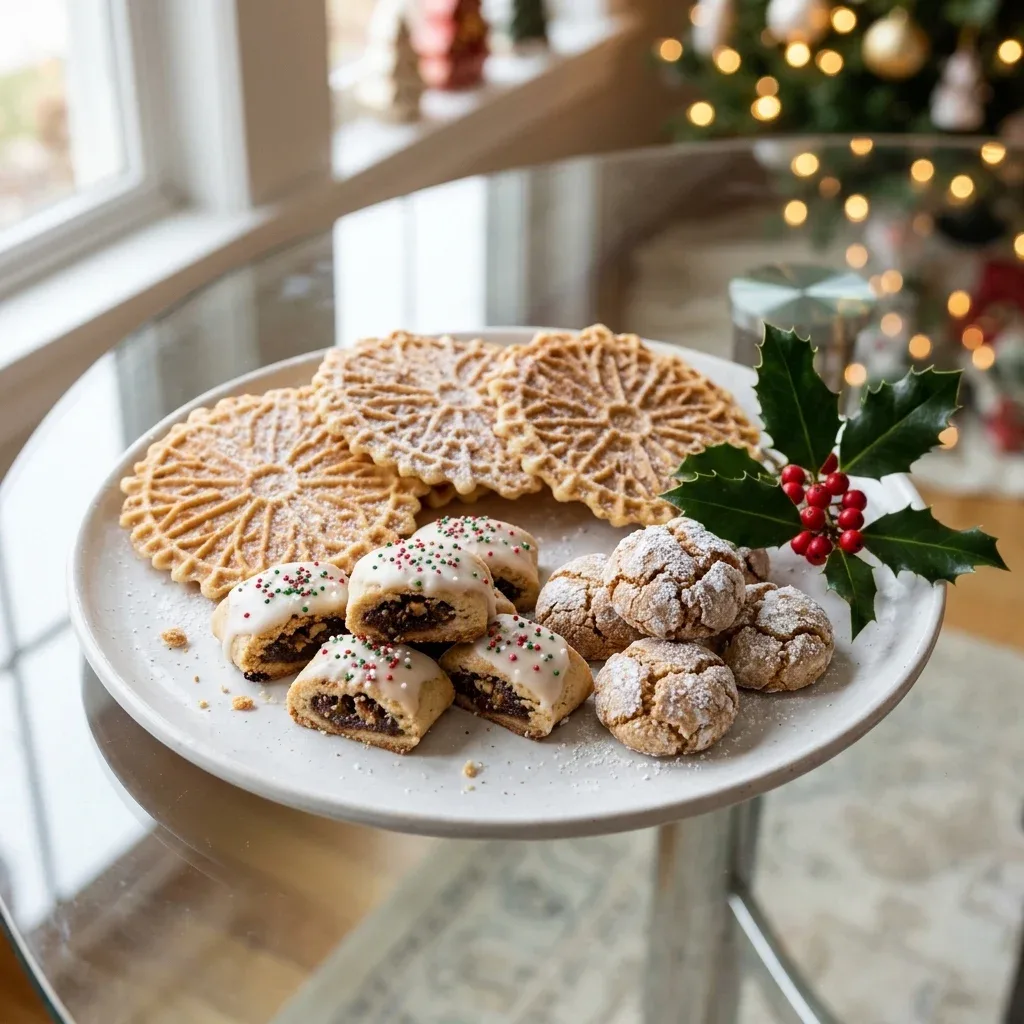
- Pizzelle. Thin, crunchy waffle cookies from Abruzzo, usually flavored with anise or vanilla. You’ll need a pizzelle iron. Once you have one, though, they’re quick to make.
- Cuccidati. Fig cookies from Sicily. A soft pastry is filled with dried figs, dates, nuts and orange, then iced and covered in sprinkles.
- Ricciarelli. Soft almond cookies from Siena. They have a cracked top and a dusting of powdered sugar. Likewise, they’re naturally gluten-free.
- Amaretti. These almond cookies can be crunchy or soft and chewy. On top of that, they’re delicious broken up and sprinkled over ice cream.
- Chocolate salami (salame di cioccolato). A no-bake log of chocolate, butter and broken biscuits, sliced to look like salami. Kids love making it because you don’t need an oven. For more ideas like this, see my chocolate Christmas desserts.
Italy’s official tourism site has a nice guide to the Christmas sweets of southern Italy, region by region, if you’d like to go deeper.
What Do Italians Eat for Dessert on Christmas Eve?
On Christmas Eve, Italians usually eat a lighter meal with no meat. Afterward, many families serve fried sweets like struffoli and zeppole, or a plate of dried fruit, nuts and torrone. Panettone and pandoro are most often saved for Christmas Day. However, plenty of people open the first one on December 24 anyway.
If you’re planning the whole meal, my Italian Christmas Eve dinner menu covers the Feast of the Seven Fishes from start to finish.
Which Italian Christmas Desserts Are Easiest to Make at Home?
Some of these need a pastry chef and three days. Others, by contrast, take one afternoon. To help you decide what to try first, here’s an honest look at the effort each one takes:
| Effort | Desserts | Why |
| Easy | Chocolate salami, tiramisu, amaretti, ricciarelli | No yeast, no frying, simple steps |
| Medium | Struffoli, zeppole, pizzelle, torta caprese, panforte | Frying, a special iron, or careful baking |
| Hard | Panettone, pandoro, cannoli shells, cuccidati, cartellate | Long rising times or lots of shaping |
If it’s your first time, I’d choose struffoli. First of all, you don’t need any special tools. What’s more, they look festive on any table.
How to Make Struffoli
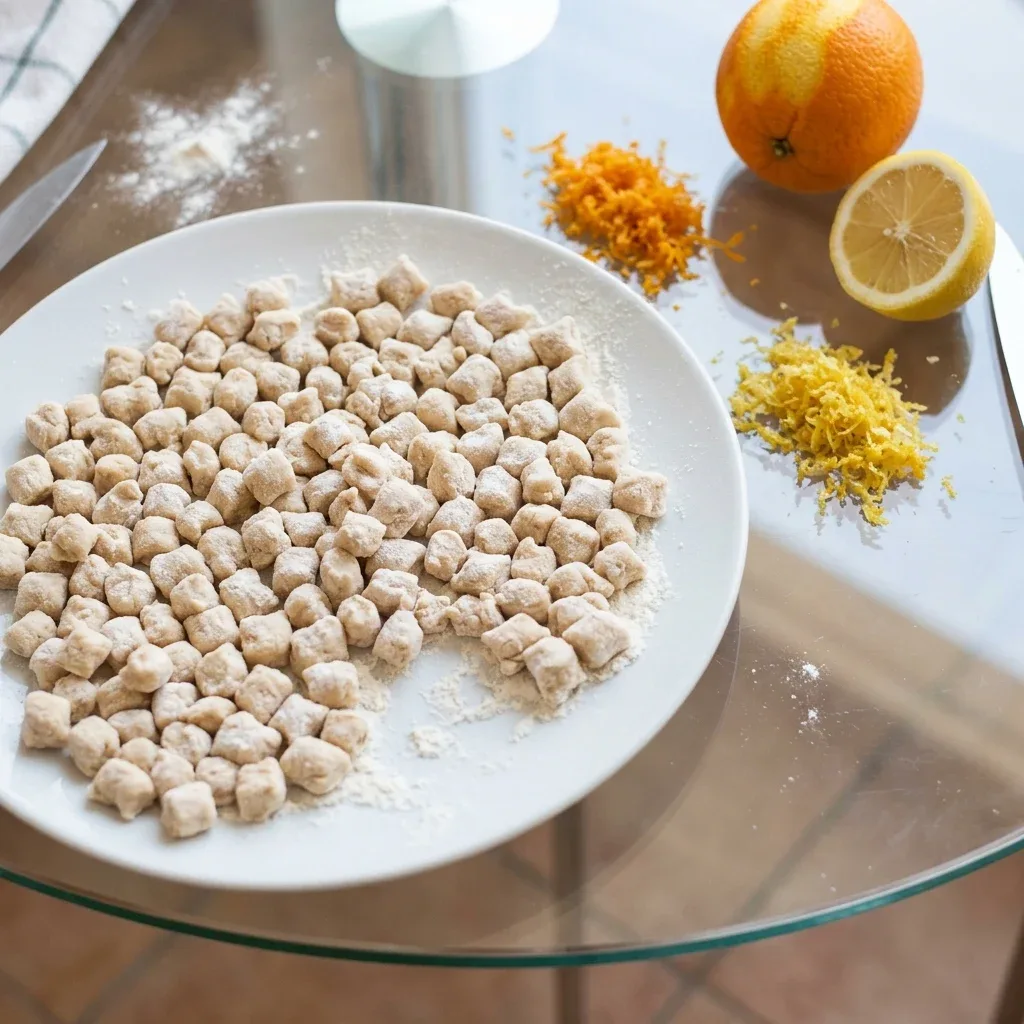
The process is simple. Above all, the key is to keep the pieces small and the oil at the right temperature.
- Make the dough. Mix the flour, sugar, baking powder, salt and citrus zest. Then add the eggs, soft butter and vanilla, and knead for 5 minutes.
- Let it rest. Wrap the dough and leave it for 30 minutes. After that, it’s much easier to roll.
- Roll and cut. Roll thin ropes and cut them into 1/2-inch pieces, about the size of a hazelnut.
- Fry. Fry small batches at 350°F (175°C) for 2 to 3 minutes, until puffed and light golden.
- Coat in honey. Warm the honey with a little sugar. Take it off the heat and stir in the fried balls.
- Shape and decorate. With damp hands, pile them into a ring or mound. Finally, add sprinkles and let them set for an hour.
Struffoli (Neapolitan Honey Balls for Christmas)
Ingredients
- 2 cups all-purpose flour 250 g, plus a little for dusting
- 2 tbsp granulated sugar 25 g
- 1/2 tsp baking powder
- 1/4 tsp salt
- 1 lemon finely grated zest only
- 1 orange finely grated zest only
- 3 large eggs room temperature
- 2 tbsp unsalted butter 28 g, very soft
- 1 tsp pure vanilla extract
- 4 cups vegetable oil 1 liter, or peanut oil
- 3/4 cup honey 255 g, a mild honey like wildflower
- 2 tbsp granulated sugar 25 g
- 2 tbsp candied orange peel finely chopped, optional
- 2 tbsp rainbow nonpareils for topping
- 2 tbsp toasted sliced almonds optional
Method
- Whisk the flour, sugar, baking powder, salt, lemon zest and orange zest in a large bowl.
- Add the eggs, soft butter and vanilla. Mix with a fork, then knead for about 5 minutes until the dough is smooth and soft. If it sticks to your hands, add flour 1 tablespoon at a time.
- Wrap the dough and let it rest at room temperature for 30 minutes.
- Cut the dough into 8 pieces. Roll each piece into a rope about 1/2 inch (1.25 cm) thick, then cut it into 1/2-inch pieces. Toss them with a little flour so they don't stick.
- Heat the oil to 350°F (175°C) in a heavy pot. Fry the dough in small batches for 2 to 3 minutes, until puffed and light golden. Drain on paper towels and let them cool.
- Warm the honey and sugar in a wide pan over low heat for 2 to 3 minutes, until the honey is thin and runny. Don't let it boil hard.
- Take the pan off the heat. Add the fried balls and the candied peel, then stir gently until every ball is coated.
- With damp hands, pile the struffoli onto a plate as a mound or a ring. Scatter the sprinkles and almonds on top. Let them set for 1 hour before serving.
Nutrition
Notes
- Keep the pieces small. They double in size when fried.
- Fry a test ball first. It should rise to the top and turn light golden in about 2 minutes. If it browns faster, lower the heat.
- Make ahead: fry the balls up to 2 days early and keep them in an airtight tin. Coat them in honey on the day.
- Store coated struffoli covered at room temperature for 3 to 4 days. The fridge makes the honey hard.
- Don't want to fry? Bake the pieces on a lined tray at 350°F (175°C) for 12 to 15 minutes. They'll be less crunchy but still good.
- Serve with a small spoon or let guests pull off clusters with their fingers.
Private Notes
Tried this recipe?
Let us know how it was!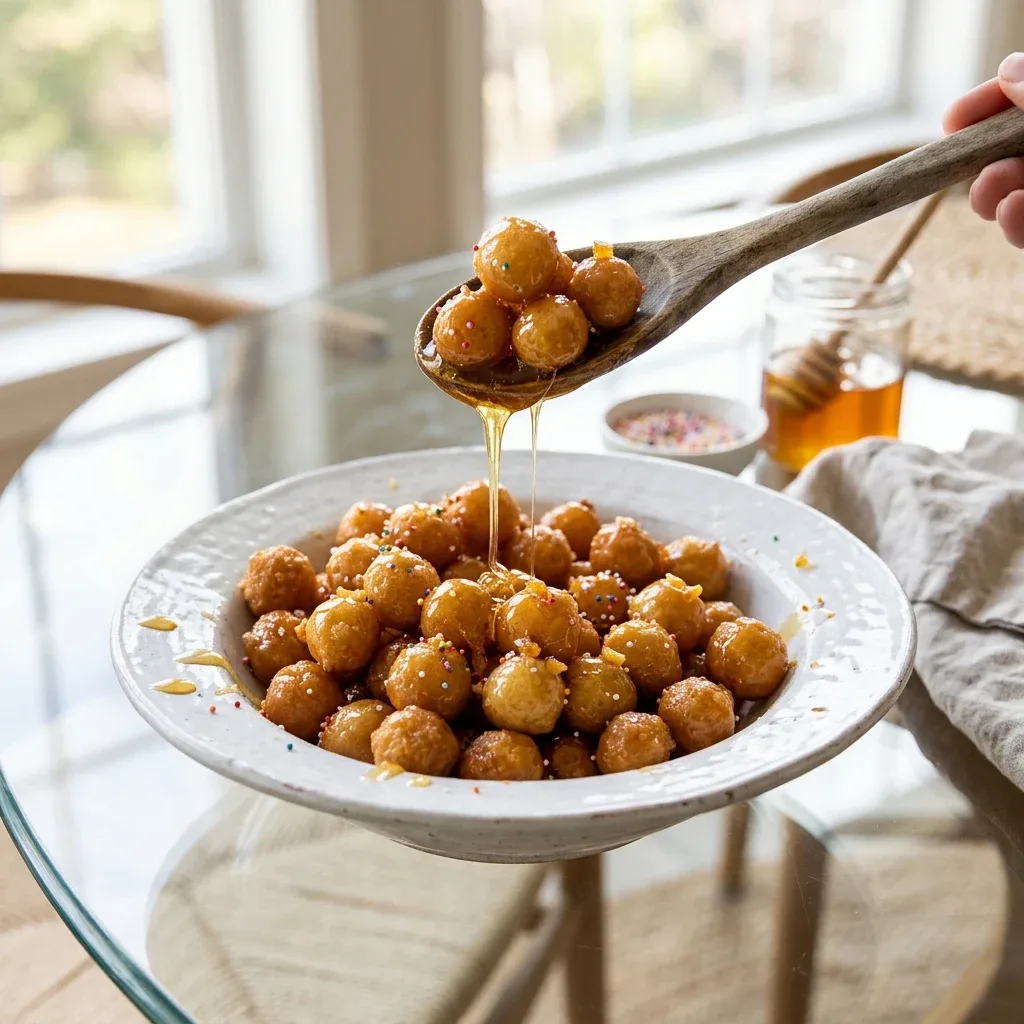
Tips for Perfect Struffoli
- Small is better. The pieces double in size in the oil. As a result, big ones end up doughy in the middle.
- Test the oil. Drop a single ball into the oil. It should float to the top and turn light golden within about 2 minutes. If it browns too quickly, lower the heat. Of course, a thermometer makes this much easier.
- Keep the honey warm, not hot. Boiling honey turns into hard candy. Instead, you only want it runny enough to coat.
- Get ahead. You can fry the balls up to two days ahead and keep them in an airtight tin. Then, on the day, the honey step takes only 10 minutes.
- Don’t refrigerate them. After all, cold makes the honey hard. So cover the struffoli and keep them at room temperature for three to four days.
For more on the dish’s roots in Naples, see this short history of struffoli.
Italian Christmas Desserts FAQ
What is the difference between panettone and pandoro?
Panettone comes from Milan and contains raisins and candied citrus. Pandoro comes from Verona, has no fruit and is shaped like a star. Even so, both are soft, buttery yeast breads.
What are the most popular Italian Christmas desserts?
Overall, panettone and pandoro are the top choices all over Italy. Struffoli, torrone, cannoli, pizzelle and panforte are also popular, depending on the region.
What is a typical Christmas dessert in southern Italy?
The South loves honey, almonds, figs and fried dough. That’s why you’ll find struffoli in Naples, cartellate in Puglia, and cuccidati and cannoli in Sicily.
How long does panettone last once opened?
First, wrap it tightly. That way, it stays soft for about a week at room temperature. If it dries out, toast the slices or turn them into a bread and butter pudding.
Can I make struffoli without frying?
Yes. Bake the pieces at 350°F (175°C) for 12 to 15 minutes, then coat them in honey. They’ll be softer and less crunchy, but still delicious.
Are there Italian Christmas desserts without alcohol?
Most of them. Panettone, pandoro, struffoli, pizzelle, amaretti and torrone are usually made without alcohol. For tiramisu, on the other hand, just use strong coffee on its own.
More Christmas Desserts
Building a holiday dessert table? Pick a few simple Christmas desserts to impress, add some Christmas cookie ideas, a batch of peanut brittle next to the torrone, or a few Christmas candy recipes. You’ll find the full holiday menu on my Christmas recipes page.
If you make struffoli this year, please leave a star rating on the recipe card. And tell me in the comments: are you team panettone or team pandoro?