
Table of contents
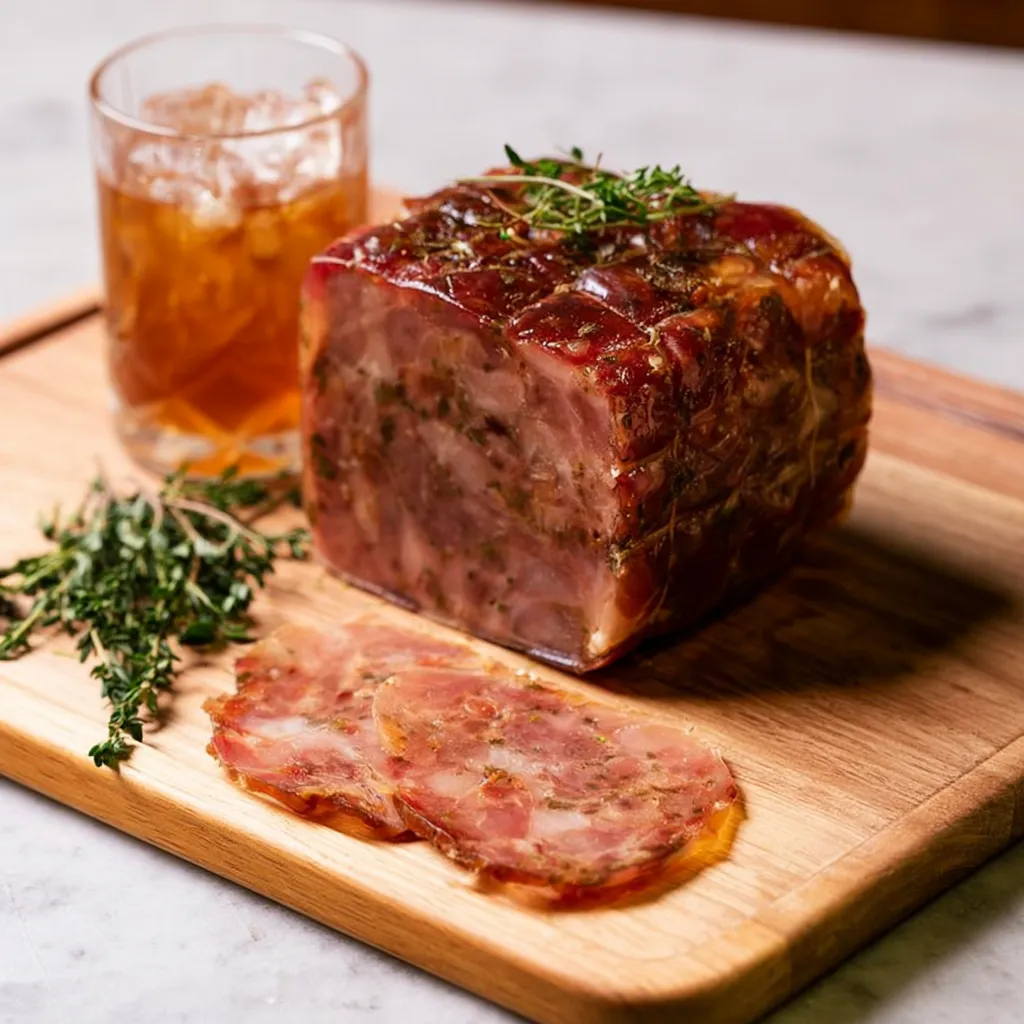
A brawn recipe is the oldest and well-respected example of meat preservation. Brawn — also called head cheese in some countries- is cooked slowly & low (a fancy way to say braised) for various collagen-rich meat bits until they are tender. The cooking liquid turns into gelatin (even blood) that glues the meat together as it cools. The best outcome is a cured cold cut that can be sliced and enjoyed as an appetizer, between meals, or together with the main course.
Families from all over Europe for centuries have made a brawn recipe since it was the best use of every part of an animal. People had to use preservation methods that made the most of what they could manage before home refrigeration became a standard. The combination consequently grew in recognition as Brawn limited food waste whilst leading to a scrumptious, wholesome dish. These days, lots of cooks still make brawn today, as much for its deep flavor as to maintain culinary practices handed down through the ages.
Now, with the re-emergence of nose-to-tail cooking in kitchens all over the country, brawn is making a comeback. While home cooks and even professionals love it for its sustainable, cheap nature, with an interesting chew. The initial preparation takes some time, but the end result is high, and this recipe proves that old traditional cooking methods do work.
RECIPE
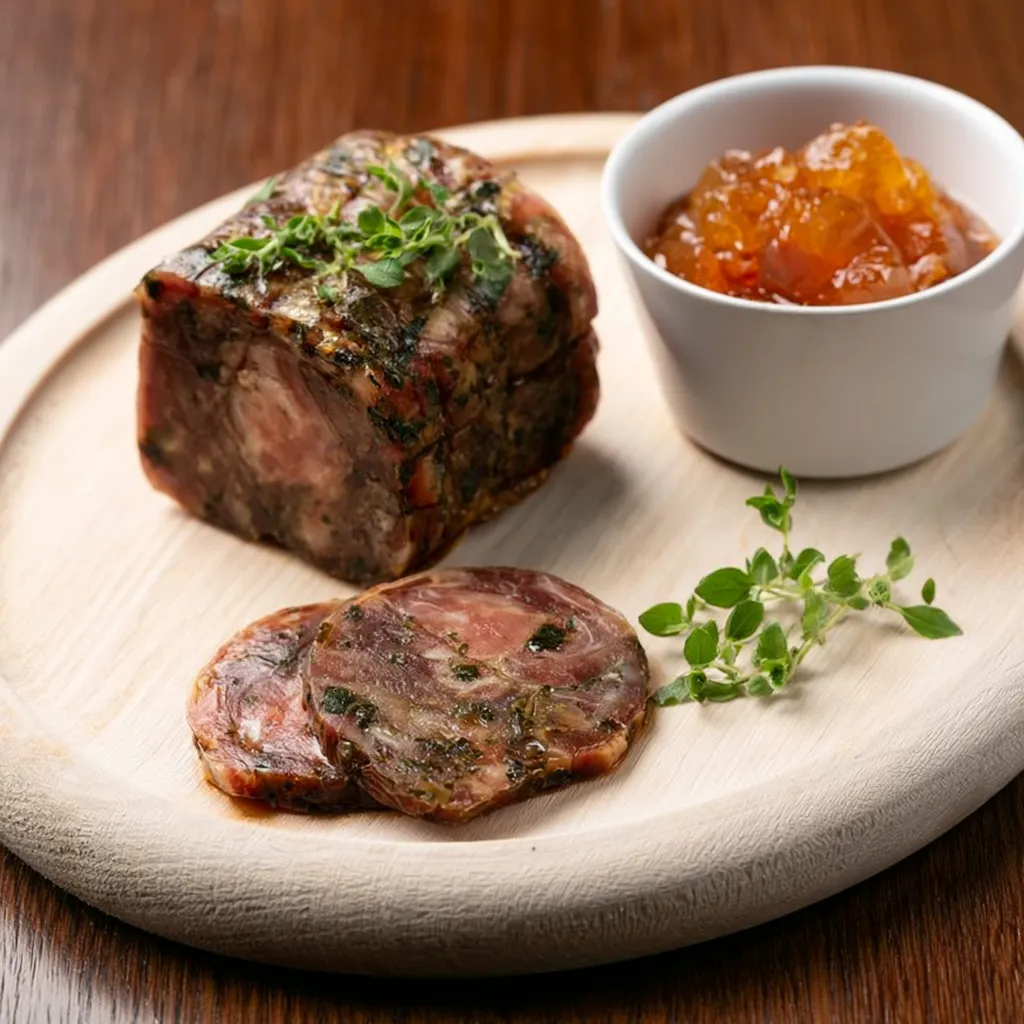
Traditional Brawn Recipe
Ingredients
- For the Brawn
- 1 pig’s head cleaned and split (about 4–5 kg)
- 2 pig’s feet optional, for extra gelatin
- 2 large onions quartered
- 3 carrots chopped
- 3 celery stalks chopped
- 6 garlic cloves crushed
- 3 bay leaves
- 1 tablespoon black peppercorns
- 1 teaspoon thyme
- 1 handful fresh parsley
- 2 tablespoons salt adjust to taste
- 4 liters water
- Optional Seasonings
- 2 tablespoons white vinegar
- 1 teaspoon mustard seeds
- ½ teaspoon ground nutmeg
Equipment
- Sharp knife
- Cutting board
- Fine mesh strainer
- Large mixing bowl
- Tongs
- Measuring spoons
- Loaf pan, terrine mold, or serving dish
- Plastic wrap or lid
- Refrigerator
Method
- Step 1: Prepare the Meat

- Thoroughly clean the pig’s head and feet under cold running water. Remove any remaining hair or impurities. Cut the head into manageable pieces if necessary.
- Step 2: Add Ingredients to the Pot
- Place the pork head, pig’s feet, onions, carrots, celery, garlic, bay leaves, peppercorns, thyme, parsley, and salt into a large stockpot. Pour in enough water to completely cover the ingredients.
- Step 3: Simmer Slowly
- Bring the mixture to a gentle boil, then reduce the heat immediately to a low simmer. Cook for 4 to 5 hours, occasionally skimming off foam and impurities from the surface.
- Step 4: Check for Tenderness
- The meat should be very tender and easily separate from the bones. Once fully cooked, remove the meat and allow it to cool slightly.
- Step 5: Strain the Stock
- Pour the cooking liquid through a fine-mesh strainer into a clean bowl. Discard the vegetables and herbs. Taste the stock and adjust seasoning if needed.
- Step 6: Prepare the Meat
- Remove all bones, cartilage, and excess fat from the cooked meat. Chop or shred the meat into small pieces.
- Step 7: Fill the Mold
- Place the chopped meat evenly into a loaf pan or terrine mold. Pour enough strained stock over the meat to cover it completely.
- Step 8: Chill and Set
- Allow the mixture to cool to room temperature. Cover and refrigerate for at least 8 hours or overnight until fully set.
- Step 9: Slice and Serve
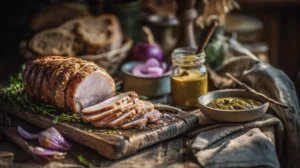
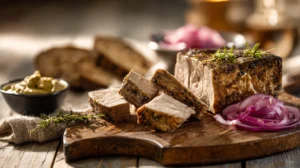
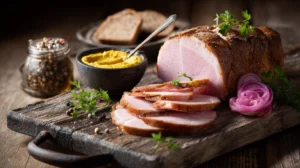
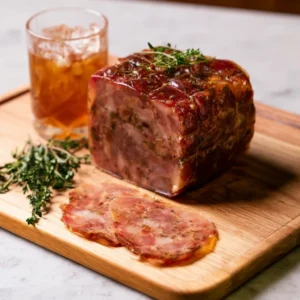
- Turn the set brawn out onto a serving plate. Slice thinly and serve cold with mustard, pickles, crusty bread, or salad.

Nutrition
Notes
- For the best texture, avoid boiling vigorously; maintain a gentle simmer throughout cooking.
- Pig’s feet help increase gelatin content and improve the firmness of the finished brawn.
- If the stock does not seem gelatinous, reduce it slightly before pouring it over the meat.
- Brawn typically tastes better the next day after the flavors have fully developed.
- Store refrigerated in an airtight container for up to 5 days.
- Serve with English mustard, pickled onions, cornichons, or fresh bread for a traditional presentation.
- This brawn recipe can be customized with additional spices such as cloves, allspice, or mustard seeds to suit regional preferences.
Private Notes
Tried this recipe?
Let us know how it was!The History and Origins of Brawn Recipe
The brawn recipe goes back hundreds of years across many different countries/cultures. Versions of brawn have been made across medieval Europe as resourceful cooks looked to preserve nutrients and obtain the last possible morsel from livestock. The food-making method spread especially in the farming communities, where wasting anything is never a consideration.
Over in England, the brawn recipe was viewed as a seasonal fixture at celebrations and festive meals. Oftentimes seasoned with herbs and spices that represented the people’s preferences around you, as well as what was readily available at your local marketplace. Similar preparations were developed in France, Germany, Poland, and other European countries with varying methods of preparation for several flavor profiles. So far, the idea was unchanged — meat cooked in its own gelatine for a long time.
The brawn recipe is still included in cooking history today. This is why food historians and traditional cooks continue to maintain these techniques, as they present a bridge to the past. Modern cooks prepare brawn — signalling the human talent for eating what needs to be eaten, then licking one’s lips at a dish with roots both in time and taste.
What Makes a Traditional Brawn Recipe Unique?
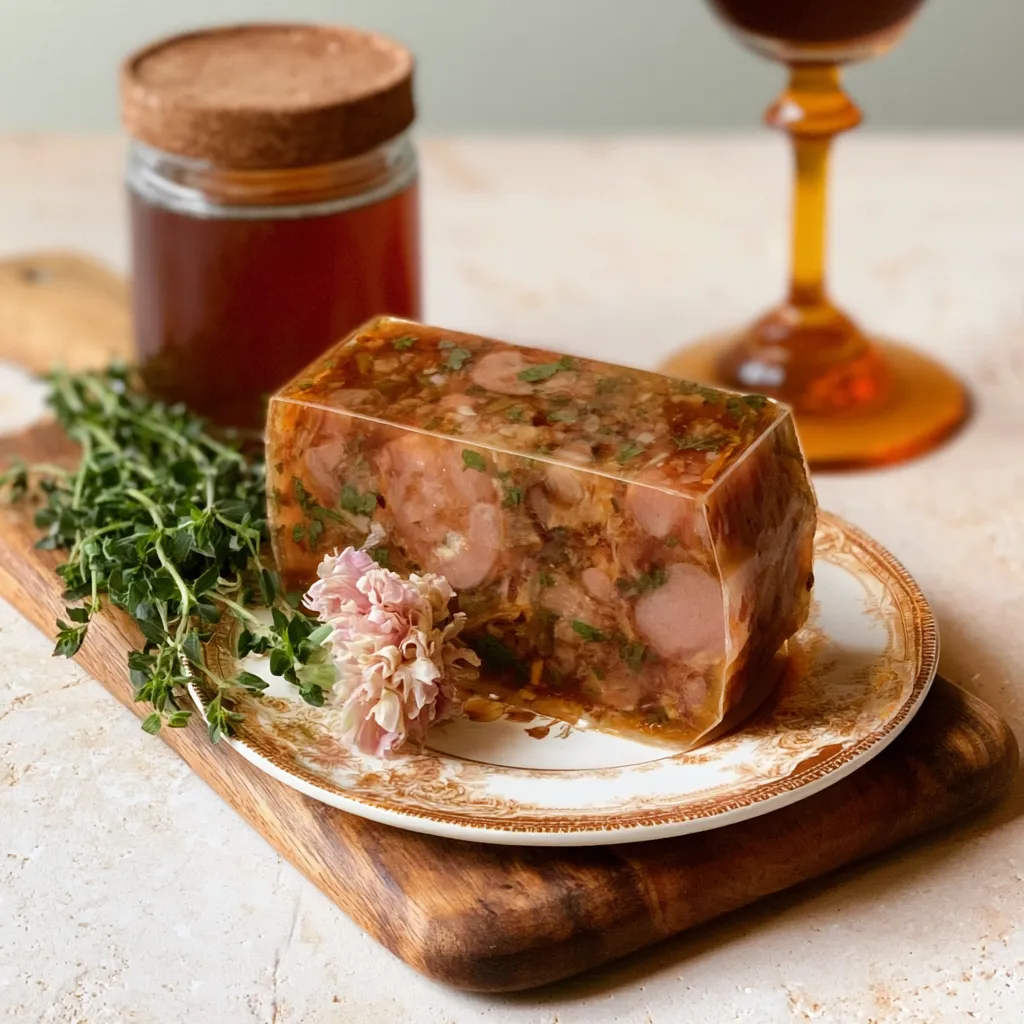
Unlike many modern processed meat products, a traditional brawn recipe does not use any synthetic ingredients or advanced cooking methods. Katz’s success lies in the fact that gelatin binds the meat that comes from collagen-forward cuts, rather than store-bought additives. That natural setting process provides real brawn with its unique texture and appearance.
An aspect that uniquely defines a brawn recipe is its focus on slow cooking. It is prepared by low-heat cooking of meat that has been boiled for many hours. Collagen breaks down while cooking and seasons the world around it, lending to a deep golden stock that will be gelatinous when cooled. The end result is a combination of soft meat with firm but delicate rest.
The diversity in the brawn recipes also plays a part in its success. Although the cooking techniques in general stay pretty much the same, cooks are free to modify herbs, spices, and seasonings. The flexibility of the dish allows it to stay traditional but also capture new influences and go regional, especially with globalisation at a certain stage.
Ingredients Required for Brawn Recipe
Essential Meat Cuts for Brawn Recipe
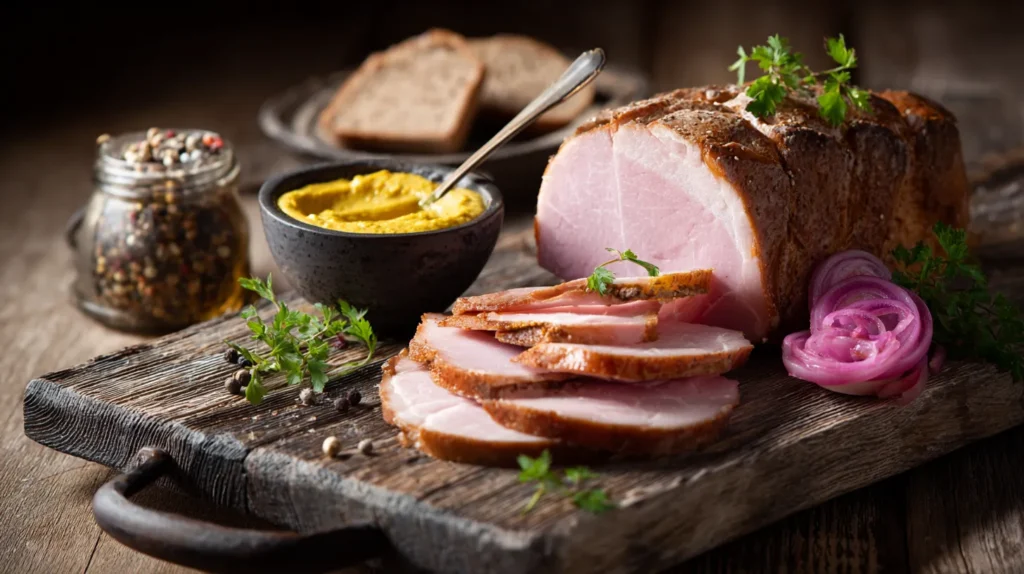
The first step in brawn success is choosing the right cuts of collagen-heavy meat. A pig’s head has been the traditional base because all that meat, skin, and connective tissue makes a great gelatin. Pig ears and trotters are often part of the recipe in order to boost gelatin or improve texture.
Ultimately, when we source ingredients for a brawn recipe, freshness is key. Meat quality has an important impact on flavor, texture, and food safety. Some of these cuts are available from specialty butchers, who may even offer to prepare them for cooking, saving home cooks a step.
Some cooks also add pork tongue, or references to brawn may sometimes include a variety of different cuts such as hocks or cheeks, with some variations using additional meats. These additions add flavor and give you more meat in the final product. Though optional, they build a more creamy and thick brawn that will appeal to the palates of many.
| Ingredient | Quantity |
|---|---|
| Pig’s head | 1 |
| Pig’s feet | 2 |
| Onions | 2 |
| Carrots | 3 |
| Celery | 3 stalks |
| Garlic | 6 cloves |
| Bay leaves | 3 |
| Peppercorns | 1 tbsp |
| Salt | 2 tbsp |
| Water | 4 L |
Vegetables and Aromatics Used in Brawn Recipe
In the traditional brawn recipe, along with it go some vegetables as a sidekick. Onions, carrots, and celery are often used to make a flavourful stock for cooking. These vegetables release natural sweetness that enables the pork to simmer together while complementing its richness.
On the other hand, herbs also play a critical role in defining flavor for any brawn recipe. Bay leaves, thyme, parsley, and sage are often used when flavoring the cooking liquid. First off, they add a hint of complexity without masking the flavor of your meat. The long cooking time allows their gentle scent to permeate the stock.
Other common ingredients in a brawn recipe are garlic, cloves, and peppercorns. These sweet spices provide depth and warmth to the flavor profile. Careful seasoning helps the end product be well-rounded, umami, and tasty without becoming too spicy or pungent.
Seasonings That Enhance a Brawn Recipe
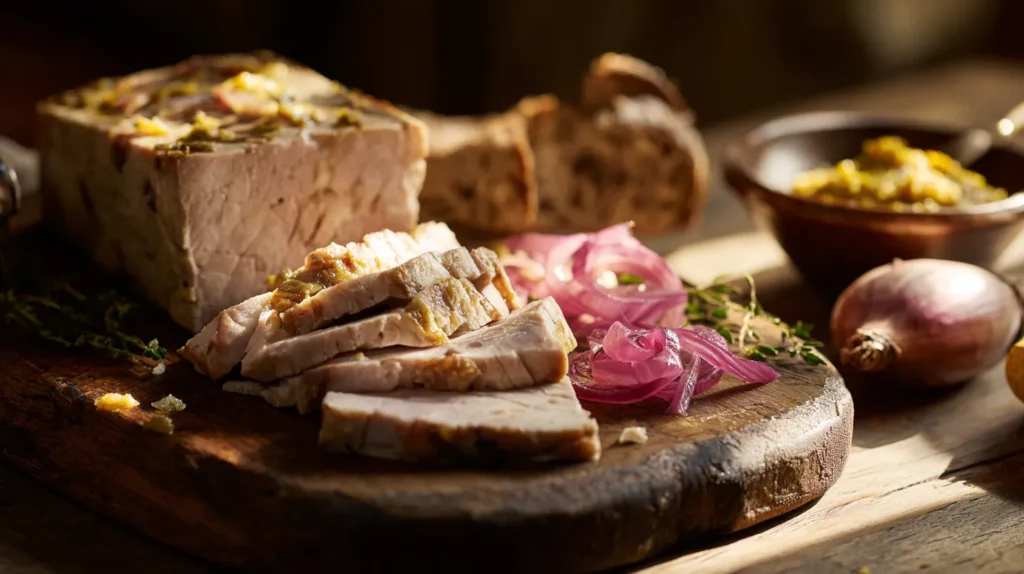
Seasoning is the most important part of a good brawn recipe. Salt is arguably the BIGGEST ingredient due to its ability to enhance flavour and preserve the end product. It needs to be measured, though; too much will upset the balance of meat and stock.
Black pepper: It adds mild heat and complexity, so it must have a place in the brawn recipe. When it comes to black pepper, whole peppers are often favored since they allow for a more gradual incorporation of flavor while cooking the stock. White pepper can be used for a smoother look and a slight change in taste.
So cooks sometimes use vinegar, mustard seeds, or nutmeg to spice up their brawn formula. These ingredients provide delicate layers of flavor to the rich pork. Seasoning depends on local traditions, and consequently, we have dozens of authentic, delicious versions.
Step-by-Step Preparation of Brawn Recipe
Preparing the Meat Properly
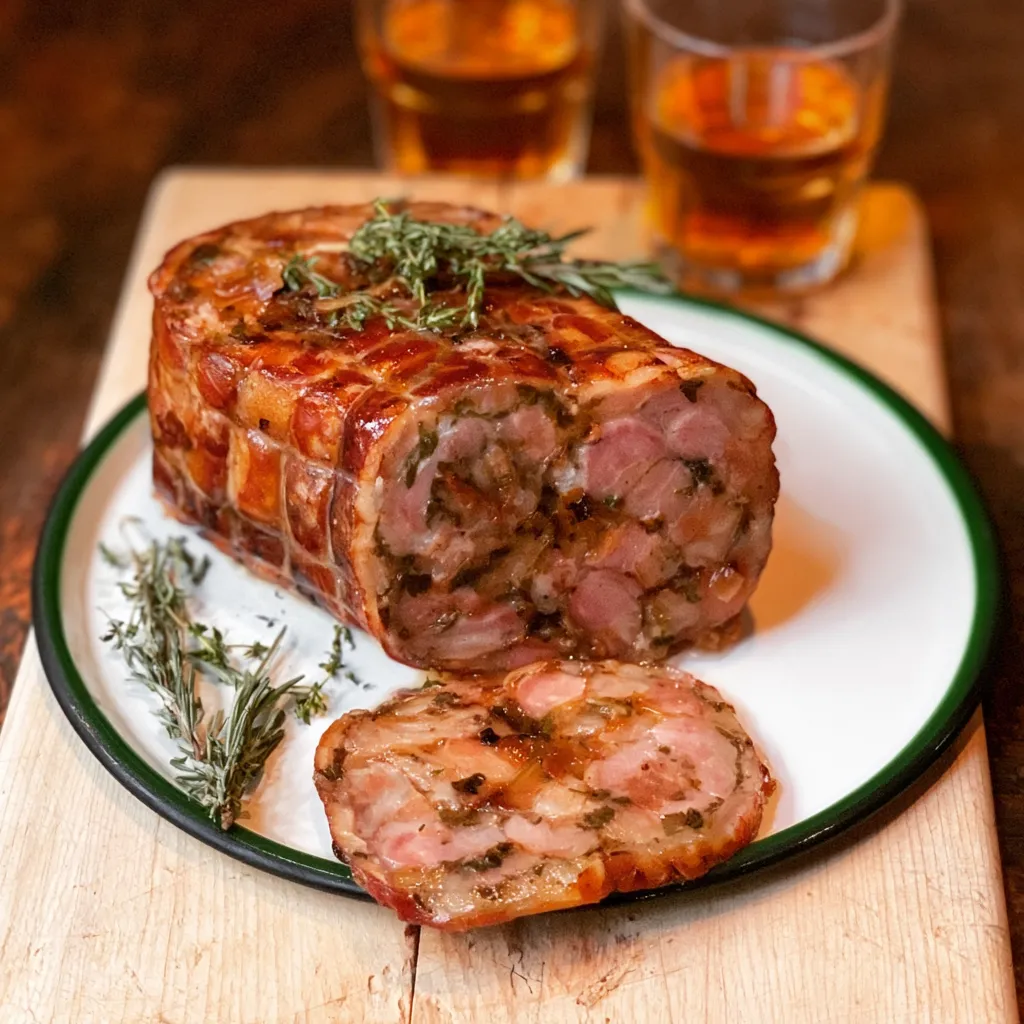
Stage 1: Cleaning the meat Your pig’s head should be washed and checked to remove any hairs or other impurities. Also, good preparation adds to both the flavour and the final look of the dish.
Being trimmed into even, straight meats that respectively fit the necessary pattern. Smaller cuts allow heat to infiltrate better, which helps the collagen break down and leach into your stock. It also makes it easier to remove the meat from the bone afterwards.
The quality of the brawn recipe is significantly tied to how carefully it has been prepared. This protects against unwanted flavour elements and allows the production of a cleaner, more attractive end product that meets traditional expectations!
Slow Cooking Process for Brawn Recipe
The traditional brawn recipe is based on slow cooking. The cut meat is put together in a deep pot with vegetables, herbs, and spices. Then bring the mixture to a simmer and let it cook for 2-3 hours, or until the scrub is tender enough that it easily peels away from the bones.
Collagen slowly dissolves into the liquid during cooking. This canon is built into a brawn recipe — one that works without unnatural-fixing agents. This makes for a hearty, delicious stock that has the ability to gel as it cools.
Skimming is a critical step during the entire process of preparing any brain recipe. Skimming foam and any other impurities will lead to a better stock, a more aesthetically appealing final product. While this step is a little tedious, it really makes the dish taste immeasurably better.
Molding and Setting the Brawn
The next step of the brawn recipe set in as soon as that meat was infused and cooked through. Once the meat has been torn from the bones, it is cut into small pieces and arranged neatly in molds, bowls, or terrines. Remove any unwanted cartilage or bony fragments.
The cooking liquid is strained of vegetables and seasonings before being ladled over the meat. In a properly formulated brawn, the stock is gelatin-rich enough to stick everything together when chilled. The firm consistency typically seen in brawn is created through this.
They are then cooled and allowed to cool in a refrigerator; that might be for hours or overnight. Once the mixture sets, however, gelatin solidifies and anchors the meat into place. The finished recipe for brawn can then be cut into neat slices and served cold on the side with a variety of accompaniments.
Tips for Perfect Brawn Recipe
Achieving the Right Texture
Texture is arguably the most critical attribute for a brawn recipe to work。 Well-cooked, a brawn should be firm enough to slice without being dry or tough. The key is to properly extract enough collagen during cooking.
The perfect brawn ingredient makes use of collagen-rich cuts, which lend a very specific flavour and texture to the dish. They also add more gelatin with the pig’s feet, ears, and skin to guarantee that your stock will set. With insufficient collagen, the final product is often mushy or doesn’t bind together properly.
The final texture is also influenced by holding the brawn recipe for a long time and letting it chill before refrigeration. If you rush it, some will turn out dirty and others clean, but being patient with the process helps to get a cleaner firm structure.
Avoiding Common Mistakes
A mistake that is frequently committed during the preparation of a brawn recipe. Boiling the stock vigorously will emulsify fat, clouding the stock and making it less appealing. A gentle simmer gives the stock a clearer and prettier final product.
Another error involves insufficient seasoning. Now, because the brawn recipe is eaten cold, flavours may not appear as strong as they would when warm. Good seasoning in the cooking will keep its taste when cooled down.
A brawn recipe may be of inferior quality if the stock is not strained very well. Filtration eliminates impurities and vegetable solids, giving the product a cleaner look and texture that is easier to consume.
Food Safety Considerations
Food Safety During Brawn Recipe Preparation. Using fresh ingredients, clean equipment, and handling the food correctly at various stages of preparation will reduce contaminating factors in cooking.
In fact, brawn recipes require it to be rapidly cooled after cooking. Leaving it on the counter for too long may invite bacterial growth. As soon as the mixture has cooled, it should be placed in the refrigerator.
Handling and storage help keep the unpreserved nature brawn recipe fresh for a long time. Herbaceous coddled brawn – or potted head, as it is sometimes known – can be refrigerated in a sealed container for up to several days after being cooked, offering peace of mind and assurance that the labour has not been wasted.
Conclusion: Mastering the Brawn Recipe
You are imbued with the spirit of not only history and skill but also resourcefulness in one dish, a hock recipe that represents your brawn. With selected cuts of collagen, such as pig head and cartilage from its ears (and sometimes feet), which are rich in gelatine, mixed with herbs, vegetables, and seasoning enhancers, makes a flavorful, advantageous cold cut. The use of slow-cooking and natural gelatin setting, which require time, patience, and precision, is also a defining feature in traditional professional culinary techniques.
Brawn recipes enable home cooks to reduce food waste, engage in sustainable cooking practices, and experience centuries-old European culinary traditions. This show also exemplifies the nose-to-tail approach in cooking, where almost every piece of animal is put to some use, so there is less waste. Also practical as an everyday, all-year-round meal in terms of combining many flavours (sandwiches / cold platters) or with pickles, mustard, and fresh bread.
In the end, though, the recipe for brawn is very much a composition of warmth and flavor, but also skill—one that punishes carelessness with punishment. What’s more, making this dish gives you a better understanding of both the traditional approaches to cooking and the culinary history behind one of Europe’s oldest forms of cold meat. All by itself, with some practice and care, anyone can get a properly set brawn that is firm, flavourful, but still respects its historical roots whilst pleasing the modern palettes.
Share Your Twist on This Brawn Recipe!
Like any classic brawn recipe, there are typically family secrets to work through. Even though the general technique stays constant, minor variations in herbs and spices or preparation can lend a totally different taste profile. Because of regional traditions, some cooks season it with garlic and black pepper for extra depth; others add mustard seeds or vinegar or fresh herbs to impart a distinct local flavor.
Tried this brawn recipe a different way? Maybe pork tongue because the richness takes it to another level, perhaps you put some aromatic spices from your parents’ generation, and serve it with a favorite homemade chutney or pickle. Traditional recipes almost always change over the course of time, as they incorporate family traditions and available locally sourced ingredients while still reflecting personal tastes in each recipe.
Please drop us a line about your favourite version of this brawn with the flour. Leave your comments on any tips or substitutions for the ingredients you made, and how to serve it differently with some creative tricks. Photo that could inspire another home cook to try something new and keep this ancient tradition alive for generations ideeën Happy cooking!

waw