
The most traditional Mexican Christmas desserts are buñuelos, churros, rosca de reyes, polvorones and arroz con leche. Most of them are simple, warm with cinnamon and piloncillo, and made to share at the posadas (December 16 to 24), on Nochebuena (Christmas Eve) and on Three Kings Day (January 6). Below you’ll find 15 classic sweets, when each one shows up during the holidays, and my easy recipe for crispy buñuelos.
The first time I had buñuelos, they were still warm and crackling under a spoonful of dark piloncillo syrup. Honestly, I was hooked. Now they’re the first thing I make when Christmas baking starts, because the dough takes ten minutes and everyone in the kitchen wants a turn with the rolling pin. So if you’re planning the whole menu, first start with my Mexican Christmas Food guide for the tamales, pozole and drinks, then come back here for dessert.
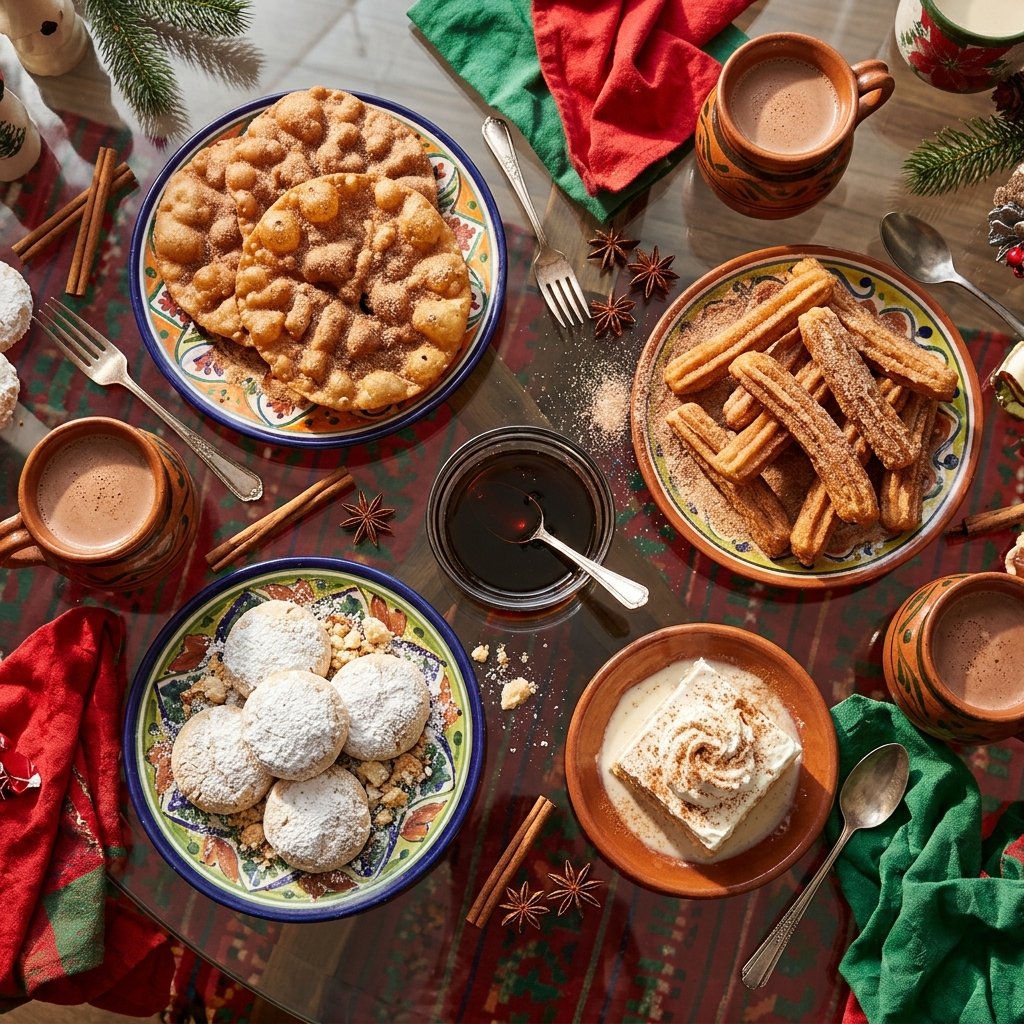
What Is the Most Popular Mexican Christmas Dessert?
Buñuelos are the most popular Mexican Christmas dessert. They’re thin rounds of fried dough, crisp like a cracker, finished with cinnamon sugar or a warm syrup made with piloncillo (Mexican unrefined cane sugar). For example, you’ll find them at posadas and Christmas fairs all over Mexico, usually sold next to a cup of champurrado or ponche.
Meanwhile, a close second is rosca de reyes, the ring-shaped sweet bread eaten on January 6. Whoever finds the little baby figure hidden inside has to host the tamales party on February 2, Día de la Candelaria. (Yes, everyone tries to avoid that slice.)
15 Traditional Mexican Christmas Desserts
Fried and Syrupy Mexican Christmas Desserts
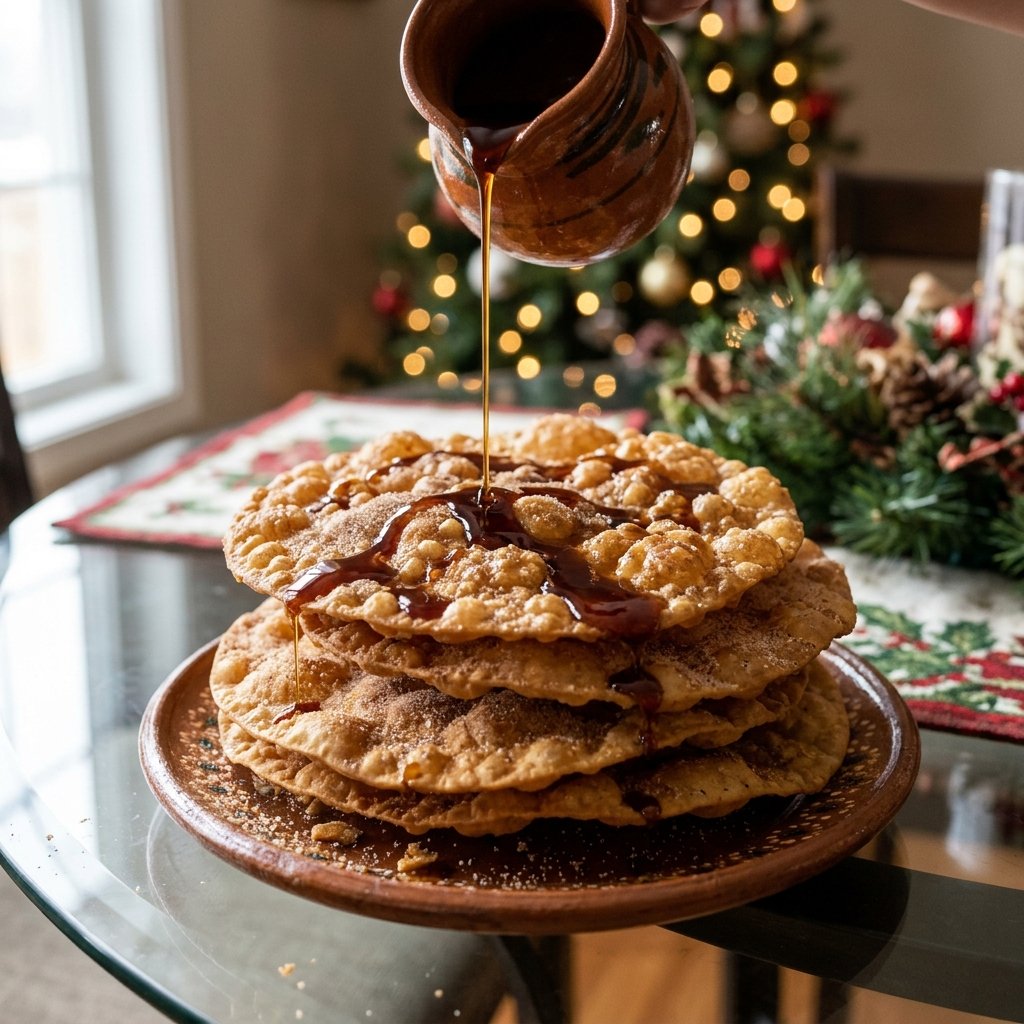
1. Buñuelos
Thin discs of dough fried until golden and bubbly, then dusted with cinnamon sugar or soaked in piloncillo syrup. Also, they keep for a week in a tin, so you can make a big batch before the holidays. The full recipe is below.
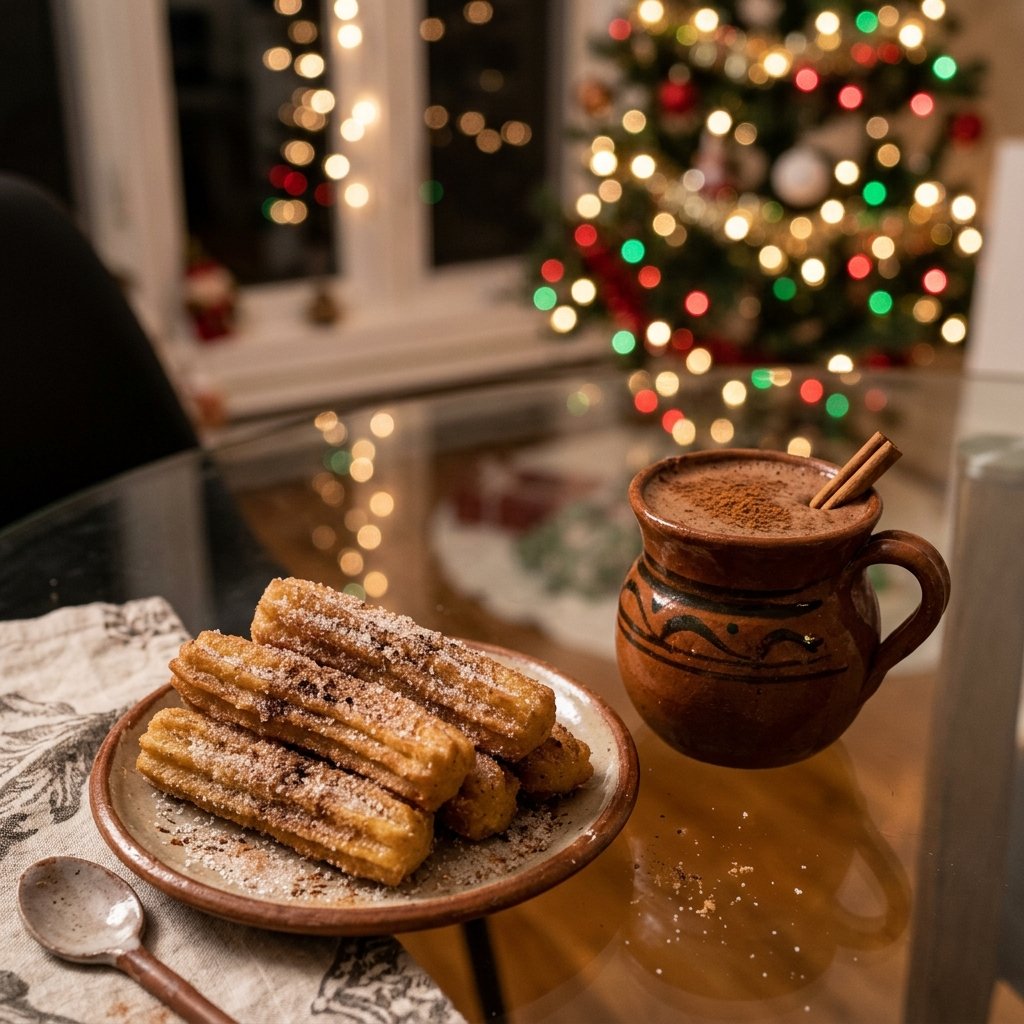
2. Churros con Chocolate
Like buñuelos, churros are fried, but these are ridged sticks of dough rolled in cinnamon sugar. At Christmas, however, they’re dipped in thick Mexican hot chocolate, or in my Crockpot Hot Chocolate when you’re feeding a crowd.
3. Torrejas
In other words, they’re Mexican French toast: slices of bread soaked in milk and egg, fried, then simmered in piloncillo syrup with cinnamon and cloves. In fact, lots of families serve them on Christmas Eve, after the late dinner.
Mexican Christmas Desserts: Cakes and Sweet Breads
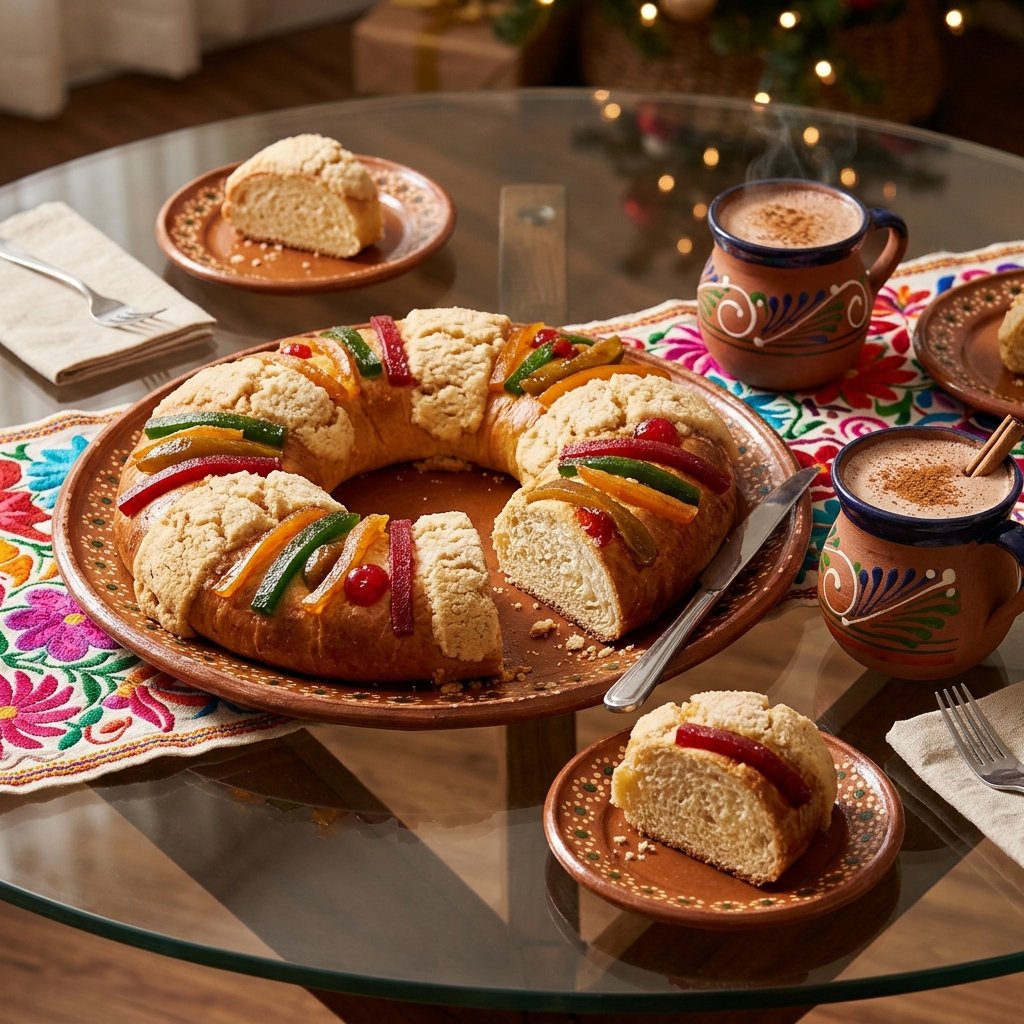
4. Rosca de Reyes
A large ring of soft, orange-scented sweet bread topped with strips of candied fruit and sugar paste. It’s shared on January 6 with hot chocolate, and the tiny baby hidden inside decides who brings the tamales on February 2.
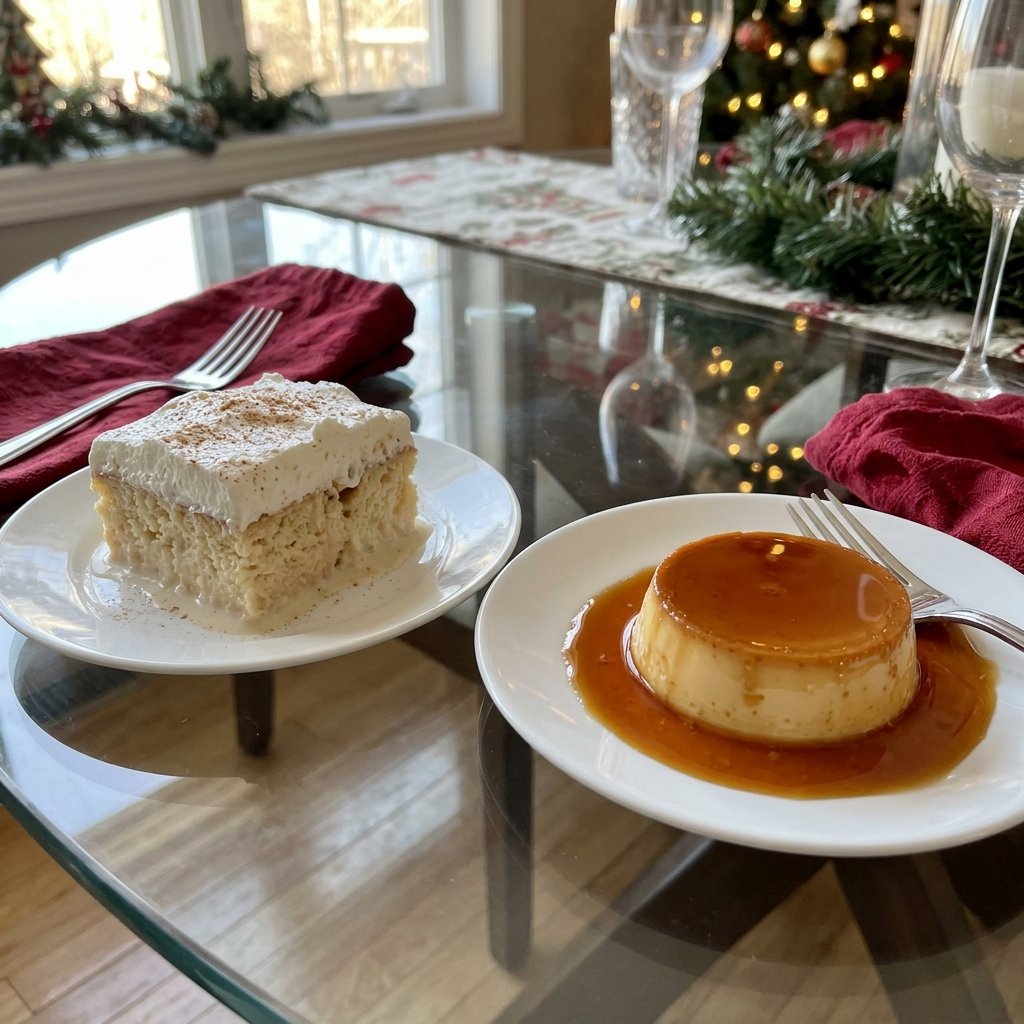
5. Pastel de Tres Leches
A light sponge cake soaked in evaporated milk, sweetened condensed milk and cream, then covered in whipped cream. Best of all, you make it a day ahead, which is exactly what you want when the house is full.
6. Flan Napolitano
A rich baked custard made with condensed milk, evaporated milk, eggs and often cream cheese, under a layer of amber caramel. Compared to Spanish flan, it’s firmer and creamier, so it slices cleanly for a buffet.
7. Chocoflan (Pastel Imposible)
First, chocolate cake batter goes in, then the flan on top, and they swap places in the oven. Of course, kids love the trick. If your crowd is all about chocolate, my Chocolate Christmas Desserts has plenty more.
Mexican Christmas Desserts: Cookies and Candy
8. Polvorones (Mexican Wedding Cookies)
Buttery pecan or walnut cookies rolled twice in powdered sugar, so they look like little snowballs. They melt in your mouth, and for that reason they belong on every cookie tray. For more ideas, see my Christmas Cookie Ideas.
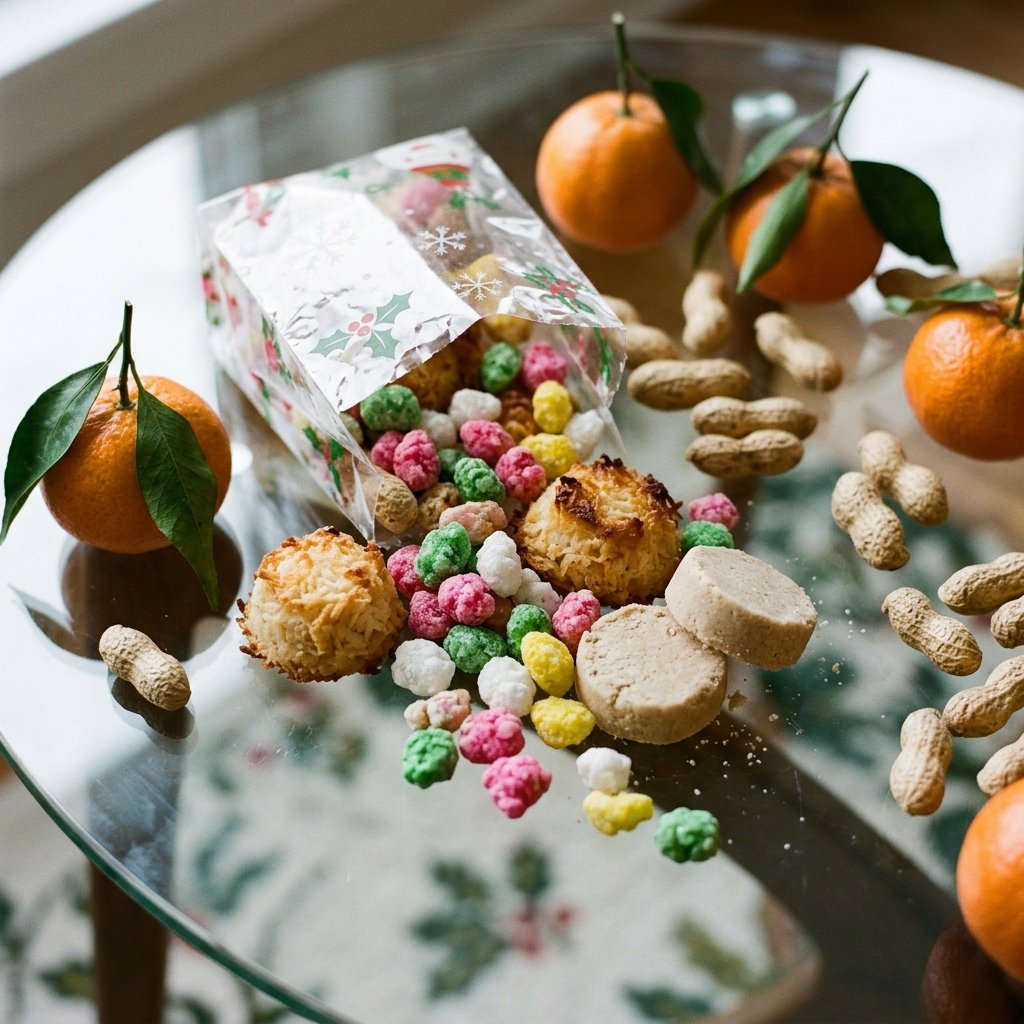
9. Colación
A colorful mix of small sugar-coated candies, some with an anise seed or a peanut inside. Traditionally, they fill the aguinaldo bags handed out to kids at posadas and come pouring out of the piñata.
10. Cocadas
Chewy coconut candies cooked or baked with sugar and milk until golden at the edges. Because they need only a few ingredients and keep well, they make a sweet homemade gift.
11. Mazapán de Cacahuate
A crumbly peanut candy made from ground roasted peanuts and powdered sugar, pressed into rounds. It’s a favorite in aguinaldo bags, and it’s also surprisingly easy to make at home.
12. Ate con Queso
Simply put, it’s firm quince or guava paste served in slices with a mild fresh cheese. In fact, it’s the easiest dessert on this list: no cooking at all, and it looks lovely on a Christmas Eve cheese board.
Mexican Christmas Desserts: Puddings, Gelatins and Nougat
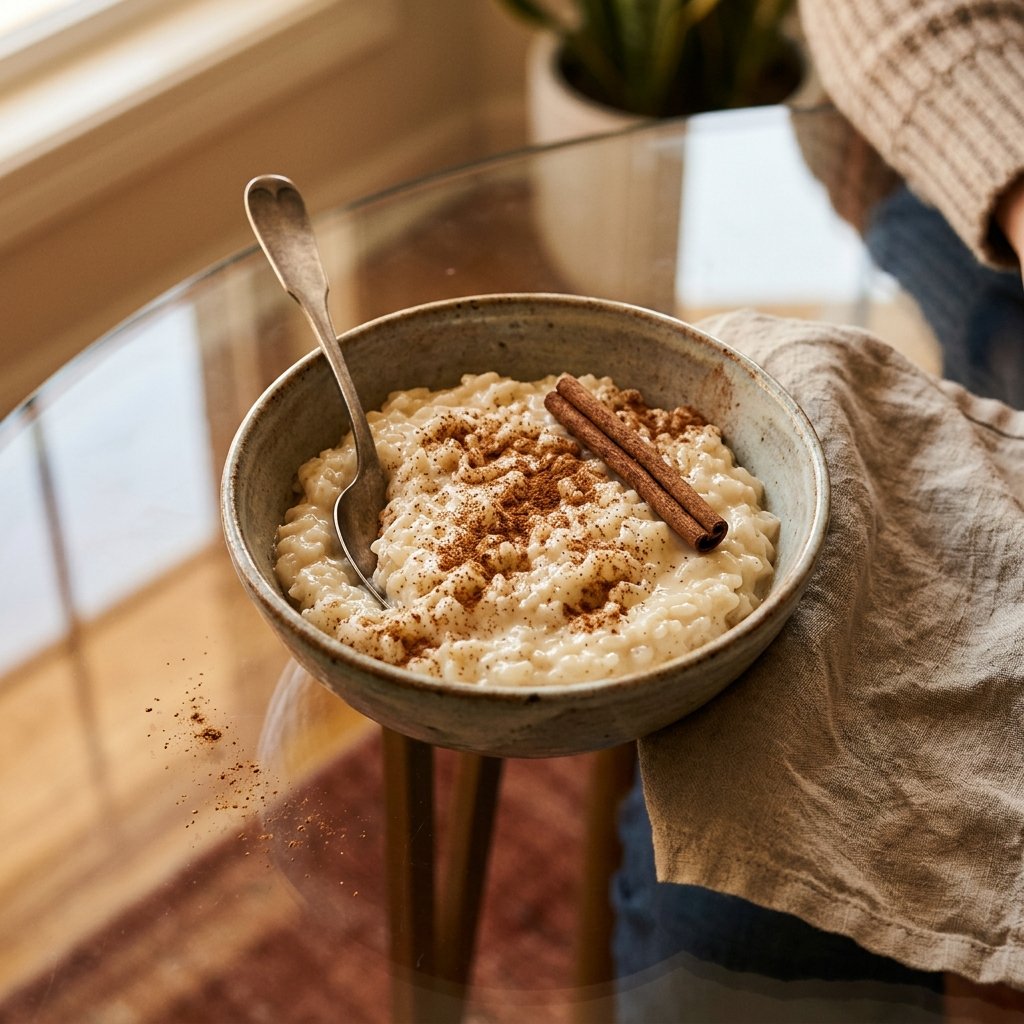
13. Arroz con Leche
Next up is creamy rice pudding, cooked with milk, a cinnamon stick and a strip of lime or orange peel, sometimes with raisins. Usually it’s served warm on a cold December night; however, it’s just as good chilled the next day.
14. Gelatina de Rompope
Similarly, gelatina de rompope is a wobbly gelatin made with rompope, the Mexican cousin of eggnog, flavored with vanilla and cinnamon. Curious about the drink itself? Read What’s in Eggnog?, and for another Latin holiday drink, try my Coquito.
15. Turrón
Originally, this almond and honey nougat came to Mexico from Spain. Today, hard and soft bars are sold everywhere in December and set out on the table after Nochebuena dinner. Italy has its own version too, called torrone; you’ll find it in my Italian Christmas Desserts.
What Do Mexicans Eat for Dessert on Christmas Eve?
On Nochebuena, dinner starts late, so the Mexican Christmas desserts often come out after midnight. As Mexico News Daily’s guide to Mexican Christmas foods points out, buñuelos are almost always part of it. The table usually holds buñuelos with piloncillo syrup, a flan or tres leches cake, and a plate of polvorones and turrón, with ponche or champurrado to drink. During the nine posadas before it, however, the sweets are simpler: buñuelos, churros, and aguinaldo bags of colación, peanut mazapán and fruit.
Which Mexican Christmas Desserts Are Easiest to Make at Home?
Short on time? Then start with these easy Mexican Christmas desserts:
- No cooking: ate con queso (10 minutes) and mazapán de cacahuate (15 minutes).
- Make ahead: tres leches cake, flan napolitano and gelatina de rompope, all made the day before.
- Stovetop in 40 minutes: arroz con leche.
- A weekend project that’s worth it: buñuelos, which stay crisp for a week.
For more low-stress ideas, take a look at my Simple Christmas Desserts to Impress.
How to Make Buñuelos
Of all the Mexican Christmas desserts on this list, these are the ones I make first: thin, crispy buñuelos from central Mexico, rolled by hand and fried in about a minute each. Serve them with cinnamon sugar, piloncillo syrup, or both (my vote is both).
Buñuelos (Crispy Mexican Christmas Fritters)
Ingredients
- 3 cups all-purpose flour 375 g, plus more for rolling
- 1 tbsp granulated sugar
- 1 tsp baking powder
- 1/2 tsp salt
- 1 large egg at room temperature
- 3 tbsp unsalted butter or lard 42 g, melted
- 3/4 cup warm water 180 ml, plus 1 to 2 tbsp if needed
- vegetable oil for frying, about 1 inch deep
- 3/4 cup granulated sugar 150 g
- 2 tsp ground cinnamon
- 8 oz piloncillo 225 g, chopped, or 1 cup packed dark brown sugar
- 1 1/2 cups water 360 ml
- 1 cinnamon stick
- 2 whole cloves
- 1 strip orange peel
Method
- Whisk the flour, sugar, baking powder and salt in a large bowl. Add the egg, melted butter and warm water, then stir until a shaggy dough forms.
- Knead on a lightly floured surface for about 5 minutes, until smooth and soft. If it feels dry, add water a tablespoon at a time.
- Cover the dough with plastic wrap and let it rest for 30 minutes, so it rolls thin without shrinking back.
- Meanwhile, make the syrup: simmer the piloncillo, water, cinnamon stick, cloves and orange peel for 15 to 20 minutes, until slightly syrupy. Strain and keep warm.
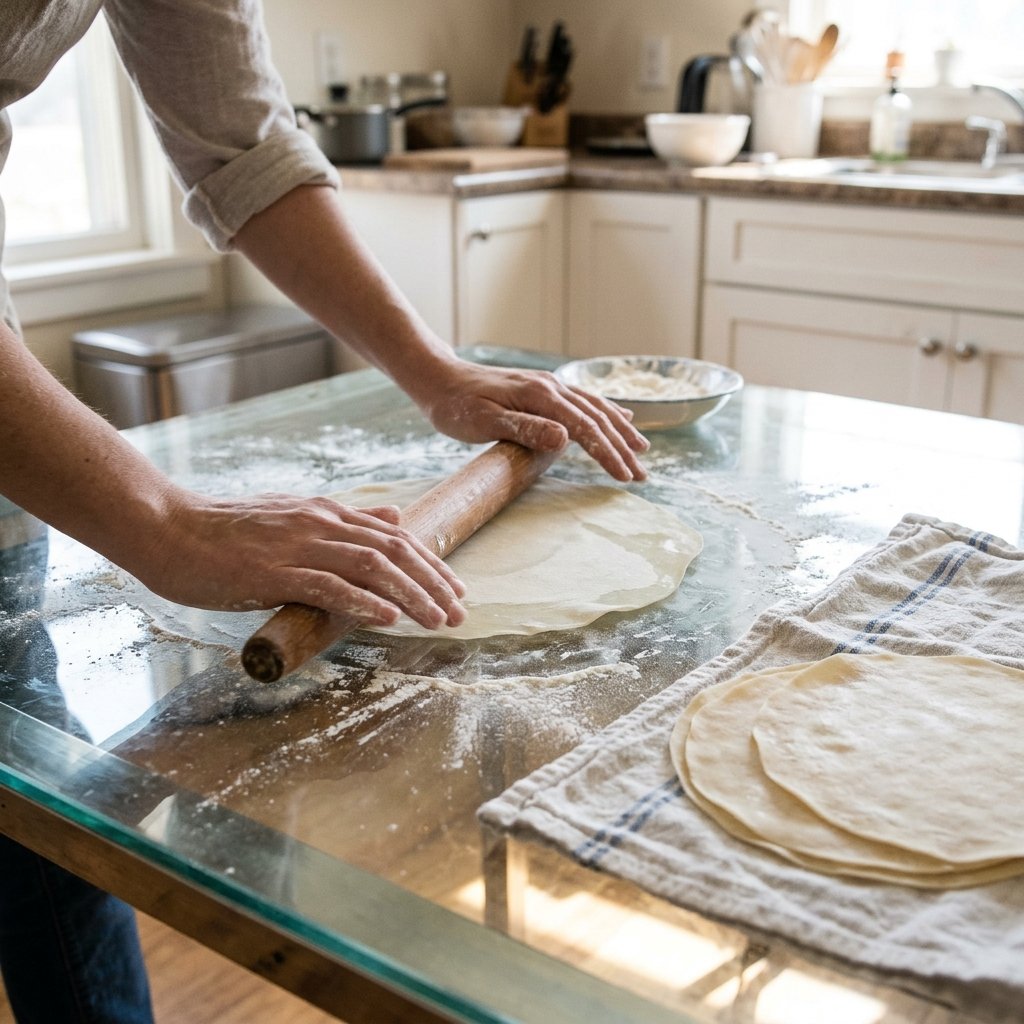
- Divide the dough into 16 balls, cover and rest 10 minutes. Roll each one on a floured surface into a very thin 6 to 7 inch round, almost see-through. Lay the rounds on clean kitchen towels.
- Heat the oil in a wide skillet to 350°F (175°C). Fry one buñuelo at a time for 30 to 45 seconds per side, until golden and full of bubbles. Drain on paper towels.
- Mix the sugar and cinnamon and sprinkle it on both sides while the buñuelos are still warm. Serve with the warm piloncillo syrup poured over the top or on the side.
Notes
- Roll the dough as thin as you can. Thin dough means a crisp buñuelo.
- Let the rolled rounds sit on the towel 5 to 10 minutes before frying for bigger bubbles.
- No piloncillo? Use the same weight of dark brown sugar plus 1 tablespoon molasses.
- Store plain or sugared buñuelos in an airtight tin for up to 1 week. Add syrup only when serving, or they go soft.
Private Notes
Tried this recipe?
Let us know how it was!Tips for Perfect Buñuelos and Other Mexican Christmas Desserts
- Roll them thin. The thinner the dough, the crisper the buñuelo. If it keeps springing back, let it rest 5 more minutes.
- Let the rounds dry a little. Five to ten minutes on a towel gives a drier surface and bigger bubbles in the oil.
- Watch the oil. At 350°F (175°C), for example, they brown in under a minute. On the other hand, cooler oil makes them greasy, while hotter oil burns the edges.
- Sugar them warm. After all, cinnamon sugar only sticks while they’re hot from the oil.
- Add syrup at the table. Pour piloncillo syrup over each serving instead of the whole batch, so the rest stay crisp.
Mexican Christmas Desserts FAQ
What are the most traditional Mexican Christmas desserts?
Buñuelos, churros, rosca de reyes, polvorones, arroz con leche, flan and tres leches cake are the most traditional. In addition, candy like colación, cocadas and peanut mazapán fills the aguinaldo bags at posadas.
What is the difference between buñuelos and churros?
Buñuelos are thin, flat rounds of rolled dough that fry up crisp like a cracker. Churros, on the other hand, are piped sticks of soft dough, crunchy outside and tender inside.
Can I make buñuelos ahead of time?
Yes. In fact, you can fry them up to a week ahead and keep them in an airtight tin. The piloncillo syrup keeps up to 5 days in the fridge; just warm it before serving.
What can I use instead of piloncillo?
Instead, use the same weight of dark brown sugar with 1 tablespoon of molasses. That way, the syrup will taste very close to the original.
When is rosca de reyes eaten?
On January 6, Three Kings Day, at the very end of the Mexican Christmas season. For this reason, it’s not usually served on Christmas Eve.